 Renting out equipment, vehicles, property, or event supplies involves more than handing over the keys. A well-prepared bill or invoice helps both sides understand what was rented, for how long, what it costs, and when payment is due. It can also make bookkeeping, tax preparation, and payment follow-up much easier.
This guide explains what rental invoices should include, how to choose a template, and how to adapt one for different rental businesses. It’s general information—not legal or tax advice. Requirements vary by location and rental type, so check the rules that apply to your business.
What Is a Rental Service Bill or Invoice?
A rental invoice is a request for payment for rental goods or services. It typically lists the rental period, rates, additional charges, taxes, and payment instructions.
A bill may refer more broadly to a statement of charges, including an invoice, a point-of-sale receipt, or a final account summary. In everyday business use, the terms are sometimes used interchangeably. Whatever label you choose, the document should make the transaction easy to understand and verify.
Rental billing can cover:
- Vehicles, trailers, and machinery
- Tools and construction equipment
- Furniture, tents, and event supplies
- Electronics and audiovisual equipment
- Vacation or commercial property
- Storage units and other rented spaces
Why Use a Rental Invoice Template?
A template gives you a consistent starting point for each transaction. Instead of recreating an invoice every time, you can fill in the details, check the charges, and send it promptly.
More consistent records
Using the same format helps you avoid leaving out key information, such as the rental dates or a deposit credit. Consistent records also make it easier to compare transactions and find past invoices.
Clearer communication
Customers should be able to see how the total was calculated. Separating rental fees, delivery charges, optional services, taxes, and credits reduces confusion and helps prevent billing disputes.
Faster bookkeeping
Invoices provide a record of amounts billed and payments received. Organized invoice records can support your accounting and tax workflows. The IRS, for example, advises businesses to maintain records that support income, expenses, and other items reported on tax returns. The exact records a business needs depend on its circumstances and applicable rules.[1]
Easier payment follow-up
An invoice number, due date, and clear payment instructions make it simpler to track what is outstanding. If a customer asks about a charge, you can refer to a specific document rather than reconstructing the transaction from memory.
What to Include in a Rental Invoice
A useful template should include enough detail for the customer to confirm the rental and understand the balance due.
1. Business and customer details
Include your business name and contact information, along with the customer’s name and relevant contact or billing details. Depending on your process, you may also include a delivery address or rental location.
2. Invoice information
Add:
- A unique invoice number
- Invoice issue date
- Payment due date, if applicable
- Related booking, contract, or purchase-order number
Numbering invoices consistently helps with filing and reference. Avoid reusing invoice numbers.
3. Rental item or service description
Describe each rental clearly. Include enough detail to distinguish similar items—for example, an equipment model, vehicle identifier, unit size, or item quantity.
A line item might look like:
Portable generator, 5,000-watt model — 1 unit — 3 days
If the rental includes service work, delivery, setup, or operation, list those charges separately where practical.
4. Rental period and rate
State the dates or times covered by the charge and the rate basis. Common billing periods include hourly, daily, weekly, and monthly.
For example:
| Description | Period | Rate | Amount |
|---|---|---|---|
| Event tent rental | 2 days | $250 per day | $500 |
Be clear about how you count partial periods. If a late return, overtime, or an extension may affect the price, explain the applicable terms in the rental agreement or another document the customer receives.
5. Additional charges and credits
List any extra amounts or adjustments, such as:
- Delivery and pickup
- Setup or installation
- Cleaning
- Fuel or mileage
- Optional accessories
- Damage or loss charges, when supported by the agreement and applicable rules
- Discounts
- Deposit payments or other credits
Use clear labels rather than folding everything into one unexplained “miscellaneous” charge.
6. Taxes and total due
Show the subtotal, applicable taxes or fees, credits, and final balance. Tax treatment can differ by jurisdiction and by the type of rental, so don’t assume one rule applies to every transaction. The IRS explains that sales tax is generally a state and local matter in the United States; businesses should consult the relevant state and local tax authorities for their obligations.[2]
A simple calculation might be:
- Rental charges: $500
- Delivery: $40
- Subtotal: $540
- Tax: $X
- Deposit credit: −$100
- Balance due: $440 + applicable tax adjustment
7. Payment instructions and terms
Tell the customer how to pay and when payment is due. Include accepted payment methods, any reference they should use, and a contact method for billing questions.
If you charge late fees or other penalties, make sure they are disclosed appropriately and comply with the agreement and local law. Avoid relying on an invoice alone to establish terms that were not previously agreed to.
Rental Invoice vs. Rental Agreement
An invoice and a rental agreement serve different purposes.
A rental agreement sets out the terms of the rental, such as the rental period, permitted use, return requirements, responsibility for loss or damage, and cancellation rules. An invoice records the charges being requested or paid.
The invoice can refer to a booking or agreement number, but it generally should not be treated as a substitute for a properly prepared rental agreement. The right documents and required disclosures depend on the type of rental and local law.
Choosing a Template for Your Business
The best template is one that matches your workflow and makes charges easy to check.
Paper or printable templates
A printable template can work for a small operation that issues invoices occasionally or needs documents at a service counter. Keep a digital copy of each completed invoice so records are searchable and backed up.
Spreadsheet templates
A spreadsheet can calculate quantities, rates, subtotals, and taxes. Check formulas before using the template and protect cells that contain formulas from accidental edits. Spreadsheets can be useful for simple billing, but they may become harder to manage as transaction volume grows.
Accounting or rental-management software
Software may help generate invoices, record payments, track overdue balances, or connect billing to bookings and inventory. Before choosing a system, consider whether it supports your rental periods, deposits, taxes, partial payments, and reporting needs.
Whatever format you use, protect customer information and limit access to people who need it. The FTC recommends that businesses take reasonable steps to secure sensitive personal information they keep.[3]
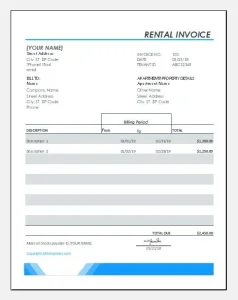
A Simple Rental Invoice Example
Here is a basic example to illustrate the layout:
Northside Event Rentals
Contact details and business address
Invoice: R-1048
Invoice date: November 15, 2026
Due date: November 22, 2026
Customer: Example Customer
Rental location: Example venue
| Item or service | Rental period | Quantity | Rate | Amount |
|---|---|---|---|---|
| Folding chairs | Nov. 18–19 | 50 | $2.00 per day | $200.00 |
| Delivery and pickup | Nov. 18–19 | 1 | $65.00 | $65.00 |
Subtotal: $265.00
Applicable tax: $X
Deposit received: −$75.00
Balance due: $190.00 plus applicable tax adjustment
Payment instructions: Add invoice number R-1048 as the payment reference.
Questions: Contact the billing team using the details above.
This is an illustrative format, not a universal tax-compliant invoice. Adapt it to your business, transaction, and local requirements.
Common Rental Billing Mistakes to Avoid
Vague line items
“Equipment rental” may not tell a customer what they are paying for. Identify the rented item, quantity, rental period, and rate basis.
Missing return or rental dates
Without dates, it may be difficult to verify a charge or explain an extension. Match invoice dates to the booking and return records.
Unexplained deposits
Show whether a deposit is being collected, applied as a credit, or refunded. A deposit is not always the same thing as rental revenue, so record it according to your accounting practices.
Combining unrelated charges
Separating rental fees from delivery, cleaning, fuel, or other services makes the invoice easier to review.
Unclear tax treatment
Use the correct tax rules for the transaction and location. If you’re unsure, check with the relevant tax agency or a qualified tax professional rather than guessing.
Inconsistent invoice numbering and filing
Use a reliable numbering system and retain invoices, agreements, payment records, and supporting documentation according to applicable recordkeeping requirements.
A Short Checklist Before Sending
Before sending a rental invoice, confirm that:
- The invoice number is unique.
- The customer and rental details are correct.
- The rental period and rate basis are clear.
- Additional charges and credits are itemized.
- The tax calculation has been checked.
- The balance due matches the payment history.
- The due date and payment instructions are included.
- The invoice agrees with the booking and rental agreement.
- A copy is saved in your records.
Conclusion
A good rental service bill or invoice does more than ask for payment. It creates a clear record of what was rented, when it was rented, how the charges were calculated, and what remains due. Start with a template that fits your business, customize it for each rental, and keep it consistent with your booking records and rental agreement.
The key is clarity: specific descriptions, transparent calculations, accurate dates, and straightforward payment instructions help customers understand their bills—and help your business keep dependable records.
Sources
- Internal Revenue Service, Recordkeeping: https://www.irs.gov/businesses/small-businesses-self-employed/recordkeeping
- Internal Revenue Service, State and Local Governments: https://www.irs.gov/government-entities/federal-state-local-governments
- Federal Trade Commission, Protecting Personal Information: A Guide for Business: https://www.ftc.gov/business-guidance/resources/protecting-personal-information-guide-business