Team Catch-up Agenda Format
Crafting Effective Team Catch-Up Agendas
Team catch-up meetings are crucial for maintaining alignment, fostering communication, and driving progress. However, without a well-structured agenda, these meetings can quickly devolve into unproductive time sinks. A carefully crafted agenda ensures that everyone is prepared, discussions are focused, and valuable outcomes are achieved.
The Building Blocks of a Great Agenda
A successful team catch-up agenda typically includes the following key components:
1. Meeting Title and Objective:
Start with a clear and concise title that reflects the meeting’s purpose. For example, “Weekly Project X Catch-Up” or “Monthly Team Performance Review.” Immediately below the title, state the meeting’s primary objective. This sets the stage and helps participants understand the intended outcome. A clear objective provides focus and prevents scope creep.
Example:
Title: Weekly Marketing Campaign Review
Objective: To review the performance of ongoing marketing campaigns, identify any roadblocks, and plan next steps.
2. Date, Time, and Location:
Include the date, time, and location (physical or virtual meeting link) prominently at the top of the agenda. This ensures everyone knows when and where to attend. For virtual meetings, clearly indicate the platform being used (e.g., Zoom, Microsoft Teams) and provide any necessary access information (passwords, meeting IDs).
Example:
Date: October 26, 2023
Time: 10:00 AM – 11:00 AM EST
Location: Zoom – [Meeting Link] – Password: [Password]
3. Attendees:
List all attendees by name and, optionally, their roles. This helps everyone understand who will be present and responsible for contributing to the discussion. If specific attendees are responsible for presenting or leading particular agenda items, clearly indicate this next to their name.
Example:
Attendees:
- John Smith (Project Manager)
- Jane Doe (Marketing Lead) – Presenting campaign performance
- David Lee (Sales Representative)
- Sarah Chen (Customer Support)
4. Agenda Items with Time Allocation:
This is the core of the agenda. List each topic to be discussed, providing a brief description of the item and the allocated time. The order of items should be logical and facilitate a smooth flow of conversation. Prioritize critical items at the beginning of the agenda when participants are most alert. Providing time estimates for each item keeps the meeting on track and prevents any single topic from dominating the discussion. Time management is critical for efficient catch-ups.
Example:
- Welcome and Introductions (5 minutes) – Quick introductions and a recap of the meeting’s objective.
- Review of Last Week’s Action Items (10 minutes) – Discuss the status of action items assigned in the previous meeting.
- Campaign Performance Review (20 minutes) – Jane Doe presents the performance data for ongoing marketing campaigns.
- Open Discussion: Roadblocks and Challenges (15 minutes) – Open forum to discuss any obstacles or challenges faced by the team.
- Action Item Assignment and Next Steps (5 minutes) – Assign action items and schedule follow-up activities.
- Wrap Up (5 minutes) – Summarize key decisions and thank attendees.
5. Pre-Reading Materials (Optional):
If there are any documents or reports that attendees need to review before the meeting, include links to these materials in the agenda. Providing pre-reading material allows participants to come prepared and contribute more effectively to the discussion. Specify what aspects of the pre-reading are most relevant to the meeting’s objectives.
Example:
Pre-Reading Materials:
- Marketing Campaign Performance Report: [Link to Report] – Focus on page 3, key metrics overview.
6. Action Items Tracker:
Include a section at the end of the agenda to track action items. This section should list the action item, the person responsible, and the due date. This ensures accountability and helps track progress between meetings. It also serves as a reminder during the meeting to discuss the status of outstanding action items.
Example:
Action Items:
| Action Item | Responsible | Due Date | Status |
|---|---|---|---|
| Analyze website traffic data | John Smith | November 2, 2023 | In Progress |
| Create a new social media ad campaign | Jane Doe | November 9, 2023 | Not Started |
7. Open Forum/Q&A (Optional):
Allocate time at the end of the agenda for an open forum or Q&A session. This provides an opportunity for participants to raise any additional questions, concerns, or ideas that were not covered in the main agenda items. This fosters open communication and encourages collaboration.
Best Practices for Creating and Distributing Agendas
- Distribute the agenda well in advance: Send the agenda out at least 24 hours before the meeting to give participants ample time to prepare.
- Keep it concise and focused: Avoid overloading the agenda with too many topics. Prioritize the most important items and allocate time accordingly.
- Use action verbs: Start each agenda item description with an action verb (e.g., “Review,” “Discuss,” “Brainstorm”).
- Incorporate visual aids (if applicable): If there are any charts, graphs, or presentations that will be used during the meeting, mention them in the agenda.
- Solicit feedback: Encourage participants to provide feedback on the agenda before the meeting. This allows you to make adjustments and ensure that the agenda meets everyone’s needs.
- Follow up after the meeting: Send out a summary of the meeting, including key decisions, action items, and next steps.
The Benefits of a Well-Defined Agenda
A well-defined team catch-up agenda yields several significant benefits:
- Improved Focus: Participants are clear on the meeting’s objectives and can stay focused on the topics at hand.
- Increased Efficiency: Time is used effectively, and meetings are less likely to run over schedule.
- Enhanced Communication: Clear agenda items encourage more structured and productive discussions.
- Better Accountability: Action items are clearly defined and assigned, leading to greater accountability.
- Improved Decision-Making: Prepared participants contribute more effectively, leading to better informed decisions.
- Increased Engagement: When meetings are productive and focused, participants are more likely to be engaged and contribute actively.
By following these guidelines, you can create team catch-up agendas that are both effective and engaging, leading to more productive meetings and better team performance.
 600×730 team agenda examples from www.examples.com
  710×979 team meeting agenda template samples format word from www.doctemplates.net
  600×730 team agenda templates sample format from www.template.net
  768×1024 team meeting agenda template templates word excel from www.formsbirds.com
  1132×684 team meeting agenda leanfarm from www.leanfarm.nz
  1194×843 team outing agenda template invitation template ideas from howtostepmom.com
 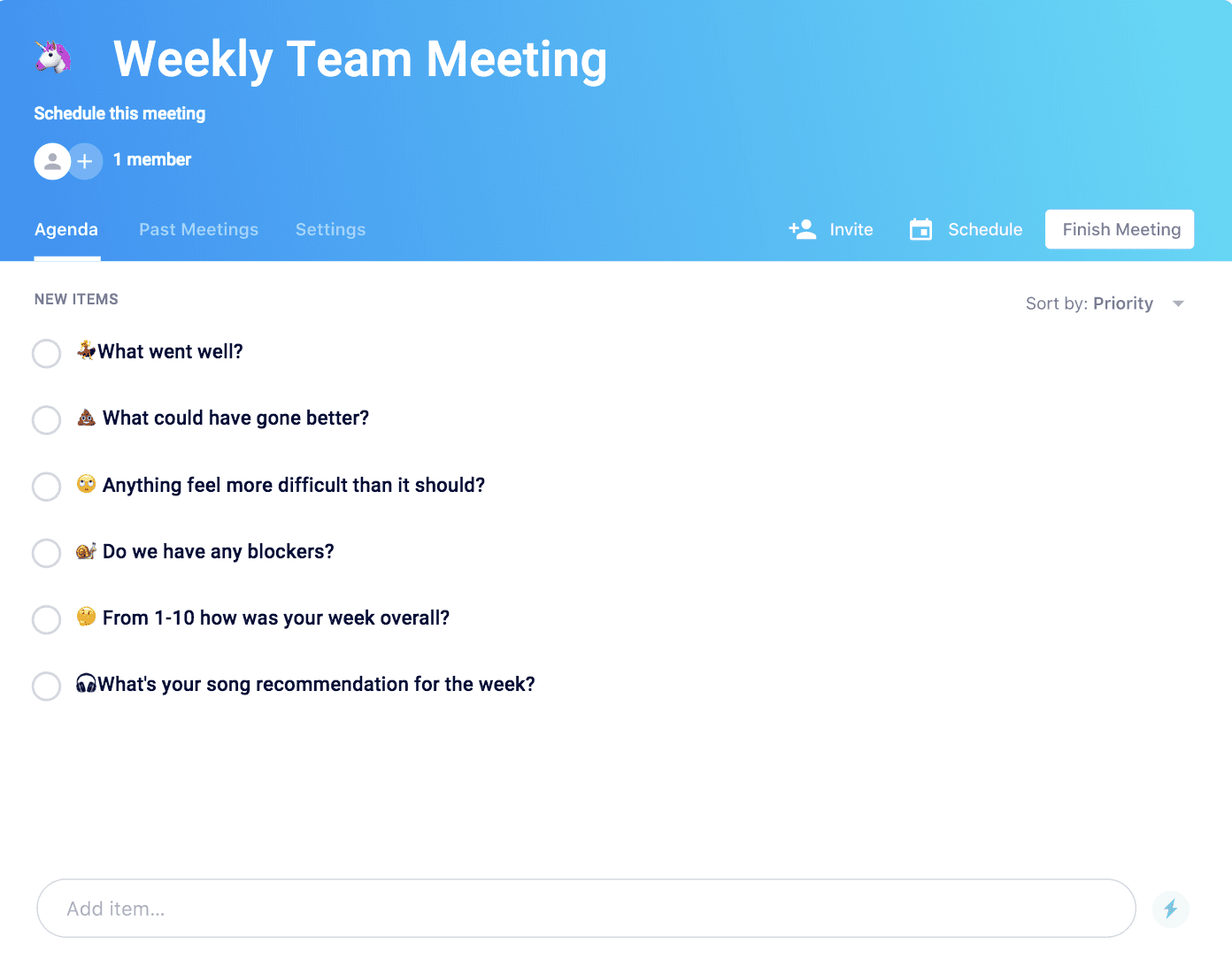 1392×1102 weekly team meeting agenda template manager from hypercontext.com
  820×1326 team building meeting agenda template invitation template ideas from howtostepmom.com
 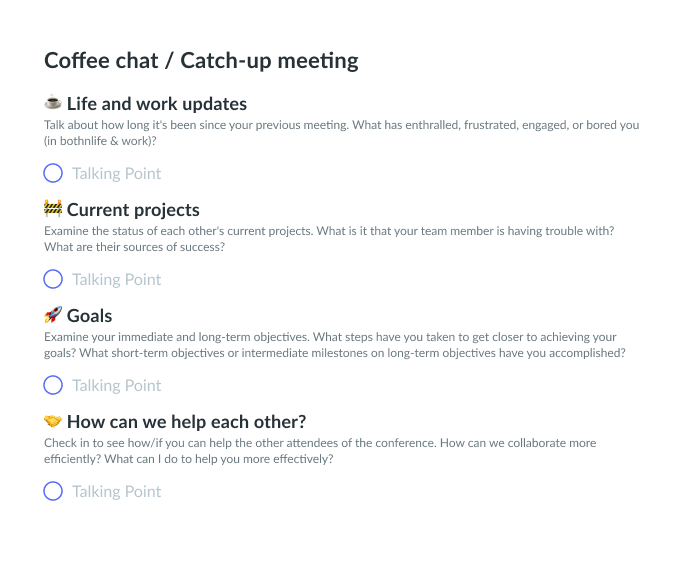 474×395 coffee chat catch meeting template fellowapp from fellow.app
 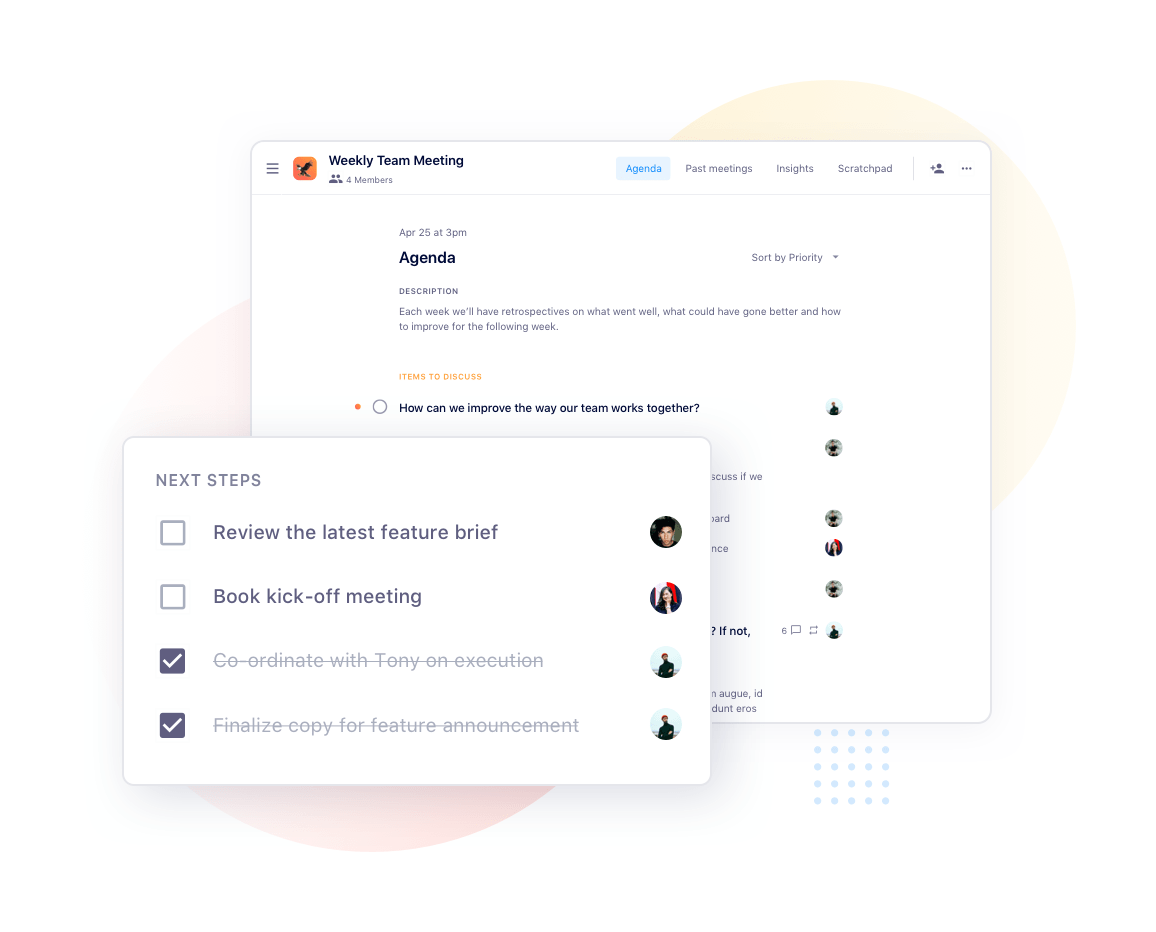 1156×932 minute team meeting agenda template hypercontext from hypercontext.com
  1600×686 run effective meetings weekly team agenda lucidchart blog from www.lucidchart.com


Team Catch-up Agenda Format :
Team Catch-up Agenda Format was posted in July 2, 2025 at 9:31 am. If you wanna have it as yours, please click the Pictures and you will go to click right mouse then Save Image As and Click Save and download the Team Catch-up Agenda Format Picture.. Don’t forget to share this picture with others via Facebook, Twitter, Pinterest or other social medias! we do hope you'll get inspired by SampleTemplates123... Thanks again! If you have any DMCA issues on this post, please contact us!
Related For Team Catch-up Agenda Format
Charity Meeting Agenda Format
Charity Meeting Agenda Format: A Comprehensive Guide Charity MeetingCross-team Collaboration Agenda
Cross-Team Collaboration Agenda Cross-Team Collaboration: A Structured Agenda forOne-on-one Agenda Planner
One-on-One Agenda Planner The Power of a Well-Planned One-on-One