Product Feedback Agenda Sheet
Product Feedback Agenda Sheet: Structuring Valuable Insights A product feedback agenda sheet is a crucial tool for organizing and maximizing the effectiveness of feedback sessions, whether they are focused on user testing, stakeholder reviews, or internal brainstorming. It serves as a roadmap, ensuring that the session stays on track, covers all pertinent areas, and ultimately generates actionable insights that can improve the product. Neglecting to plan these sessions carefully can result in wasted time, unfocused feedback, and ultimately, a less effective product development process. This document will explore the essential components of a well-crafted product feedback agenda sheet, explaining why each element is important and how to implement it for optimal results. **Key Elements of a Product Feedback Agenda Sheet** 1. **Meeting Title and Purpose:** * **Clarity is Key:** Begin with a clear and concise title that accurately reflects the session’s focus. Examples include “User Testing Feedback Session: Mobile App Redesign,” “Stakeholder Review: New Feature Proposal,” or “Internal Brainstorming: Enhancing User Onboarding.” * **Define the ‘Why’:** Explicitly state the purpose of the session. What specific goals are you trying to achieve? Are you seeking validation of a concept, identifying usability issues, gathering feature requests, or exploring potential improvements? A well-defined purpose helps participants understand the context and provide more relevant feedback. For instance: “The purpose of this session is to gather feedback on the usability of the new mobile app redesign, focusing on ease of navigation, clarity of information, and overall user experience.” 2. **Participants:** * **Identify Key Stakeholders:** List all individuals who will be participating in the session. This includes users, designers, developers, product managers, marketing representatives, and any other relevant stakeholders. * **Define Roles:** Briefly outline the role of each participant. This clarifies expectations and helps everyone understand their contribution to the session. For example: “John Doe (Product Manager): Facilitates the session and guides the discussion.” “Jane Smith (UX Designer): Presents the design and answers questions about design decisions.” “User 1, User 2, User 3: Provide feedback based on their experience using the product.” 3. **Date, Time, and Location:** * **Logistics are Essential:** Clearly state the date, time, and location (physical or virtual) of the session. Use a standard time zone to avoid confusion. * **Include Dial-in/Access Information:** For virtual meetings, provide the meeting link, dial-in number, and any necessary access codes. 4. **Materials Required:** * **Preparation is Paramount:** List all materials that participants will need to review or bring to the session. This might include prototypes, wireframes, mockups, user flows, competitor analyses, questionnaires, or specific tasks for users to complete. * **Accessibility:** Ensure that all materials are easily accessible to participants well in advance of the session. Provide links to online documents or distribute physical copies as needed. 5. **Agenda Items (Detailed and Timed):** * **The Heart of the Agenda:** This is the most crucial section, outlining the specific topics to be covered during the session. Each item should be clearly defined and allocated a specific time slot. * **Start with Introductions and Context:** Begin with a brief introduction of all participants and a restatement of the session’s purpose and objectives. * **Structured Discussion:** Divide the remaining time into focused discussion topics. For each topic, clearly state the questions you want to answer or the issues you want to address. * **Prioritize Key Areas:** Allocate more time to the most critical areas of feedback. If usability is a primary concern, dedicate a significant portion of the session to user testing and related discussions. * **Example Agenda Items:** * **(5 minutes) Introduction and Review of Objectives:** Welcome participants and reiterate the purpose of the session. * **(15 minutes) Presentation of New Feature:** Briefly introduce the new feature and explain its intended functionality. * **(30 minutes) User Testing and Feedback:** Observe users interacting with the feature and solicit their feedback on usability, clarity, and overall experience. * **(15 minutes) Q&A and Discussion:** Open the floor for questions and discussion about the feature. * **(5 minutes) Next Steps and Action Items:** Summarize the key findings and assign action items to specific individuals. 6. **Questions to Address:** * **Guiding the Discussion:** Prepare a list of specific questions that you want to answer during the session. These questions should be aligned with the session’s purpose and the specific agenda items. * **Focus on Specific Aspects:** Tailor the questions to address specific aspects of the product or feature being reviewed. Examples: * “How intuitive is the user interface?” * “Does the feature provide the expected value?” * “Are there any confusing or frustrating aspects of the user experience?” * “What are the potential use cases for this feature?” * “How does this feature compare to existing solutions?” 7. **Desired Outcomes:** * **Setting Expectations:** Clearly state the desired outcomes of the session. What specific results are you hoping to achieve? This helps participants understand what constitutes a successful outcome. * **Measurable Objectives:** Ideally, outcomes should be measurable. For example: “Identify at least three major usability issues,” “Gather five new feature requests,” or “Achieve consensus on the core value proposition.” 8. **Action Items and Next Steps:** * **Translating Feedback into Action:** This section is typically completed during or immediately after the session. Document any action items that arise from the discussion, assigning each item to a specific individual and setting a deadline for completion. * **Follow-up:** Outline the next steps that will be taken to address the feedback received. This might include further research, design revisions, development work, or additional testing. **Benefits of Using a Product Feedback Agenda Sheet** * **Increased Efficiency:** A well-structured agenda ensures that the session stays on track and avoids unnecessary tangents. * **Focused Feedback:** By outlining specific topics and questions, the agenda encourages participants to provide more targeted and relevant feedback. * **Improved Collaboration:** The agenda promotes a collaborative environment by clearly defining roles and responsibilities. * **Actionable Insights:** The agenda helps to translate feedback into actionable insights by identifying key findings and assigning action items. * **Better Documentation:** The agenda serves as a record of the session, providing a valuable reference point for future product development efforts. **Conclusion** A product feedback agenda sheet is an indispensable tool for maximizing the value of feedback sessions. By carefully planning and structuring these sessions, product teams can gather more meaningful insights, improve collaboration, and ultimately create better products. Investing the time to create a comprehensive agenda is a small price to pay for the significant benefits it provides. Remember to adapt the agenda to suit the specific needs of each session and to continuously refine the process based on experience and feedback.
 2600×1634 product feedback survey form template assembly flows from www.joinassembly.com
  420×541 product feedback card templates ms word edit print from www.wordexceltemplates.com
 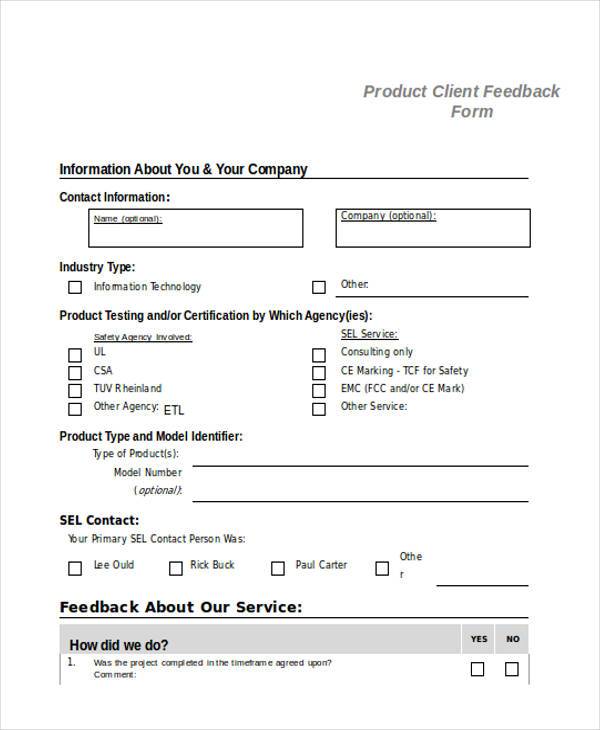 600×730 sample product feedback forms ms word from www.sampleforms.com


Product Feedback Agenda Sheet :
Product Feedback Agenda Sheet was posted in May 22, 2025 at 8:25 am. If you wanna have it as yours, please click the Pictures and you will go to click right mouse then Save Image As and Click Save and download the Product Feedback Agenda Sheet Picture.. Don’t forget to share this picture with others via Facebook, Twitter, Pinterest or other social medias! we do hope you'll get inspired by SampleTemplates123... Thanks again! If you have any DMCA issues on this post, please contact us!