Project Plan Template For Software Development
Software Development Project Plan Template
A well-structured project plan is the cornerstone of successful software development. It acts as a roadmap, guiding the team through each phase of the project, minimizing risks, and ensuring timely delivery within budget. This template provides a comprehensive framework for creating a robust project plan.
I. Project Overview & Objectives
1. Executive Summary
Provide a high-level overview of the project. This section should succinctly describe the project’s purpose, key deliverables, target audience, and the anticipated benefits. Think of it as an “elevator pitch” for the project.
2. Project Goals & Objectives
Clearly define the SMART goals (Specific, Measurable, Achievable, Relevant, Time-bound) that the project aims to achieve. Objectives should be specific actions that contribute to reaching the overall goals. For example:
- Goal: Increase user engagement on the platform.
- Objective: Implement a new personalized recommendation engine by [Date].
- Objective: Increase daily active users by 15% within three months of the new feature launch.
3. Project Scope
Define what is included in the project and, equally importantly, what is not included. This prevents scope creep and manages stakeholder expectations. Explicitly state the features, functionalities, and deliverables that will be developed, as well as any limitations or exclusions. Use clear, concise language.
4. Success Criteria
Establish clear and measurable criteria for determining the project’s success. This allows for objective evaluation upon completion. These criteria should align with the project goals and objectives. Examples include:
- Meeting specified performance benchmarks.
- Delivering all planned features with minimal defects.
- Achieving a certain level of user satisfaction.
- Staying within budget and meeting the agreed-upon deadline.
II. Project Organization & Management
1. Project Team & Roles
Identify all team members and their respective roles and responsibilities. This includes the project manager, developers, testers, designers, business analysts, and any other relevant stakeholders. Clearly define the reporting structure and communication channels.
A RACI matrix (Responsible, Accountable, Consulted, Informed) can be helpful in outlining the responsibilities for each task.
2. Project Governance
Outline the decision-making process and the stakeholders involved in key decisions. Define the escalation path for resolving issues and conflicts. This section should also address how changes to the project plan will be managed and approved.
3. Communication Plan
Detail how communication will be managed throughout the project. This includes the frequency, methods (e.g., email, meetings, project management software), and audience for different types of communication. Regular progress updates, status reports, and risk assessments should be included.
III. Technical Approach & Architecture
1. System Architecture
Describe the overall architecture of the software system, including the technologies, frameworks, and platforms that will be used. Provide diagrams and specifications to illustrate the system’s components and their interactions. Consider scalability, security, and maintainability aspects.
2. Development Methodology
Specify the software development methodology that will be followed (e.g., Agile, Waterfall, Scrum, Kanban). Explain the rationale for choosing this methodology and how it will be implemented in the project. Define the sprint cycles, review processes, and other relevant practices.
3. Technology Stack
List the specific technologies, programming languages, databases, and tools that will be used in the project. Justify the selection of each technology based on its suitability for the project requirements and the team’s expertise.
IV. Project Schedule & Milestones
1. Work Breakdown Structure (WBS)
Break down the project into smaller, more manageable tasks and subtasks. This allows for better estimation, tracking, and assignment of resources. The WBS should cover all aspects of the project, from requirements gathering to deployment and maintenance.
2. Project Timeline & Milestones
Create a detailed project timeline, including start and end dates for each task. Identify key milestones that represent significant accomplishments in the project. Use a Gantt chart or similar tool to visualize the project schedule and dependencies. Ensure the timeline is realistic and considers potential delays or challenges.
3. Resource Allocation
Allocate resources (e.g., personnel, equipment, budget) to each task in the project. Ensure that resources are available when needed and that there are no conflicts or overallocations. Track resource utilization throughout the project to identify potential bottlenecks.
V. Risk Management
1. Risk Identification
Identify potential risks that could impact the project’s success. This includes technical risks, business risks, resource risks, and schedule risks. Brainstorming sessions, expert interviews, and historical data can be used to identify risks.
2. Risk Assessment
Assess the likelihood and impact of each identified risk. Prioritize risks based on their severity and potential impact on the project. Use a risk matrix to visualize the risks and their corresponding priorities.
3. Risk Mitigation Strategies
Develop mitigation strategies for each high-priority risk. This includes actions that can be taken to reduce the likelihood or impact of the risk. Assign responsibility for monitoring and managing each risk. Contingency plans should be in place to address risks that cannot be fully mitigated.
VI. Budget & Cost Management
1. Cost Estimation
Estimate the total cost of the project, including labor, materials, equipment, and other expenses. Use different estimation techniques (e.g., bottom-up, top-down, analogous) to validate the cost estimates. Clearly document the assumptions and rationale behind the cost estimates.
2. Budget Allocation
Allocate the budget to different tasks and activities in the project. Track actual costs against the budgeted amounts. Use cost control techniques to identify and address cost overruns. Regularly review and update the budget as the project progresses.
3. Contingency Planning
Allocate a contingency fund to cover unexpected expenses or cost overruns. This provides a buffer against unforeseen circumstances and helps to ensure that the project stays within budget.
VII. Quality Assurance & Testing
1. Testing Strategy
Define the testing strategy that will be used to ensure the quality of the software. This includes different types of testing (e.g., unit testing, integration testing, system testing, user acceptance testing) and the tools that will be used. Specify the testing environment and the criteria for passing each test.
2. Test Plan
Create a detailed test plan that outlines the scope, objectives, schedule, and resources for testing. The test plan should include test cases, test data, and procedures for reporting and resolving defects.
3. Defect Management
Establish a process for tracking and managing defects. This includes logging defects, assigning them to developers for resolution, and verifying that the defects have been fixed. Use a defect tracking system to manage the defect lifecycle.
VIII. Deployment & Maintenance
1. Deployment Plan
Develop a detailed deployment plan that outlines the steps for deploying the software to the production environment. This includes preparing the environment, migrating data, and configuring the software. Address rollback procedures in case of deployment failure.
2. Maintenance Plan
Outline the plan for maintaining the software after deployment. This includes bug fixes, security updates, and performance improvements. Define the service level agreements (SLAs) for responding to and resolving issues. Establish a process for gathering user feedback and incorporating it into future releases.
IX. Appendices
Include any supporting documents, such as requirements specifications, design documents, user manuals, and other relevant information.
This template provides a comprehensive starting point for creating a software development project plan. Remember to tailor it to the specific needs and characteristics of your project. Regularly review and update the project plan throughout the project lifecycle to ensure its accuracy and relevance.
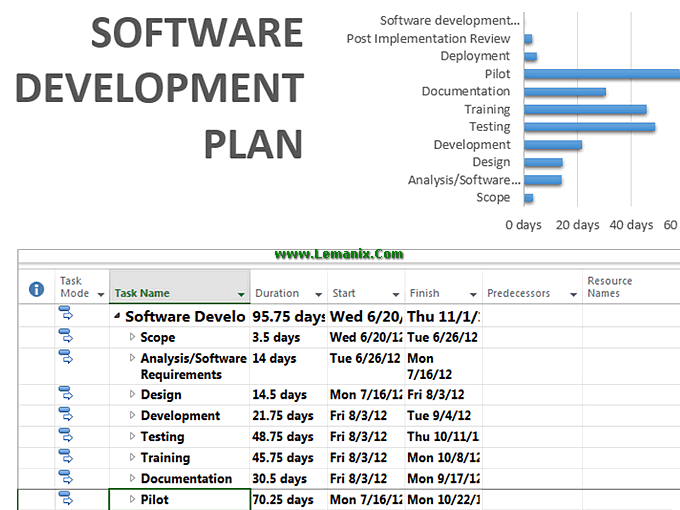 680×510 software development project management plan template project from www.lemanix.com
 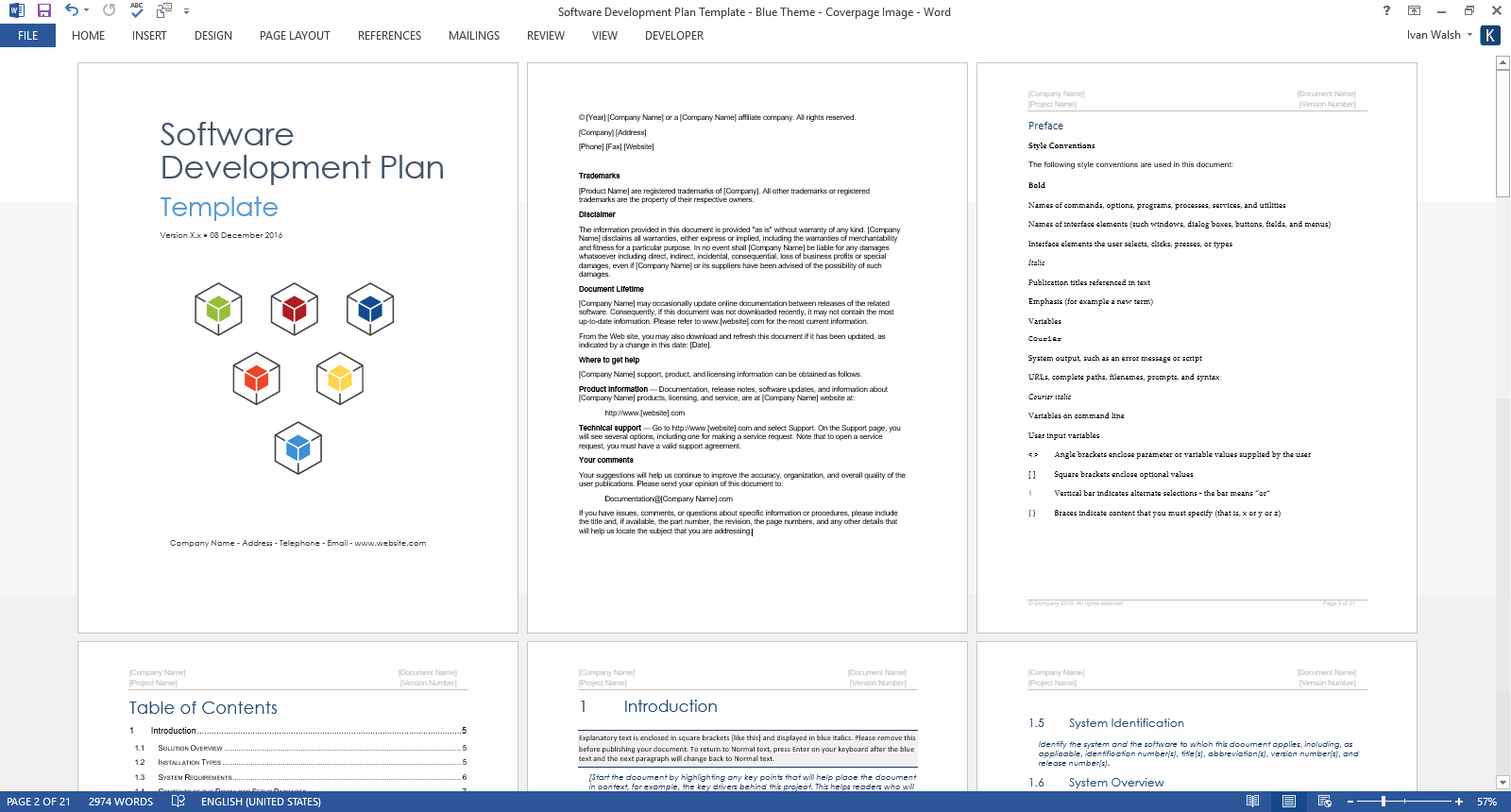 1600×860 software development plan template ms word templates forms from klariti.com



Project Plan Template For Software Development :
Project Plan Template For Software Development was posted in June 28, 2025 at 8:52 pm. If you wanna have it as yours, please click the Pictures and you will go to click right mouse then Save Image As and Click Save and download the Project Plan Template For Software Development Picture.. Don’t forget to share this picture with others via Facebook, Twitter, Pinterest or other social medias! we do hope you'll get inspired by SampleTemplates123... Thanks again! If you have any DMCA issues on this post, please contact us!