Lesson Plan Template For College Professors
Lesson Plan Template for College Professors
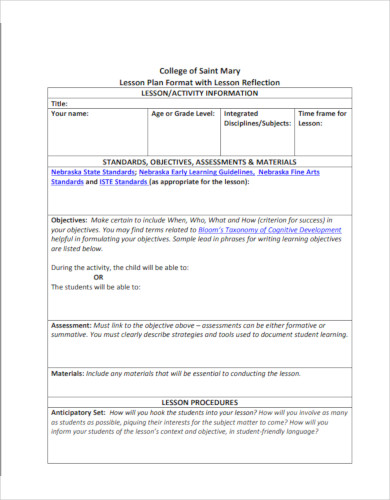
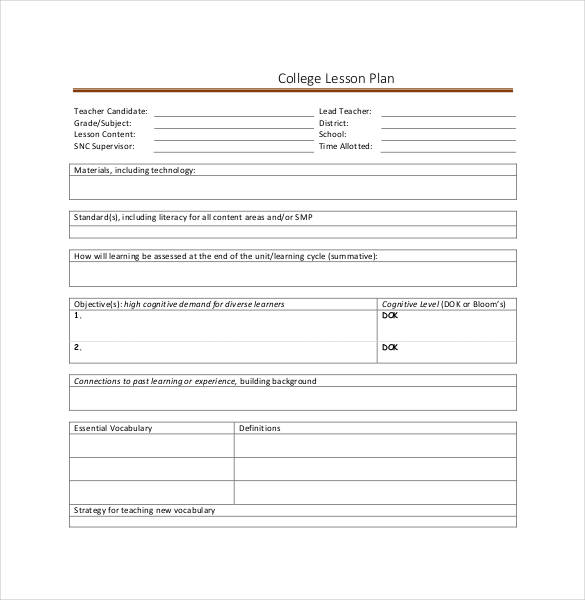
A well-crafted lesson plan is the cornerstone of effective teaching in higher education. It serves as a roadmap, guiding the professor through the learning objectives, activities, and assessments for a particular class session. While flexibility is crucial in the classroom, a solid lesson plan provides structure, ensures alignment with course goals, and helps manage time effectively. This document outlines a comprehensive lesson plan template specifically designed for college professors.
I. General Information
* **Course Name and Number:** Clearly identify the specific course for which the lesson plan is designed (e.g., Introduction to Psychology, PSY 101). * **Instructor Name:** The name of the professor responsible for teaching the lesson. * **Date and Time:** Indicate the date and time of the specific class session. This helps with organization and future reference. * **Classroom Location:** Specify the room number or virtual meeting link for the class. * **Topic:** A concise title that summarizes the main subject matter of the lesson (e.g., Cognitive Dissonance, Supply and Demand).
II. Learning Objectives
This section is arguably the most crucial part of the lesson plan. Learning objectives are specific, measurable, achievable, relevant, and time-bound (SMART) statements that describe what students should be able to do by the end of the lesson. * **Behavioral Verbs:** Use action verbs that are observable and measurable (e.g., define, explain, analyze, compare, evaluate, create). Avoid vague verbs like “understand” or “know.” * **Specificity:** Objectives should be clearly defined and leave no room for ambiguity. * **Alignment:** Ensure that the objectives align with the overall course learning outcomes and the specific content being covered in the lesson. * **Examples:** * “By the end of this lesson, students will be able to *define* cognitive dissonance and *provide* two examples of its manifestation in everyday life.” * “By the end of this lesson, students will be able to *analyze* the impact of supply and demand on market equilibrium.” * “By the end of this lesson, students will be able to *compare* and *contrast* different theories of motivation.”
III. Materials and Resources
This section lists all the materials and resources needed to deliver the lesson effectively. This includes both physical and digital resources. * **Required Readings:** List any assigned readings that students should complete before the class session. Include the specific chapters, articles, or online resources. * **Presentation Slides:** Indicate the availability of slides (e.g., PowerPoint, Keynote) and briefly outline the key topics covered in the slides. * **Handouts:** List any handouts, worksheets, or activity sheets that will be distributed to students. * **Technology:** Specify any technology required for the lesson, such as projectors, computers, internet access, software (e.g., statistical analysis software, online simulation tools), or clickers. * **Other Materials:** Include any other materials needed, such as whiteboards, markers, art supplies, or props.
IV. Lesson Activities
This section outlines the sequence of activities that will take place during the class session. It should include a detailed description of each activity, the estimated time allocation, and the rationale behind its inclusion. * **Introduction/Warm-up (5-10 minutes):** Begin with an engaging activity to capture students’ attention and activate prior knowledge. This could be a brief discussion, a question-and-answer session, a short video clip, or a quick poll. The goal is to pique students’ interest and prepare them for the lesson. * **Content Delivery (20-30 minutes):** This section focuses on presenting the core concepts and information of the lesson. This can be achieved through lectures, presentations, demonstrations, or guest speakers. * **Active Learning Strategies:** Incorporate active learning strategies to enhance student engagement and understanding. Examples include: * **Think-Pair-Share:** Pose a question to students, have them think about it individually, discuss it with a partner, and then share their ideas with the class. * **Small Group Discussions:** Divide students into small groups to discuss a specific topic or problem. * **Case Studies:** Present a real-world scenario and have students analyze it and propose solutions. * **Debates:** Organize a debate on a controversial topic related to the lesson. * **Role-Playing:** Have students act out different roles to understand concepts from different perspectives. * **Activities/Application (20-30 minutes):** This section provides opportunities for students to apply the concepts they have learned. Examples include: * **Problem-Solving Activities:** Present students with problems or scenarios that require them to use the concepts they have learned. * **Group Projects:** Assign group projects that allow students to collaborate and apply their knowledge to a larger task. * **Simulations:** Use simulations to allow students to experience real-world situations and make decisions based on their understanding of the concepts. * **Worksheets/Exercises:** Provide worksheets or exercises that allow students to practice applying the concepts. * **Wrap-up/Conclusion (5-10 minutes):** Summarize the key concepts covered in the lesson and provide a preview of the next lesson. This could involve a brief review, a question-and-answer session, or a concluding statement. Consider assigning a brief reflection activity or a “one-minute paper” where students summarize what they learned or pose remaining questions.
V. Assessment
This section describes how student learning will be assessed during the lesson. Assessment can be formative (ongoing feedback) or summative (evaluating overall learning). * **Formative Assessment:** Identify opportunities to assess student understanding throughout the lesson. Examples include: * **Questioning:** Asking questions during the lecture to gauge student comprehension. * **Observing Group Discussions:** Monitoring group discussions to assess student participation and understanding. * **Collecting Worksheets:** Collecting worksheets or exercises to review student work and provide feedback. * **Clicker Questions:** Using clickers to assess student understanding of key concepts. * **Summative Assessment:** Describe how student learning will be assessed at the end of the lesson or unit. This could include: * **Quizzes:** Administering a short quiz to assess student understanding of the key concepts. * **Exams:** Including questions related to the lesson on a larger exam. * **Projects:** Assessing student learning through projects or presentations. * **Papers:** Evaluating student understanding through written assignments.
VI. Differentiation/Accommodations
This section addresses how the lesson will be adapted to meet the needs of diverse learners, including students with disabilities or different learning styles. * **Provide Multiple Means of Representation:** Offer content in various formats (e.g., visual, auditory, kinesthetic) to cater to different learning styles. * **Provide Multiple Means of Engagement:** Offer choices in activities and assignments to increase student motivation and engagement. * **Provide Multiple Means of Action and Expression:** Allow students to demonstrate their understanding in different ways (e.g., written reports, presentations, projects). * **Accommodations for Students with Disabilities:** Document any specific accommodations required for students with disabilities, such as extended time on exams or alternative assignment formats. Consult with the disability services office for appropriate accommodations.
VII. Reflection and Evaluation
After teaching the lesson, take time to reflect on its effectiveness and identify areas for improvement. * **What went well?** Identify aspects of the lesson that were particularly successful and contributed to student learning. * **What could be improved?** Identify areas where the lesson could be improved, such as the pacing, activities, or assessment methods. * **What changes will you make next time?** Outline specific changes that will be implemented in future iterations of the lesson based on the reflection and evaluation. * **Student Feedback:** Consider collecting feedback from students to gain insights into their learning experiences and identify areas for improvement. By utilizing this comprehensive lesson plan template, college professors can create structured and engaging learning experiences that promote student success. Remember to adapt the template to fit the specific needs of your course and students, and to continuously reflect on and improve your teaching practices.
 500×729 college level lesson plan template simple template design from pictimilitude.com
  390×500 college lesson plan templates ms word google docs apple from www.template.net
  521×672 lesson plan template college instructors peterainsworth from www.peterainsworth.com
  880×1243 college teaching plan template google docs word apple pages from www.template.net
  585×500 lesson plan template college from pictimilitude.com
  600×988 lesson plan template college education from www.academia.edu
  1162×872 college lesson plan template template sample from template-sample.blogspot.com
  300×388 lesson plan template word editable image excel from www.101planners.com
  880×1243 college lesson plan template google docs word apple pages from www.template.net
  585×600 lesson plan templates excel premium templates from www.template.net
  673×800 teachers college lesson plan template simple template design from pictimilitude.com
  791×1024 teachers college lesson plan template from lesboucans.com


Lesson Plan Template For College Professors :
Lesson Plan Template For College Professors was posted in June 25, 2025 at 4:51 pm. If you wanna have it as yours, please click the Pictures and you will go to click right mouse then Save Image As and Click Save and download the Lesson Plan Template For College Professors Picture.. Don’t forget to share this picture with others via Facebook, Twitter, Pinterest or other social medias! we do hope you'll get inspired by SampleTemplates123... Thanks again! If you have any DMCA issues on this post, please contact us!