Campaign Kickoff Meeting Agenda
Campaign Kickoff Meeting Agenda: Igniting Success
A well-structured campaign kickoff meeting is the cornerstone of a successful marketing or business initiative. It’s the pivotal moment where the team aligns, understands the vision, and commits to contributing their expertise. This agenda provides a framework for a highly effective kickoff meeting, ensuring everyone leaves energized and ready to conquer the campaign goals.
I. Welcome and Introductions (10 minutes)
Start with a warm welcome and introductions. This might seem obvious, but setting a positive tone from the beginning is crucial. If the team is large, consider using a brief icebreaker or a quick round-robin to help everyone connect. Key points to cover:
- Welcome Address: A senior leader (CEO, CMO, or Project Sponsor) should provide a brief welcome address, emphasizing the importance of the campaign and expressing confidence in the team’s ability to succeed. This sets the stage and shows executive buy-in.
- Team Introductions: Allow each team member to briefly introduce themselves, including their role and relevant expertise for the campaign. This helps establish communication lines and clarifies who is responsible for what.
- Icebreaker (Optional): A quick icebreaker can help loosen the atmosphere and encourage interaction. Something simple like “Share one fun fact about yourself” or “What are you most excited about for this campaign?” can work wonders.
II. Campaign Overview and Objectives (20 minutes)
This section lays the foundation for the entire campaign. It’s vital to clearly articulate the “why” behind the campaign, its overall goals, and how it fits into the broader business strategy. Key elements include:
- Campaign Purpose: Clearly define the campaign’s purpose. What problem are we trying to solve? What opportunity are we trying to seize? This should be articulated in a concise and compelling manner.
- Target Audience: Deep dive into the target audience. Who are we trying to reach? What are their needs, pain points, and motivations? Include demographic data, psychographic profiles, and any relevant customer research.
- Campaign Goals & Objectives (SMART): Present the campaign’s goals and objectives using the SMART framework (Specific, Measurable, Achievable, Relevant, Time-bound). For example, “Increase website traffic by 20% in Q3 2024” or “Generate 100 qualified leads per month.”
- Key Performance Indicators (KPIs): Define the key performance indicators that will be used to track progress and measure success. These KPIs should be directly linked to the campaign objectives. Examples include conversion rates, click-through rates, cost per acquisition, and brand awareness scores.
III. Strategic Approach and Messaging (25 minutes)
This section details the “how” of the campaign – the specific strategies and tactics that will be employed to achieve the objectives. It also covers the key messaging that will resonate with the target audience. Key components:
- Marketing Channels: Outline the marketing channels that will be used (e.g., social media, email marketing, content marketing, paid advertising). Explain why these channels were chosen and how they will be integrated.
- Messaging Strategy: Present the core messaging that will be used throughout the campaign. This should be aligned with the target audience’s needs and motivations, and it should clearly communicate the value proposition of the product or service.
- Creative Assets: Showcase examples of creative assets, such as ad copy, website landing pages, email templates, and social media graphics. This provides a visual representation of the campaign’s look and feel.
- Competitive Analysis: Briefly discuss the competitive landscape. What are our competitors doing? How will we differentiate ourselves? Highlight our unique selling points and competitive advantages.
IV. Roles and Responsibilities (15 minutes)
Clear roles and responsibilities are essential for effective collaboration and accountability. This section clarifies who is responsible for each aspect of the campaign. Key considerations:
- Team Structure: Clearly outline the team structure and reporting lines. Who is the project manager? Who is responsible for content creation? Who is managing the budget?
- Individual Responsibilities: Define each team member’s specific responsibilities and deliverables. This helps avoid confusion and ensures that everyone knows what is expected of them.
- Communication Protocols: Establish clear communication protocols, including preferred channels (e.g., Slack, email, project management software) and meeting schedules. This ensures that everyone stays informed and connected.
- Decision-Making Process: Outline the decision-making process. Who has the authority to make decisions? How will conflicts be resolved? This helps streamline the decision-making process and avoid delays.
V. Timeline, Budget, and Resources (10 minutes)
This section provides a practical overview of the campaign’s timeline, budget, and available resources. Key elements:
- Campaign Timeline: Present a detailed timeline outlining key milestones, deadlines, and launch dates. Use a visual representation, such as a Gantt chart, to illustrate the timeline.
- Budget Allocation: Provide a breakdown of the campaign budget, including how funds will be allocated across different channels and activities.
- Resource Allocation: Identify the resources that will be available to the team, including personnel, software, tools, and equipment.
- Risk Assessment: Identify potential risks that could impact the campaign’s success and outline mitigation strategies.
VI. Q&A and Next Steps (10 minutes)
This is an open forum for team members to ask questions, clarify any uncertainties, and voice their concerns. It also provides an opportunity to outline the next steps. Key actions:
- Open Q&A Session: Allow ample time for questions and answers. Encourage team members to ask questions about any aspect of the campaign.
- Action Items: Clearly define the immediate next steps for each team member. This ensures that everyone knows what they need to do to move the campaign forward.
- Follow-Up Communication: Schedule a follow-up meeting to review progress and address any emerging issues.
- Document Sharing: Ensure that all relevant documents, including the campaign brief, timeline, budget, and roles and responsibilities, are shared with the team.
VII. Conclusion and Wrap-Up (5 minutes)
End the meeting on a high note, reiterating the campaign’s importance and expressing confidence in the team’s ability to achieve its goals. Thank everyone for their participation and commitment. This reinforces the positive message and leaves the team feeling motivated and ready to succeed.
By following this agenda, you can ensure that your campaign kickoff meeting is productive, engaging, and sets the stage for a successful campaign. Remember to tailor the agenda to the specific needs of your campaign and your team.
 1556×856 kick meeting agenda template from fellow.app
  390×450 kickoff meeting agenda template sample format from www.template.net
  1073×1452 write kickoff meeting agenda lucidchart blog from www.lucidchart.com
  1200×628 create kickoff meeting agenda projectmanagercom from www.projectmanager.com
  768×994 kickoff meeting agenda guide project management from studylib.net
768×994 kickoff meeting agenda guide project management from studylib.net 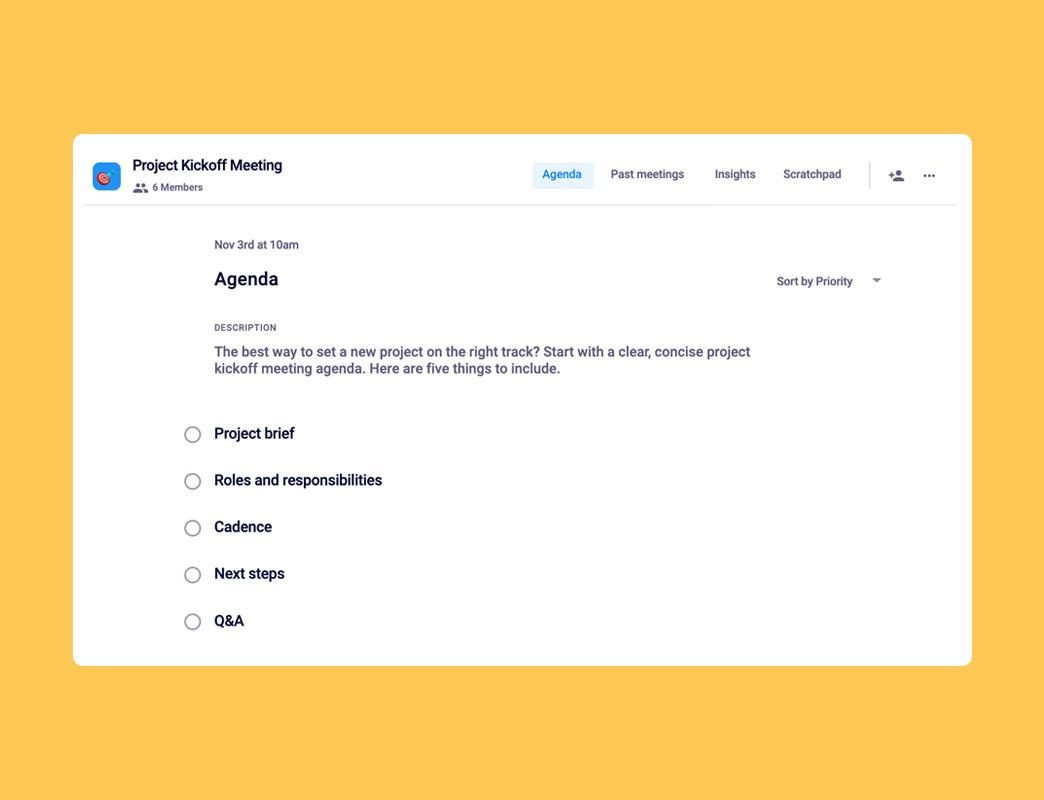 1044×800 project kickoff meeting agenda template hypercontext from hypercontext.com
  760×1352 kickoff meeting agenda create projectcubicle from www.projectcubicle.com
  728×943 kick meeting agenda from www.formsbirds.com
  768×1024 kick meeting agenda edit fill sign handypdf from handypdf.com



Campaign Kickoff Meeting Agenda :
Campaign Kickoff Meeting Agenda was posted in September 26, 2025 at 7:27 am. If you wanna have it as yours, please click the Pictures and you will go to click right mouse then Save Image As and Click Save and download the Campaign Kickoff Meeting Agenda Picture.. Don’t forget to share this picture with others via Facebook, Twitter, Pinterest or other social medias! we do hope you'll get inspired by SampleTemplates123... Thanks again! If you have any DMCA issues on this post, please contact us!