Apologetic Sample Letter For Absence
Crafting a compelling apology letter for absence requires a delicate balance of sincerity, responsibility, and professionalism. Whether your absence was due to illness, a personal emergency, or another unavoidable circumstance, the letter serves as an opportunity to mend potential damage to your professional reputation and demonstrate your commitment to your work. The following provides a comprehensive guide and sample letter designed to effectively convey your apologies and mitigate any negative consequences stemming from your absence.
Key Components of an Apology Letter for Absence
An effective apology letter for absence typically incorporates the following key elements:
- A Clear and Direct Apology: Begin by explicitly stating your apology for your absence. Avoid vague language or making excuses. Be direct and genuine in expressing your regret for any inconvenience or disruption your absence may have caused.
- A Concise Explanation: Briefly explain the reason for your absence. While honesty is important, avoid sharing overly personal or irrelevant details. Focus on providing a clear and concise explanation that provides context without dwelling on the specifics. If the reason for your absence is sensitive, you can simply state that it was due to a personal matter.
- Acknowledgement of Impact: Demonstrate your awareness of the impact your absence had on your colleagues, projects, or workflow. Acknowledge the challenges they may have faced in your absence and express your understanding of any difficulties that arose. This shows empathy and consideration for your team.
- Expression of Responsibility: Take full responsibility for your absence, even if the circumstances were beyond your control. Avoid shifting blame or making excuses. Owning your absence demonstrates accountability and integrity.
- Offer of Assistance: Offer to assist in catching up on any missed work or mitigating any outstanding issues. This demonstrates your commitment to your responsibilities and your willingness to make amends for your absence. Be specific about how you can contribute to getting things back on track.
- Reassurance and Commitment: Reassure your employer or colleagues that you are committed to your work and that you will take steps to prevent future absences, if possible. Emphasize your dedication to your responsibilities and your desire to contribute to the team’s success.
- Gratitude: Express your gratitude to your employer or colleagues for their understanding and support during your absence. Thank them for covering your responsibilities or for any assistance they provided.
- Professional Tone: Maintain a professional and respectful tone throughout the letter. Avoid using overly casual language or making jokes. A sincere and professional tone will convey your genuine remorse and commitment to your work.
Sample Apology Letter for Absence
[Your Name]
[Your Address]
[Your Phone Number]
[Your Email Address]
[Date]
[Recipient Name]
[Recipient Title]
[Company Name]
[Company Address]
Dear [Recipient Name],
Please accept my sincere apologies for my absence from work on [Date(s) of Absence]. I understand that my absence may have caused inconvenience and disruption, and I deeply regret any difficulties it may have created.
My absence was due to [Briefly explain the reason for your absence. Examples: a sudden illness, a family emergency, a personal matter requiring immediate attention]. I understand that this occurred at an inopportune time, and I am truly sorry for any added burden it placed on you and my colleagues.
I am aware that my absence impacted [Specifically mention the impact, e.g., the progress on the [Project Name] project, the coverage of customer inquiries, the completion of daily tasks]. I understand the importance of my responsibilities, and I am committed to catching up on any missed work and ensuring a smooth workflow going forward.
I take full responsibility for my absence, and I am prepared to do everything I can to mitigate any outstanding issues. I have already [Mention any steps you’ve taken to catch up, e.g., reviewed emails, contacted colleagues, prioritized urgent tasks]. I am also available to [Offer specific assistance, e.g., work overtime, assist with project tasks, provide additional support to colleagues].
I am committed to my work at [Company Name], and I value my role within the team. I assure you that I am taking steps to ensure that this type of absence does not occur again in the future. [If applicable, briefly mention the steps you are taking, e.g., seeking medical attention, making alternative arrangements for family care].
Thank you for your understanding and support during this time. I appreciate your patience and the efforts of my colleagues in covering my responsibilities. I am grateful for the opportunity to continue contributing to the success of the team.
Sincerely,
[Your Signature]
[Your Typed Name]
Tailoring the Sample Letter
While the sample letter provides a solid foundation, it’s crucial to tailor it to your specific situation. Consider the following when adapting the letter:
- Specificity: Provide specific details relevant to your absence and its impact. Avoid generic statements and demonstrate a clear understanding of the consequences.
- Honesty and Transparency: Be honest and transparent in your explanation, but avoid oversharing. Maintain a professional tone and focus on the essential information.
- Company Culture: Adapt the tone and language of the letter to align with your company’s culture. A more formal tone may be appropriate for traditional organizations, while a more informal tone may be acceptable in more relaxed environments.
- Severity of Absence: The length and detail of the letter should reflect the severity and duration of your absence. A brief absence may require a shorter, more concise letter, while a longer absence may necessitate a more detailed and comprehensive apology.
- Relationship with Recipient: Your relationship with the recipient may influence the tone and formality of the letter. A letter to your direct supervisor may be slightly more informal than a letter to a senior executive.
When Not to Apologize (or When to Consult HR)
In some rare cases, an apology letter might not be the appropriate course of action. Consult with your HR department before sending an apology letter if:
- Your absence was legally protected: If your absence was due to legally protected reasons such as FMLA leave, jury duty, or military service, an apology might not be necessary and could even be misconstrued. HR can advise on the appropriate communication protocol.
- Your absence was due to a workplace issue: If your absence stemmed from a workplace conflict, harassment, or discrimination, an apology letter might not be the right approach. Instead, focus on documenting the incident and reporting it to HR.
- You are unsure of the company policy: If you are unsure about your company’s policy regarding absences, consult with HR before sending an apology letter. They can provide guidance on the appropriate procedures and communication channels.
In conclusion, a well-crafted apology letter for absence can effectively mitigate any negative consequences and demonstrate your commitment to your work. By incorporating the key components outlined above and tailoring the letter to your specific situation, you can convey your sincere remorse and reassure your employer and colleagues of your dedication to your responsibilities.
 585×600 leave absence letter samples templates from www.sampletemplates.com
 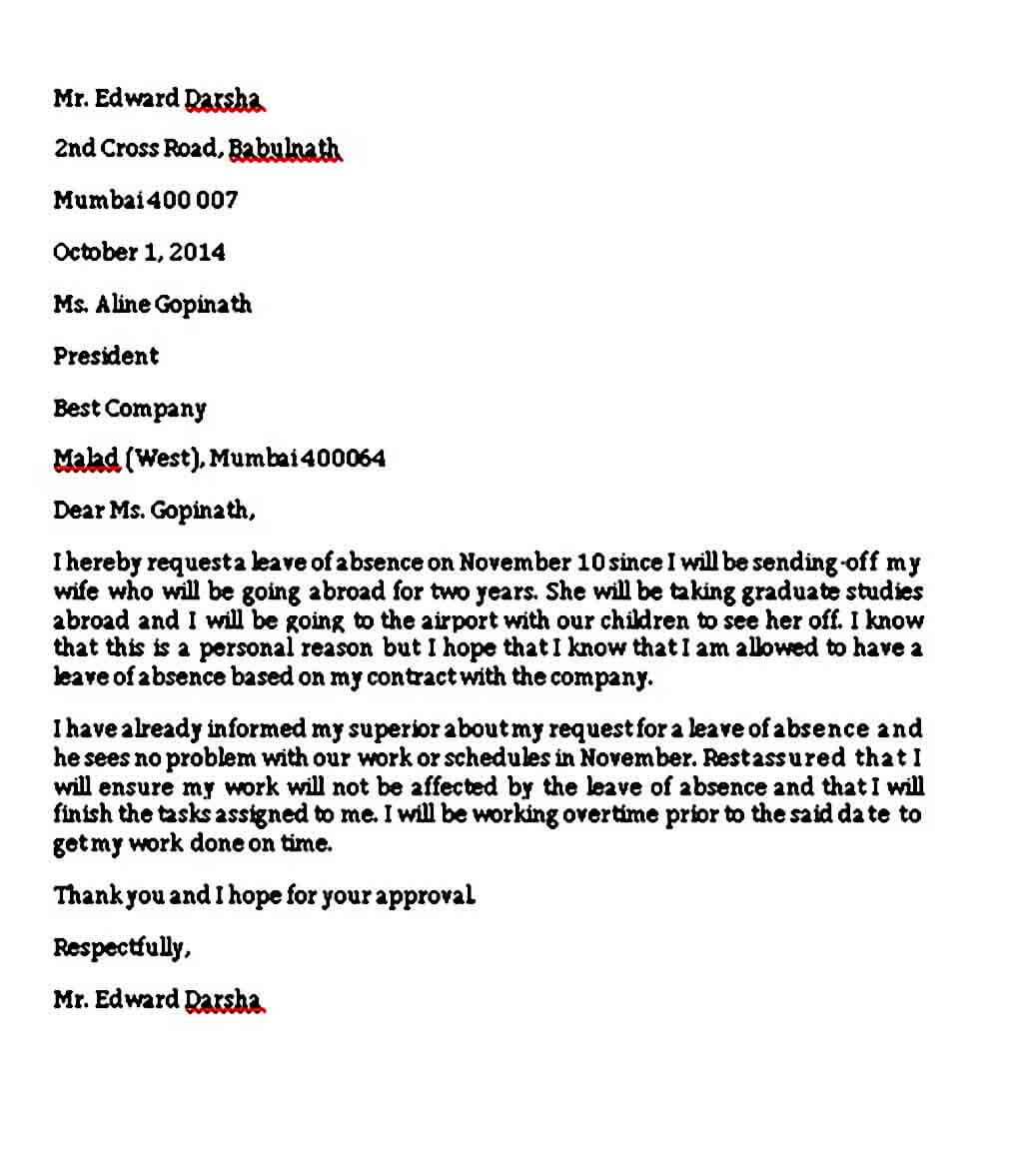 1013×1177 sample leave absence letter proper format word mous from moussyusa.com
  1275×1650 leave absence letters work school templatelab from templatelab.com
  765×1044 apologetic letter siddlebuns deviantart from www.deviantart.com
  1280×720 apology letter absent notice sample letter from www.lettersinenglish.com
  737×1024 apology letter teacher homework letter template from bestlettertemplate.com
  676×955 fossil apologetic letter from whatafishthinks.blogspot.com
  700×724 explanation letter sample absence letter explanation format from psittacula7.blogspot.com
  772×995 leave absence templates markmeckler template design from markmeckler.net


Apologetic Sample Letter For Absence :
Apologetic Sample Letter For Absence was posted in May 17, 2025 at 6:48 am. If you wanna have it as yours, please click the Pictures and you will go to click right mouse then Save Image As and Click Save and download the Apologetic Sample Letter For Absence Picture.. Don’t forget to share this picture with others via Facebook, Twitter, Pinterest or other social medias! we do hope you'll get inspired by SampleTemplates123... Thanks again! If you have any DMCA issues on this post, please contact us!