Sample Letter Of Explanation For Audit
Sample Letter of Explanation for Audit
When facing an audit, a clear and concise letter of explanation can be crucial in resolving discrepancies and demonstrating compliance. This document provides a sample letter and guidance on crafting an effective explanation.
Sample Letter of Explanation
[Your Name/Company Name]
[Your Address]
[Your Phone Number]
[Your Email Address]
[Date]
[Auditor’s Name]
[Auditing Company Name]
[Auditor’s Address]
Subject: Explanation Regarding [Specific Issue/Transaction/Discrepancy] Identified in Audit [Audit Name/Period]
Dear [Auditor’s Name],
This letter is in response to your inquiry regarding [Specifically identify the issue raised in the audit]. We understand your need for clarification on this matter, and we appreciate the opportunity to provide a detailed explanation.
[Clearly and concisely explain the situation. The explanation should be factual, avoid emotional language, and focus on providing relevant details. Break down complex situations into smaller, understandable parts. Here are some examples based on different potential audit findings:]
Example 1: Discrepancy in Inventory Count
Upon reviewing the inventory count discrepancy reported in your audit, we have identified the following explanation. The discrepancy of [Quantity] units of [Item Name] can be attributed to [Reason, e.g., a data entry error during the physical count conducted on [Date]]. Specifically, [Detail the error, e.g., the count for location A was inadvertently entered into the system as the count for location B]. Supporting documentation, including the original count sheet and the corrected data entry log, are attached as Exhibits A and B, respectively. We have implemented a revised data entry process to minimize the risk of future errors. This includes mandatory verification of data entry by a second employee and a training session for all inventory personnel on the new procedure.
Example 2: Unsubstantiated Expense Claim
Regarding the expense claim for [Amount] submitted by [Employee Name] on [Date] for [Purpose of Expense], we acknowledge that the original documentation submitted did not fully meet the required standards. The expense was incurred for [Purpose of Expense], which was directly related to [Business Activity, e.g., a client meeting to discuss the renewal of contract X]. The original receipt was misplaced by the employee. However, we have located [Alternative Documentation, e.g., a credit card statement showing the transaction and an email confirming the meeting] to substantiate the expense. Copies of these documents are attached as Exhibits C and D. We have also reminded all employees of the company’s expense reimbursement policy and the importance of retaining and submitting original receipts. A formal reminder was sent via email on [Date], a copy of which is attached as Exhibit E.
Example 3: Variance in Revenue Recognition
Concerning the variance in revenue recognition for the period ending [Date], as highlighted in your audit, the difference of [Amount] is due to [Explanation, e.g., a change in accounting method for recognizing revenue from subscription services]. This change was implemented on [Date] following [Reason for Change, e.g., a review of accounting standards and consultation with our external accounting firm]. Prior to [Date], revenue was recognized [Previous Method]. The new method recognizes revenue [Current Method]. This change was necessary to ensure compliance with [Specific Accounting Standard, e.g., ASC 606]. Documentation supporting this change, including the internal memo authorizing the change and the consultation report from our accounting firm, are attached as Exhibits F and G.
[Continue with your explanation, providing specific details and relevant documentation. Always be factual and avoid making excuses.]
We believe this explanation, along with the attached documentation, provides a clear understanding of [Specific Issue/Transaction/Discrepancy]. We are committed to maintaining accurate and transparent financial records, and we appreciate your diligence in identifying this area for review.
We are available to discuss this matter further at your convenience. Please do not hesitate to contact us if you require any additional information or clarification.
Sincerely,
[Your Name/Title]
Attachments:
Exhibit A: [Description of Document]
Exhibit B: [Description of Document]
Exhibit C: [Description of Document]
Exhibit D: [Description of Document]
Exhibit E: [Description of Document]
Exhibit F: [Description of Document]
Exhibit G: [Description of Document]
Key Elements of an Effective Explanation Letter
* Professional Tone: Maintain a professional and respectful tone throughout the letter. Avoid accusatory language or blaming others. * Clarity and Conciseness: Be clear and concise in your explanation. Use simple language and avoid jargon. Get straight to the point without unnecessary preamble. * Specific Details: Provide specific details about the issue. Include dates, amounts, names, and any other relevant information. The more specific you are, the better the auditor can understand the situation. * Factual Information: Base your explanation on facts, not assumptions or opinions. Double-check your information to ensure accuracy. * Supporting Documentation: Include any supporting documentation that can help to substantiate your explanation. This may include invoices, receipts, contracts, bank statements, emails, or other relevant records. Clearly label each document as an exhibit. * Address the Auditor’s Concerns: Directly address the specific concerns raised by the auditor. Don’t try to avoid the issue or provide a vague response. * Acknowledge Any Errors: If an error was made, acknowledge it and explain what steps have been taken to prevent similar errors from occurring in the future. * Focus on Solutions: Instead of dwelling on the problem, focus on the solutions you have implemented or plan to implement to address the issue. * Offer Assistance: Offer to provide additional information or assistance as needed. This shows that you are cooperative and committed to resolving the issue. * Review and Proofread: Before sending the letter, carefully review and proofread it for any errors in grammar, spelling, or punctuation. Ask a colleague to review it as well. * Timely Response: Respond to the auditor’s inquiry as quickly as possible. Delays can create suspicion and make it more difficult to resolve the issue.
Common Mistakes to Avoid
* Being Defensive: Avoid being defensive or argumentative. This will only make the auditor more suspicious. * Providing Incomplete Information: Provide all the information that is requested and any other relevant information that you think might be helpful. * Making Excuses: Avoid making excuses or blaming others for the error. Take responsibility for your actions. * Ignoring the Issue: Ignoring the auditor’s inquiry will not make the problem go away. It will only make it worse. * Using Jargon: Avoid using technical jargon that the auditor may not understand. By following these guidelines and using the sample letter as a template, you can create an effective explanation letter that will help you to resolve audit discrepancies and demonstrate compliance. Remember to tailor the letter to the specific circumstances of your situation and always be honest and transparent in your communication with the auditor.
 1200×1697 sample audit letter client letter template collection from simpleartifact.com
  390×505 audit letter templates word from www.template.net
  390×505 audit findings letter templates ms word from www.template.net
 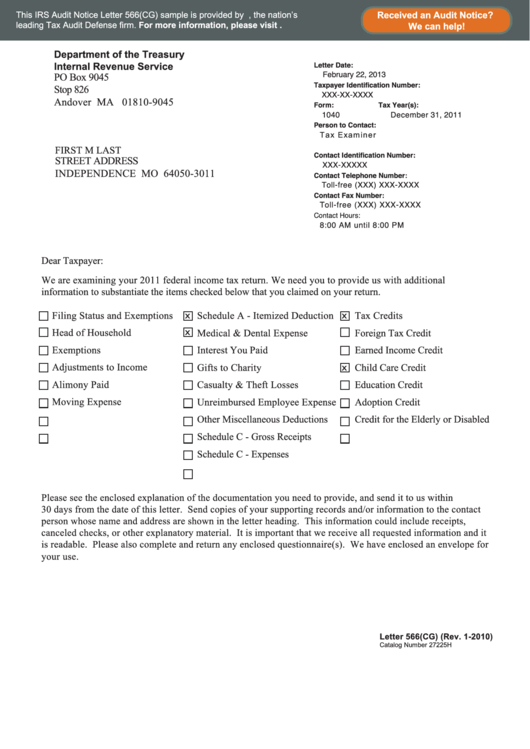 530×749 audit letter template printable from www.formsbank.com
  1500×1941 sample audit request letter lodi letter from lodiletter.blogspot.com
  768×1049 audit letter received usual tennessee from www.tennesseefisherhouse.org
  1200×1552 state audit letter pg shelby city health department from shelbycityhealth.org



Sample Letter Of Explanation For Audit :
Sample Letter Of Explanation For Audit was posted in November 30, 2025 at 10:47 pm. If you wanna have it as yours, please click the Pictures and you will go to click right mouse then Save Image As and Click Save and download the Sample Letter Of Explanation For Audit Picture.. Don’t forget to share this picture with others via Facebook, Twitter, Pinterest or other social medias! we do hope you'll get inspired by SampleTemplates123... Thanks again! If you have any DMCA issues on this post, please contact us!