Music Lesson Plan Template For Beginners
Beginner Music Lesson Plan Template: A Comprehensive Guide
Creating effective and engaging music lessons for beginners is crucial for fostering a lifelong love of music. A well-structured lesson plan serves as a roadmap, ensuring that you cover essential concepts, maintain student engagement, and track their progress. This template provides a framework for designing beginner music lessons, adaptable to various instruments and age groups.
Template Structure and Elements
A comprehensive beginner music lesson plan should include the following sections:
I. Lesson Information
- Date: The date the lesson is scheduled.
- Time: The duration of the lesson (e.g., 30 minutes, 60 minutes).
- Student Name(s): Name(s) of the student(s) being taught. Indicate if it’s a private lesson or a group session.
- Instrument: The instrument being taught (e.g., piano, guitar, voice).
- Student Level: Beginner level (specify if they are absolute beginners or have some minimal prior exposure).
II. Learning Objectives
Clearly define what the student should be able to do by the end of the lesson. Objectives should be SMART (Specific, Measurable, Achievable, Relevant, and Time-bound). Examples:
- “The student will be able to correctly identify and play notes C, D, and E on the piano.”
- “The student will be able to maintain a steady beat using clapping for a simple four-bar rhythm.”
- “The student will be able to sing a simple melody in tune, maintaining proper posture.”
III. Materials
List all the materials needed for the lesson. This ensures you are prepared and prevents interruptions during the session. Examples:
- Instrument (piano, guitar, etc.)
- Music stand
- Sheet music (beginner level)
- Metronome
- Pencil and eraser
- Flashcards (with notes, rhythms, or musical terms)
- Whiteboard or markerboard (optional, for visual aids)
IV. Lesson Procedure
This is the heart of the lesson plan, outlining the activities and their sequence. Break it down into distinct phases:
A. Warm-up (5-10 minutes)
- Purpose: Prepare the student physically and mentally for the lesson. This can include:
- Physical Warm-up: Stretching exercises (especially for hands and arms), breathing exercises (for vocalists).
- Technical Warm-up: Simple exercises related to the instrument (e.g., scales, arpeggios, finger exercises).
- Aural Warm-up: Singing scales, identifying intervals, clapping rhythms.
B. Review (5-10 minutes)
- Purpose: Reinforce concepts from the previous lesson and assess student retention.
- Activities: Review previously learned notes, rhythms, or songs. Ask the student to demonstrate concepts or answer questions.
C. Introduction of New Material (15-20 minutes)
- Purpose: Introduce new concepts or skills in a clear and engaging manner.
- Activities:
- Explanation: Clearly explain the new concept using simple language and visual aids.
- Demonstration: Demonstrate the concept on the instrument or vocally.
- Practice: Guide the student through exercises to practice the new concept. Break down the material into small, manageable steps.
- Example: Introducing Note Reading
- Explanation: “Today we’re going to learn how to read notes on the staff. The staff has five lines and four spaces, and each line and space represents a different note.” Show a visual representation of the staff.
- Demonstration: Point to the lines and spaces on the staff and identify the notes (e.g., “This is the line for E, this is the space for F”). Play the notes on the instrument.
- Practice: Use flashcards with notes on them. Ask the student to identify the note and play it on the instrument. Start with simple notes like C, D, and E.
D. Application (10-15 minutes)
- Purpose: Apply the new material in a musical context, such as playing a simple song or creating a short improvisation.
- Activities:
- Simple Song: Choose a beginner-friendly song that incorporates the new concepts learned.
- Improvisation: Encourage the student to improvise a simple melody or rhythm using the new material.
E. Cool-Down (5 minutes)
- Purpose: Review the lesson’s key concepts and provide positive reinforcement.
- Activities:
- Recap: Ask the student to summarize what they learned during the lesson.
- Assignment: Assign practice exercises or a song to work on before the next lesson.
- Encouragement: Provide positive feedback and encouragement. Highlight the student’s progress and effort.
V. Assessment
Describe how you will assess the student’s understanding and progress during the lesson. This can include:
- Observation: Observe the student’s technique, posture, and musicality.
- Performance: Evaluate the student’s ability to play or sing the material accurately and musically.
- Questioning: Ask questions to assess their understanding of musical concepts.
- Self-Assessment: Encourage the student to reflect on their own performance and identify areas for improvement.
VI. Modifications and Differentiation
Plan for potential modifications to the lesson based on the student’s individual needs and learning style. Consider:
- Slower Pace: If the student is struggling with a concept, slow down the pace and provide more repetition.
- Alternative Activities: If the student is not engaged with a particular activity, offer an alternative that is more appealing.
- Visual Aids: Use visual aids to help the student understand complex concepts.
- Simplified Material: Simplify the material if the student is overwhelmed.
- Extended Challenges: Provide extra challenges for students who are progressing quickly.
VII. Notes and Reflection
After the lesson, take a few minutes to reflect on what went well and what could be improved. This will help you refine your teaching methods and create more effective lesson plans in the future.
- Student Progress: Note the student’s progress and areas where they need more support.
- Lesson Effectiveness: Evaluate the effectiveness of the lesson plan and identify areas for improvement.
- Future Plans: Plan for future lessons based on the student’s progress and needs.
Example Lesson Plan Snippet (Piano Beginner)
Lesson Information: * Date: 2024-02-29 * Time: 30 minutes * Student Name: Jane Doe * Instrument: Piano * Student Level: Absolute Beginner Learning Objectives: * The student will be able to identify and play Middle C on the piano. * The student will be able to play Middle C five times in a row with correct finger placement. Materials: * Piano * Music Stand * Pencil * Finger number chart Lesson Procedure: * Warm-up: Gentle hand stretches (2 minutes) * Review: Naming the piano keys (2 minutes) * Introduction: Identifying Middle C on the keyboard. Explain its importance and how it’s located in relation to other keys. Demonstrate proper finger placement (finger 1 – thumb). (10 minutes) * Application: Student plays Middle C five times repeatedly. Provide correction and encouragement. (10 minutes) * Cool-Down: Review what was learned. Assign practice: Play Middle C 10 times daily. (6 minutes) Assessment: Observation of finger placement and ability to locate/play Middle C accurately. Modifications: If struggling to find Middle C, use a sticker to mark the key temporarily. Notes: Jane had some difficulty initially locating Middle C but responded well to the sticker. Remind her of finger placement next lesson.
Conclusion
This template provides a structured framework for creating engaging and effective beginner music lessons. Remember to adapt it to the specific needs and learning style of each student. Consistency and positive reinforcement are key to fostering a lifelong love of music!
 697×933 lesson plan template from pictimilitude.com
  706×675 lesson plan template melodysouporg from melodysoup.org
  585×600 lesson plan templates excel premium templates from www.template.net
  350×259 lesson plan template fruity tpt from www.teacherspayteachers.com
  350×350 lesson plan template market teachers pay teachers from www.teacherspayteachers.com
 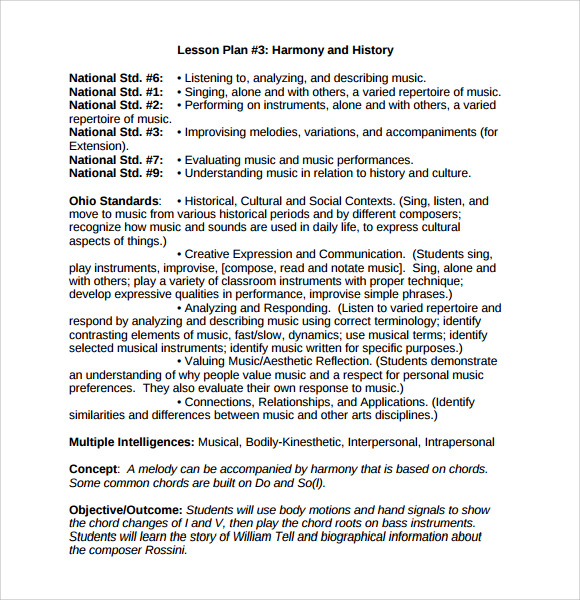 580×600 sample lesson plan templates ms word from www.sampletemplates.com
  770×1024 plan template excel fill printable fillable blank pdffiller from www.pdffiller.com
  585×700 sample lesson plan templates psd from www.sampletemplates.com


Music Lesson Plan Template For Beginners :
Music Lesson Plan Template For Beginners was posted in June 7, 2025 at 3:50 pm. If you wanna have it as yours, please click the Pictures and you will go to click right mouse then Save Image As and Click Save and download the Music Lesson Plan Template For Beginners Picture.. Don’t forget to share this picture with others via Facebook, Twitter, Pinterest or other social medias! we do hope you'll get inspired by SampleTemplates123... Thanks again! If you have any DMCA issues on this post, please contact us!