GMAT Study Plan Template
GMAT Study Plan Template: Your Roadmap to Success
The GMAT is a significant hurdle in the path to business school. A structured study plan is not just recommended, it’s essential. This template provides a framework you can adapt to create a personalized and effective strategy for tackling the exam.
I. Assessment and Goal Setting
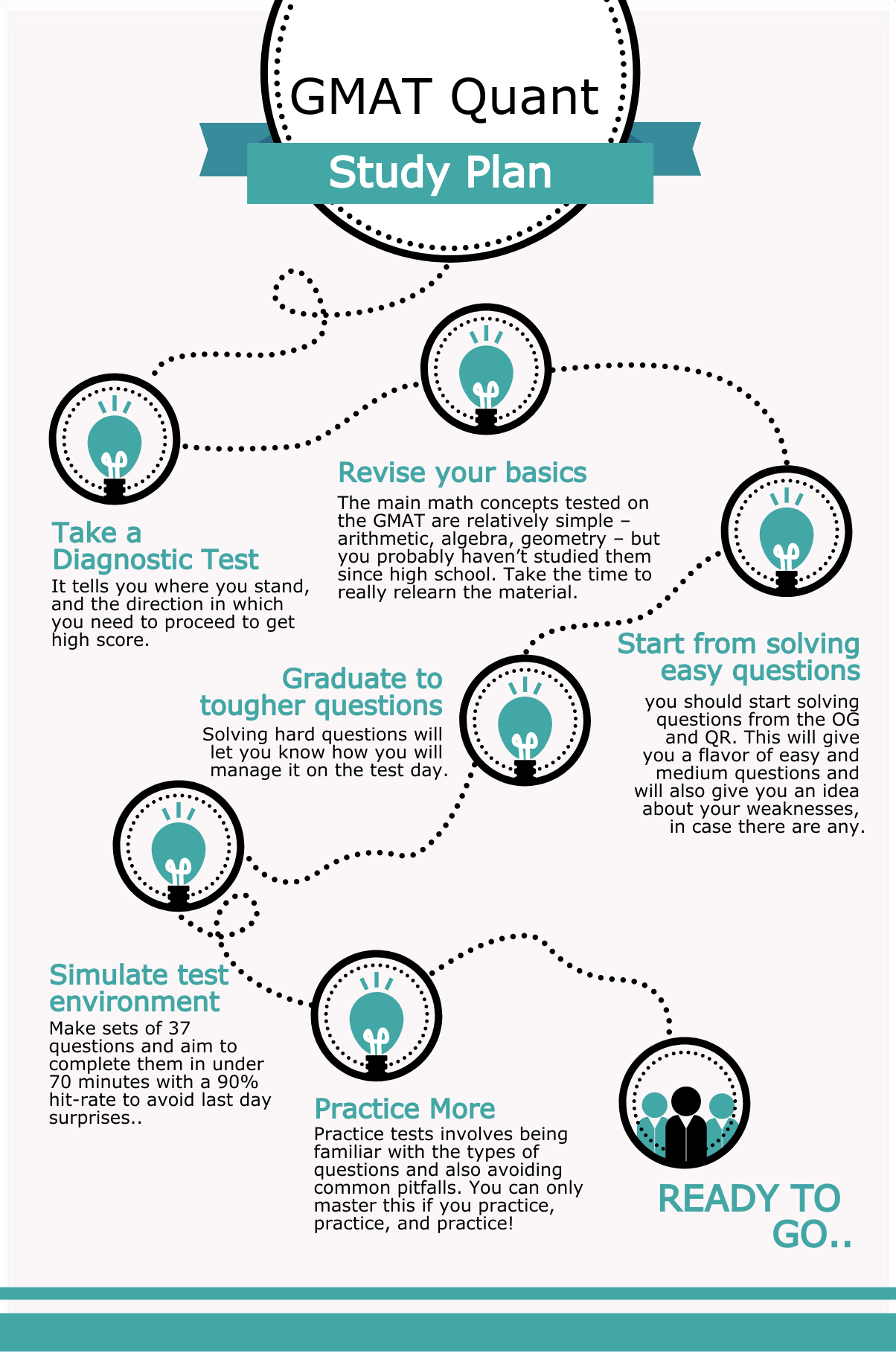
1. Diagnostic Test: Know Your Starting Point
Before diving into any material, take a full-length GMAT practice test under realistic exam conditions. This serves as your baseline and reveals your strengths and weaknesses. Focus on understanding the following aspects:
- Overall Score: This gives you a general idea of your current level.
- Section Scores (Quant and Verbal): Pinpoint which section needs more attention.
- Question Types: Identify specific question types (e.g., Sentence Correction, Data Sufficiency) that consistently challenge you.
- Timing: Assess if you’re running out of time on any section.
Analyze your mistakes. Did you lack the knowledge to solve the problem? Did you make careless errors? Did you run out of time? This analysis dictates where you’ll focus your efforts.
2. Define Your Target Score: Aim High, But Be Realistic
Research the average GMAT scores for the business schools you’re targeting. Add a buffer to your target score to increase your chances of acceptance. Consider your academic background and work experience when setting your goal. Someone with a strong quantitative background might naturally excel in the Quant section, while someone with excellent communication skills might find the Verbal section easier. Be ambitious but also realistic.
3. Timeline: Plan for Adequate Preparation
The amount of time you need to prepare depends on your diagnostic score, target score, and availability. A common guideline is 2-3 months for dedicated study, but this can vary significantly. Factor in work, family, and other commitments. Create a realistic weekly schedule that you can consistently follow. Consistency is more crucial than cramming.
II. Building Your Study Schedule
1. Content Review: Mastering the Fundamentals
Based on your diagnostic test results, prioritize content areas where you’re weak. Use a variety of resources, such as GMAT prep books, online courses, and tutoring services. Choose resources that align with your learning style. Some people learn best through reading, while others prefer video lectures or interactive exercises.
a. Quant:
- Arithmetic: Fractions, decimals, percentages, ratios, and proportions.
- Algebra: Linear equations, quadratic equations, inequalities, and word problems.
- Geometry: Lines, angles, triangles, circles, and coordinate geometry.
- Data Sufficiency: Mastering this question type requires understanding the logic of sufficiency, not just solving the problems.
b. Verbal:
- Reading Comprehension: Active reading techniques, identifying main ideas, and understanding author’s purpose.
- Critical Reasoning: Identifying assumptions, inferences, and arguments.
- Sentence Correction: Grammar rules, style, and idiom usage.
2. Practice Questions: Apply What You Learn
Practice questions are crucial for solidifying your understanding and improving your timing. After reviewing a specific topic, immediately practice related questions. Use official GMAT practice questions whenever possible, as they accurately reflect the exam’s difficulty and style. Keep track of your progress and identify areas where you’re still struggling.
3. Full-Length Practice Tests: Simulate the Exam Experience
Take full-length practice tests regularly (at least once a week) to simulate the real exam environment. This helps you build stamina, manage your time effectively, and become comfortable with the testing format. Analyze your performance after each test and identify areas for improvement. Pay attention to your timing, accuracy, and mental state during the test.
4. Review and Analysis: Learn from Your Mistakes
Don’t just focus on getting the right answers; understand why you got the wrong answers. Analyze your mistakes carefully and identify the underlying reasons. Did you misread the question? Did you make a careless calculation error? Did you lack the knowledge to solve the problem? Learn from your mistakes and adjust your study plan accordingly. This is the most important part of the process.
III. Study Plan Template Outline
This is a general outline; adjust it based on your needs:
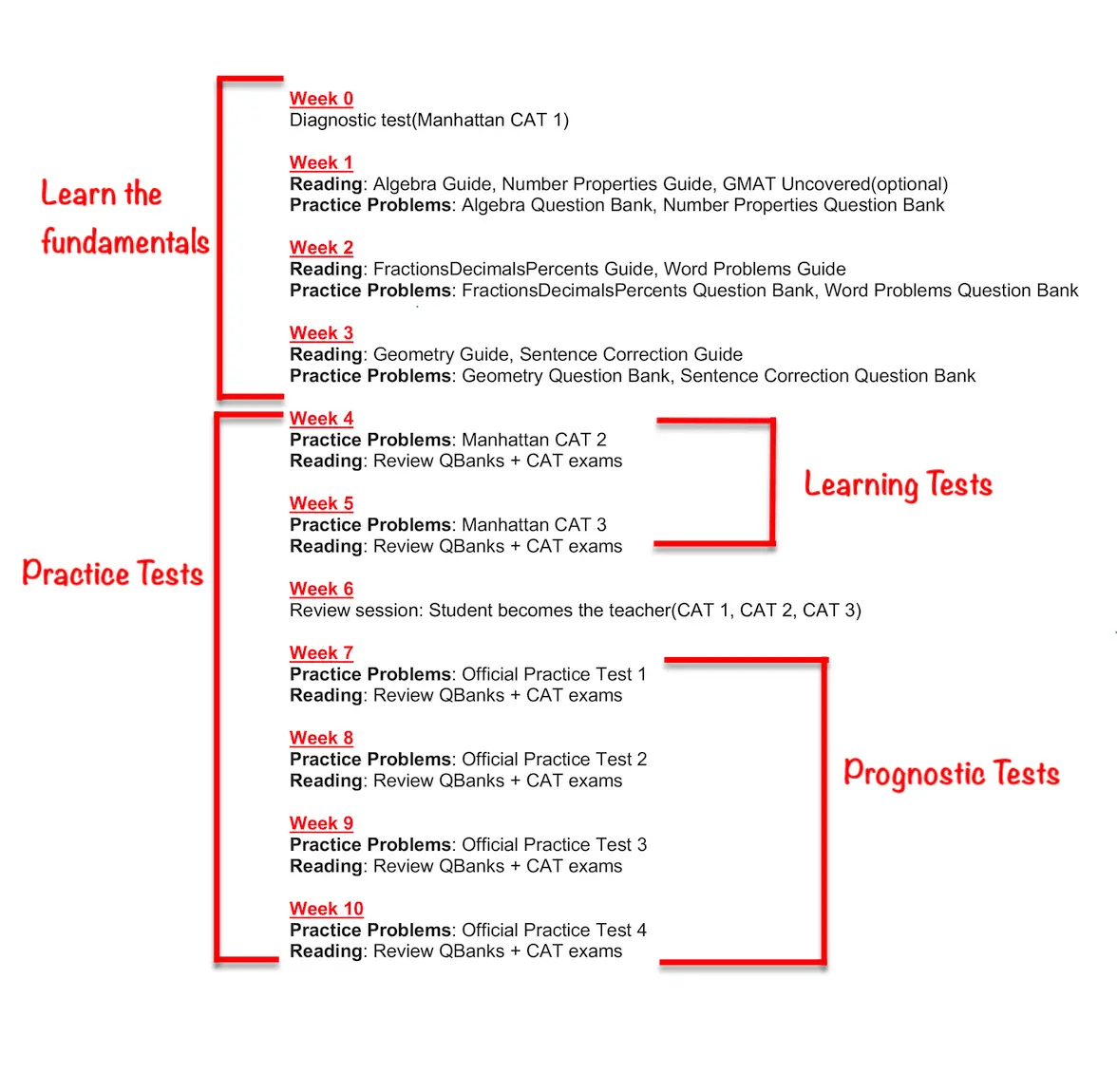
* Week 1-2: Diagnostic and Foundation Building: Full diagnostic test, identify weak areas, begin content review of foundational concepts (arithmetic, basic algebra, grammar basics). * Week 3-6: Targeted Content Review and Practice: Dedicate specific days to Quant and Verbal, focus on weaker areas identified in the diagnostic, practice with official questions after each topic. Introduce Integrated Reasoning questions. * Week 7-9: Advanced Concepts and Timing: Tackle more challenging topics, work on improving timing for each section, take full-length practice tests every week. * Week 10-12: Refinement and Strategy: Focus on your weakest areas based on practice test results, refine your test-taking strategies, practice with official GMATPrep software, simulate exam conditions. * Final Week: Review and Relaxation: Review key concepts and formulas, take a light practice test, focus on relaxing and getting adequate rest before the exam.
IV. Essential Tips for Success
* Consistency is Key: Stick to your study schedule as much as possible. * Use Official Materials: Official GMAT practice questions and tests are the most accurate reflection of the exam. * Manage Your Time: Practice pacing yourself during practice tests. * Take Breaks: Avoid burnout by taking regular breaks during your study sessions. * Stay Positive: Maintain a positive attitude and believe in yourself. * Seek Help: Don’t hesitate to ask for help from tutors, classmates, or online forums. * Simulate Test Day: Practice under real exam conditions, including timing and distractions.
V. Adapting the Template
This template is a starting point. Tailor it to your specific needs and learning style. Some individuals might benefit from a more structured approach, while others prefer a more flexible schedule. Experiment with different study methods and resources to find what works best for you. Regularly review and adjust your plan based on your progress and performance. The most important thing is to create a plan that you can consistently follow and that helps you achieve your target score.
 748×288 gmat study plan optimize preparation prep zone academy gmat from gmat.edu.sg
  1799×1399 day gmat study plan from www.myguruedge.com
  540×520 recording gmat strategy session from e-gmat.com
  1176×1150 day test prep gmat blog gmat study plan from www.alldaytestprep.com
  1204×1818 gmat quantitative study plan ace high score from byjus.com
  1351×702 working professionals gmat study plan balancing work gmat from e-gmat.com
  2400×1647 gmat study plan ttp gmat blog from blog.targettestprep.com
  1200×1200 month gmat study plan magoosh study resources from magoosh.com
  758×480 gmat study plan sample schedules prepscholar gmat from www.prepscholar.com
  636×427 gmat month study plan gmat from www.manhattanprep.com
  1000×563 study gmat months study plan gmat gmat from e-gmat.com
  0 x 0 gmat study plans gmat study guides from magoosh.com
  1024×938 gmat study plan benefits study plans score improvement from e-gmat.com


GMAT Study Plan Template :
GMAT Study Plan Template was posted in November 23, 2025 at 1:59 pm. If you wanna have it as yours, please click the Pictures and you will go to click right mouse then Save Image As and Click Save and download the GMAT Study Plan Template Picture.. Don’t forget to share this picture with others via Facebook, Twitter, Pinterest or other social medias! we do hope you'll get inspired by SampleTemplates123... Thanks again! If you have any DMCA issues on this post, please contact us!
Related For GMAT Study Plan Template
Project Plan Template For Website D
Website Development Project Plan Template Website Development Project PlanWeekly Lesson Plan Template For Tea
Weekly Lesson Plan Template for Teachers Weekly Lesson PlanBusiness Plan Template For Food Tru
Food Truck Business Plan Template Food Truck Business Plan