Email Marketing Plan Template
Email Marketing Plan Template: A Comprehensive Guide
An email marketing plan template serves as a roadmap for your email campaigns, ensuring they’re strategic, targeted, and ultimately successful. It’s not just about sending emails; it’s about crafting a journey for your subscribers that nurtures relationships and drives conversions. This guide provides a detailed template and explains how to effectively use it.
I. Executive Summary
Start with a brief overview of your email marketing goals and objectives. This should be a concise summary outlining what you aim to achieve with your email campaigns. Include key metrics like subscriber growth, open rates, click-through rates (CTR), conversion rates, and revenue goals. Briefly mention the target audience and the overall strategy you’ll employ.
II. Goals and Objectives
Clearly define your SMART (Specific, Measurable, Achievable, Relevant, Time-bound) goals. Examples include:
- Increase Website Traffic: Drive more visitors to your website through email campaigns. (e.g., Increase website traffic by 15% in Q4.)
- Generate Leads: Capture new leads by offering valuable content in exchange for email addresses. (e.g., Generate 500 new leads per month through lead magnet downloads.)
- Boost Sales: Promote products or services and increase sales conversions. (e.g., Increase online sales by 10% in the next quarter.)
- Improve Customer Retention: Engage existing customers and encourage repeat purchases. (e.g., Increase customer retention rate by 5% within six months.)
- Build Brand Awareness: Reinforce your brand message and values through consistent and engaging content. (e.g., Increase brand mentions on social media by 20% through email-driven campaigns.)
III. Target Audience
Identify your ideal customer profile. Create detailed buyer personas, including demographics, interests, pain points, and online behavior. Understanding your audience is crucial for tailoring your messaging and content. Consider segmenting your audience based on factors like:
- Demographics: Age, gender, location, income.
- Interests: Hobbies, passions, topics they care about.
- Purchase History: Past purchases, frequency of purchases, average order value.
- Engagement Level: How often they open and click on your emails.
- Lifecycle Stage: Where they are in the customer journey (e.g., prospect, new customer, loyal customer).
IV. Email List Management
Outline your strategy for building and maintaining a healthy email list. This includes:
- Opt-in Methods: How you’ll collect email addresses (e.g., website forms, lead magnets, events). Emphasize double opt-in to ensure subscribers genuinely want to receive your emails.
- Segmentation Strategies: How you’ll segment your list based on demographics, behavior, and preferences.
- List Cleaning: Regularly remove inactive subscribers to improve deliverability and engagement rates.
- Compliance: Ensure compliance with email marketing regulations like GDPR, CCPA, and CAN-SPAM Act.
V. Content Strategy
Develop a content calendar outlining the types of emails you’ll send and when. Consider a mix of:
- Welcome Emails: Introduce your brand and welcome new subscribers.
- Newsletters: Share company updates, industry news, and valuable content.
- Promotional Emails: Promote products, services, and special offers.
- Educational Emails: Provide valuable information and tutorials related to your industry.
- Transactional Emails: Confirmation emails, shipping updates, and password resets.
- Re-engagement Emails: Target inactive subscribers to encourage them to re-engage with your brand.
For each email type, define the purpose, target audience, subject line, and call to action (CTA). Ensure your content is relevant, engaging, and valuable to your subscribers.
VI. Email Design and Optimization
Focus on creating visually appealing and mobile-friendly email templates. Consider:
- Branding: Maintain consistent branding across all your emails.
- Mobile Responsiveness: Ensure your emails look good on all devices.
- Clear Layout: Use a clean and easy-to-read layout.
- Compelling Visuals: Incorporate high-quality images and videos.
- Strong Call to Actions: Use clear and concise CTAs that encourage action.
A/B test different design elements (e.g., subject lines, CTAs, images) to optimize your email performance.
VII. Email Marketing Automation
Leverage email automation to streamline your marketing efforts and deliver personalized experiences. Consider setting up:
- Welcome Series: A series of automated emails to welcome new subscribers.
- Lead Nurturing Campaigns: A series of emails to nurture leads and guide them through the sales funnel.
- Abandoned Cart Emails: Remind customers about items left in their shopping carts.
- Post-Purchase Emails: Follow up with customers after a purchase to thank them and encourage repeat business.
- Birthday Emails: Send personalized birthday messages with special offers.
VIII. Email Deliverability
Ensure your emails reach your subscribers’ inboxes by implementing best practices for email deliverability:
- Authenticate Your Email: Set up SPF, DKIM, and DMARC records.
- Maintain a Good Sender Reputation: Avoid spam traps and high bounce rates.
- Use a Dedicated IP Address: For high-volume senders, consider using a dedicated IP address.
- Monitor Your Sender Score: Regularly check your sender score to identify any issues.
IX. Measurement and Reporting
Track key performance indicators (KPIs) to measure the success of your email campaigns. Regularly analyze your data and make adjustments as needed. Monitor:
- Open Rates: The percentage of subscribers who opened your emails.
- Click-Through Rates (CTR): The percentage of subscribers who clicked on a link in your emails.
- Conversion Rates: The percentage of subscribers who completed a desired action (e.g., made a purchase, filled out a form).
- Bounce Rates: The percentage of emails that could not be delivered.
- Unsubscribe Rates: The percentage of subscribers who unsubscribed from your list.
- Return on Investment (ROI): The overall profitability of your email campaigns.
Use email marketing analytics tools to track your progress and identify areas for improvement. Regularly report your findings to stakeholders.
X. Budget
Allocate a budget for your email marketing activities, including:
- Email Marketing Platform: Costs associated with your email marketing software.
- Content Creation: Costs for creating email content, including writing, design, and photography.
- List Acquisition: Costs for acquiring new subscribers through advertising or other methods.
- Testing and Optimization: Costs for A/B testing and optimizing your email campaigns.
Clearly outline how your budget will be allocated and track your spending to ensure you stay within budget.
XI. Timeline
Create a timeline for implementing your email marketing plan, including key milestones and deadlines. This will help you stay organized and on track. Consider setting deadlines for:
- List Building: Target dates for reaching subscriber goals.
- Campaign Launches: Scheduled launch dates for specific email campaigns.
- Reporting: Regular reporting deadlines to track progress.
Regularly review and update your timeline as needed.
By following this email marketing plan template, you can create a strategic and effective email marketing program that drives results for your business.
 600×675 email marketing template psd eps documents from www.template.net
 .png#keepProtocol) 1220×640 email marketing planning template from offers.hubspot.com
1220×640 email marketing planning template from offers.hubspot.com 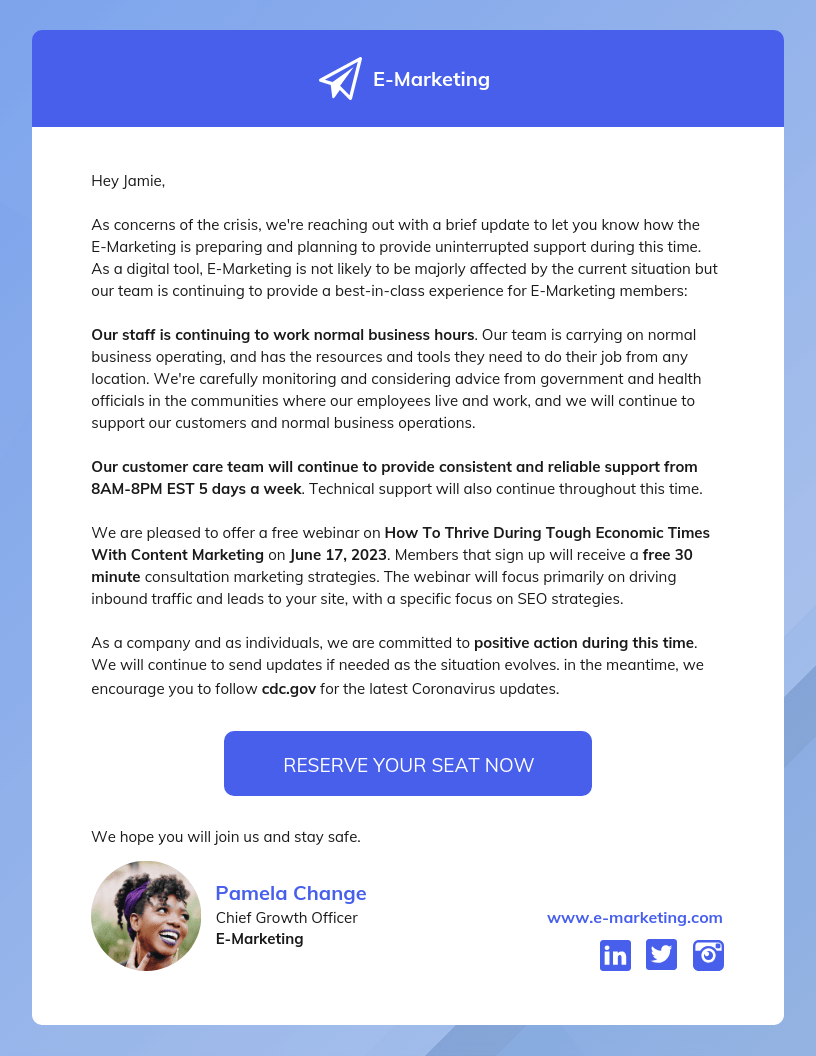 816×1056 professional email templates engage audience venngage from venngage.com


Email Marketing Plan Template :
Email Marketing Plan Template was posted in September 9, 2025 at 10:28 pm. If you wanna have it as yours, please click the Pictures and you will go to click right mouse then Save Image As and Click Save and download the Email Marketing Plan Template Picture.. Don’t forget to share this picture with others via Facebook, Twitter, Pinterest or other social medias! we do hope you'll get inspired by SampleTemplates123... Thanks again! If you have any DMCA issues on this post, please contact us!
Related For Email Marketing Plan Template
