Freelancer Marketing Plan Template
Freelancer Marketing Plan Template: Attract Clients & Grow Your Business
A robust marketing plan is crucial for freelance success. It’s not enough to simply be good at what you do; you need to actively seek out clients and build a sustainable business. This template provides a framework for creating a comprehensive marketing plan tailored to your freelance services.
I. Executive Summary
Briefly summarize your freelance business, its goals, and the key marketing strategies you will employ. This section should be concise and compelling, providing a high-level overview of your entire plan. It serves as a roadmap for the rest of the document.
* **Your Freelance Business:** State your primary service offering (e.g., web development, content writing, graphic design) and your target audience. * **Marketing Goals:** Define specific, measurable, achievable, relevant, and time-bound (SMART) goals. Examples include: “Increase website traffic by 20% in three months” or “Acquire three new clients per month for the next six months.” * **Key Strategies:** Highlight the primary marketing activities you’ll focus on, such as content marketing, social media marketing, networking, or paid advertising.
II. Situation Analysis
This section involves understanding your current position in the market, your strengths, weaknesses, opportunities, and threats (SWOT analysis). It also includes an analysis of your target audience and competitive landscape.
* **SWOT Analysis:** * **Strengths:** What are you good at? What advantages do you have over competitors? (e.g., specialized skills, strong portfolio, excellent client communication) * **Weaknesses:** Where do you struggle? What areas need improvement? (e.g., limited marketing experience, inconsistent lead generation, pricing challenges) * **Opportunities:** What external factors can you leverage to grow your business? (e.g., emerging industry trends, unmet client needs, new technologies) * **Threats:** What external factors could harm your business? (e.g., increased competition, economic downturn, changing client preferences) * **Target Audience Analysis:** * **Demographics:** Age, location, industry, job title, income level. * **Psychographics:** Values, interests, lifestyle, pain points, motivations. * **Needs:** What problems are they trying to solve? What benefits are they seeking? * **Online Behavior:** Where do they spend their time online? What social media platforms do they use? What keywords do they search for? * **Competitive Analysis:** * **Identify Competitors:** Who are your main competitors? (Direct and indirect) * **Analyze Their Strengths and Weaknesses:** What are they doing well? What are they not doing so well? * **Differentiate Yourself:** How can you position yourself differently from your competitors? What unique value proposition can you offer?
III. Marketing Objectives
Based on your situation analysis, define specific and measurable marketing objectives that align with your overall business goals. These objectives should be SMART.
* **Examples:** * Increase brand awareness by X% in Y months. * Generate Z qualified leads per month. * Improve website conversion rate by A% in B months. * Build an email list of C subscribers within D months. * Achieve an average client satisfaction score of E out of F.
IV. Marketing Strategies
Outline the specific strategies you will use to achieve your marketing objectives. This is the “how” of your marketing plan.
* **Content Marketing:** * **Strategy:** Create valuable and informative content (blog posts, articles, guides, videos, infographics) to attract and engage your target audience. * **Tactics:** Keyword research, blog post writing, video creation, content distribution (social media, email marketing). * **Social Media Marketing:** * **Strategy:** Build a strong presence on relevant social media platforms to connect with potential clients, share your expertise, and promote your services. * **Tactics:** Profile optimization, content scheduling, engagement with followers, social media advertising. * **Search Engine Optimization (SEO):** * **Strategy:** Optimize your website and content to rank higher in search engine results pages (SERPs) for relevant keywords. * **Tactics:** Keyword research, on-page optimization (title tags, meta descriptions, header tags), off-page optimization (link building). * **Email Marketing:** * **Strategy:** Build an email list and nurture leads through targeted email campaigns. * **Tactics:** Lead magnet creation, email automation, segmentation, newsletter creation. * **Networking:** * **Strategy:** Attend industry events, join online communities, and connect with potential clients and referral partners. * **Tactics:** Online forums, industry conferences, LinkedIn outreach, collaboration with other freelancers. * **Paid Advertising:** * **Strategy:** Run targeted ads on platforms like Google Ads or social media to reach a wider audience and generate leads. * **Tactics:** Keyword targeting, audience targeting, ad copy creation, A/B testing.
V. Marketing Budget
Allocate a budget for each marketing activity and track your spending to ensure you are staying within your financial constraints. Be realistic and prioritize activities that offer the highest return on investment (ROI).
* **Example Budget Allocation:** * Content Marketing: $X per month (for tools, software, or outsourcing) * Social Media Marketing: $Y per month (for advertising or scheduling tools) * Paid Advertising: $Z per month * Networking: $A per year (for conference tickets or travel) * Website Maintenance: $B per year
VI. Implementation Timeline
Create a timeline for implementing your marketing strategies and tactics. This will help you stay organized and on track.
* **Example Timeline:** * **Month 1:** Keyword research, website optimization, social media profile setup. * **Month 2:** Blog launch, email list setup, initial content promotion. * **Month 3:** Social media advertising campaign launch, networking event attendance. * **Ongoing:** Content creation, social media engagement, email marketing.
VII. Measurement and Evaluation
Define key performance indicators (KPIs) to track the success of your marketing efforts. Regularly monitor your KPIs and make adjustments to your strategies as needed.
* **Key Performance Indicators (KPIs):** * Website traffic * Lead generation * Conversion rate * Social media engagement * Email open rate and click-through rate * Client acquisition cost * Return on investment (ROI) * **Evaluation Methods:** * Google Analytics * Social media analytics * Email marketing platform analytics * Client feedback surveys
VIII. Conclusion
Reiterate your commitment to implementing your marketing plan and achieving your business goals. Emphasize the importance of ongoing monitoring and adaptation.
Remember that this is a template, and you should adapt it to fit your specific needs and circumstances. A well-crafted and consistently implemented marketing plan is essential for freelance success.
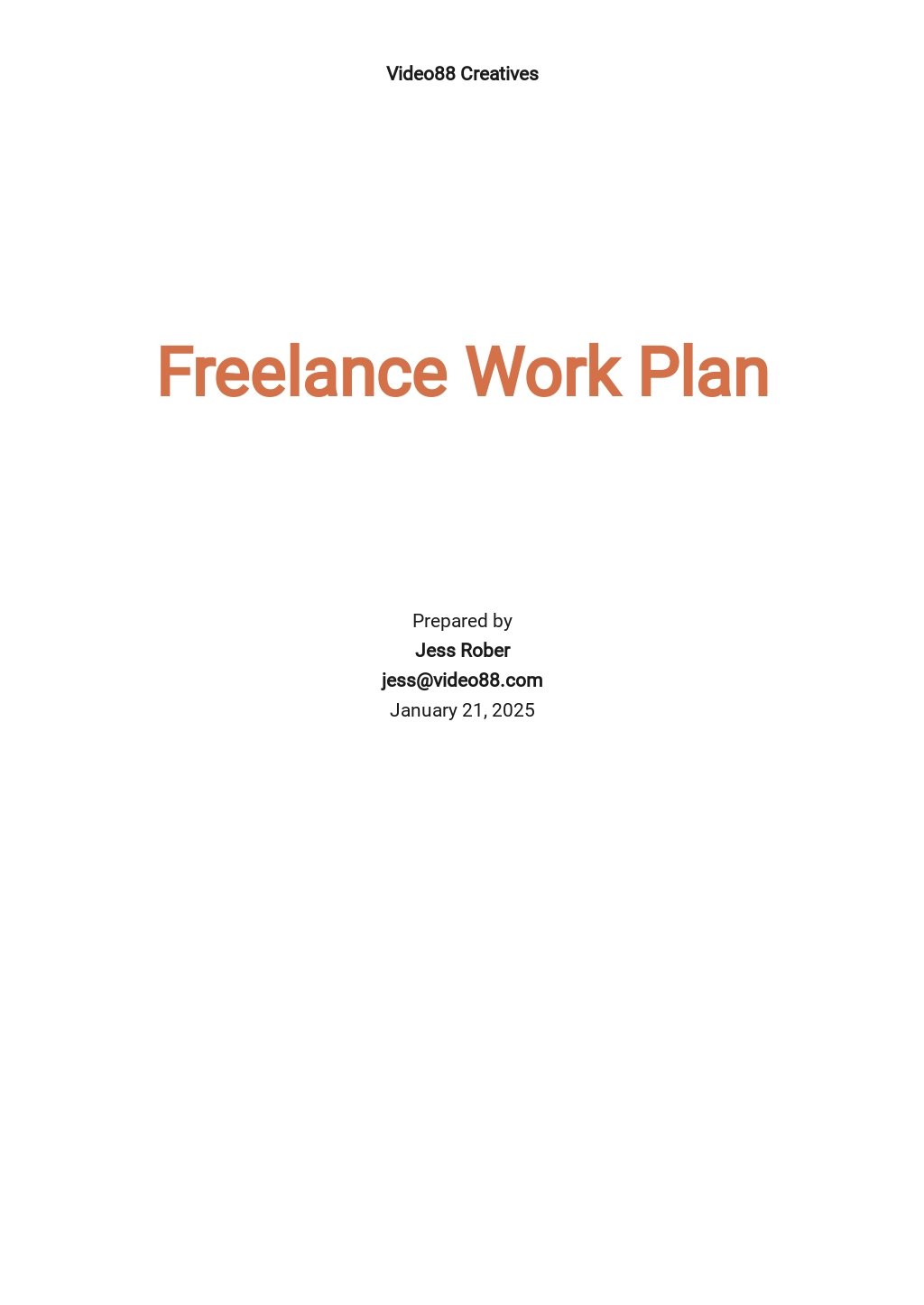 1024×1446 freelancer templates psd word excel pages numbers from www.template.net
  1600×900 wobizzles guide creating freelancer marketing plan wobizzle from wobizzle.com
  1280×3349 freelancer template review demo from onepagelove.com
  1024×1446 simple freelance business plan template google docs word from www.template.net
 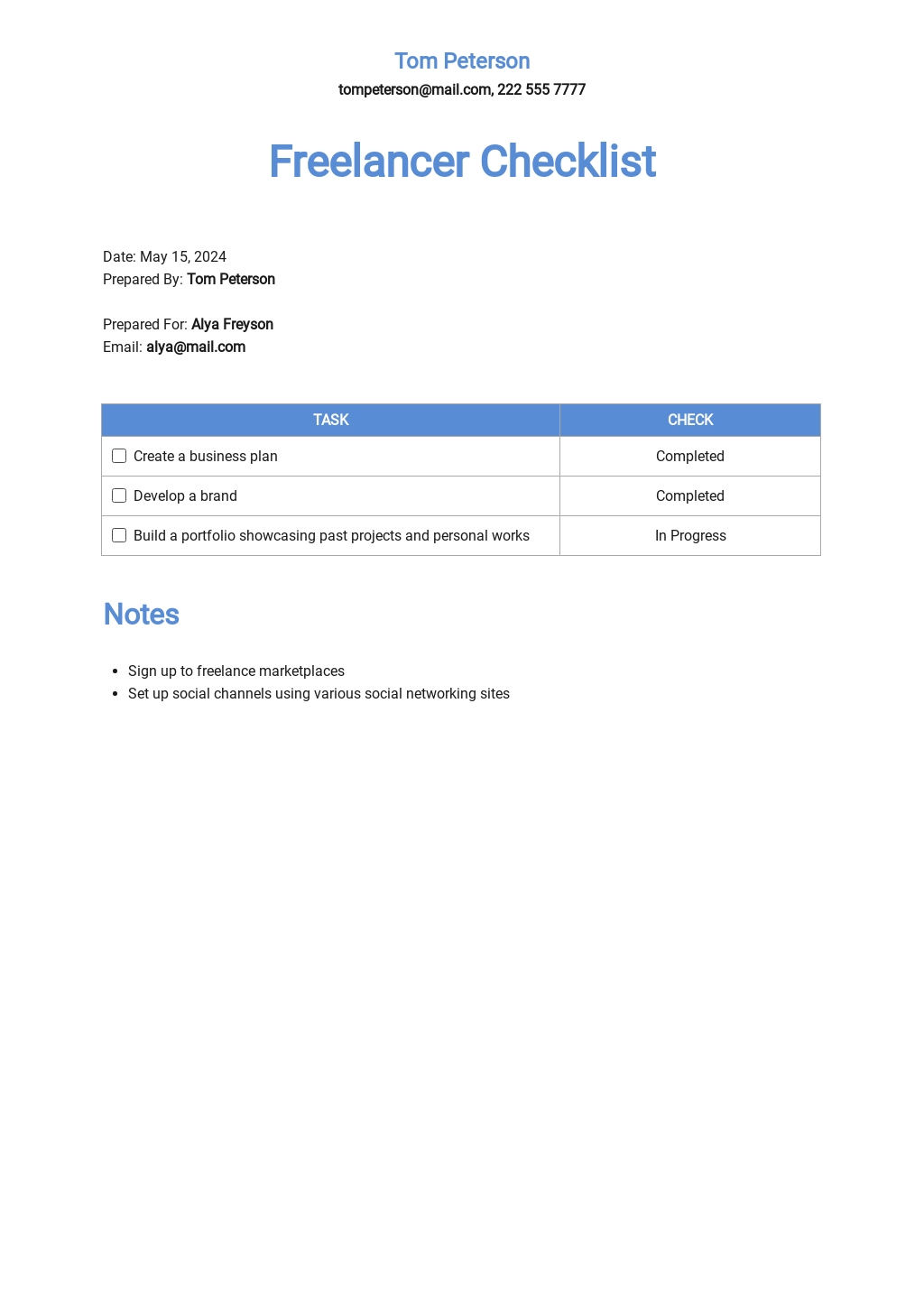 1024×1446 freelancer templates edit templatenet from www.template.net
  1000×1500 freelance marketing tips beginners freelancer faqs from www.freelancerfaqs.com
  698×901 ultimate marketing plan template examples from www.mayple.com
  1932×2500 professional marketing plan templates template lab from templatelab.com
  1440×810 freelance marketing proposal template from ikase.us


Freelancer Marketing Plan Template :
Freelancer Marketing Plan Template was posted in November 29, 2025 at 12:36 pm. If you wanna have it as yours, please click the Pictures and you will go to click right mouse then Save Image As and Click Save and download the Freelancer Marketing Plan Template Picture.. Don’t forget to share this picture with others via Facebook, Twitter, Pinterest or other social medias! we do hope you'll get inspired by SampleTemplates123... Thanks again! If you have any DMCA issues on this post, please contact us!