Math Lesson Plan Template With Activities
Math Lesson Plan Template & Engaging Activities
A well-structured math lesson plan is the cornerstone of effective mathematics instruction. It acts as a roadmap, guiding the teacher through the learning objectives, materials needed, activities planned, and assessment strategies to be employed. Using a template helps ensure all critical elements are considered and organized, leading to a more focused and impactful lesson.
Key Components of a Math Lesson Plan Template
- Lesson Title/Topic: A clear and concise title that specifies the mathematical concept being taught (e.g., “Adding Fractions with Unlike Denominators,” “Introduction to Geometry”).
- Grade Level: Specifies the target grade level for the lesson. Adjustments may be needed to accommodate diverse learners.
- Learning Objectives/Standards: Clearly defined statements that outline what students will know or be able to do by the end of the lesson. These should align with relevant state or national math standards (e.g., Common Core State Standards). Use action verbs like “identify,” “solve,” “explain,” “compare,” and “apply.” For example: “Students will be able to add fractions with unlike denominators and simplify the resulting fraction.”
- Materials: A comprehensive list of all materials required for the lesson, including manipulatives (e.g., fraction bars, counters, geometric shapes), worksheets, textbooks, calculators (if appropriate), online resources, and any visual aids (e.g., whiteboard, projector).
- Differentiation: Strategies for adapting the lesson to meet the needs of diverse learners. This includes modifications for students who are struggling, extensions for students who are ready for a challenge, and accommodations for students with special needs (e.g., providing simplified instructions, allowing extra time, using assistive technology).
- Assessment: Methods for evaluating student understanding throughout the lesson. This can include formative assessments (e.g., questioning, observation, exit tickets) and summative assessments (e.g., quizzes, tests, projects). Specify the types of questions or tasks students will be asked to perform.
- Lesson Procedure (Detailed Steps): This is the heart of the lesson plan, outlining the sequence of activities and instruction. It typically includes:
- Anticipatory Set/Introduction (5-10 minutes): An engaging activity to grab students’ attention and activate prior knowledge. This could be a quick review of a related concept, a real-world problem, or a thought-provoking question.
- Instruction/Direct Teaching (15-20 minutes): The teacher presents the new mathematical concept or skill, providing clear explanations, examples, and demonstrations. This section should include opportunities for student participation and interaction.
- Guided Practice (15-20 minutes): Students practice the new skill under the guidance of the teacher. This can involve working through problems together as a class, in small groups, or individually with teacher support.
- Independent Practice (15-20 minutes): Students work independently on problems or activities to reinforce their understanding of the concept. This provides an opportunity for students to apply what they have learned and for the teacher to assess their individual progress.
- Closure (5-10 minutes): A brief review of the main concepts covered in the lesson. This could involve summarizing key points, asking students to reflect on their learning, or assigning homework.
- Reflection: After the lesson, take time to reflect on what worked well and what could be improved. Consider student engagement, pacing, and the effectiveness of the assessment strategies. This reflection will inform future lesson planning.
Engaging Math Activities to Incorporate
Here are some ideas for engaging math activities that can be incorporated into various parts of the lesson plan, targeting different learning styles and levels of understanding:
- Real-World Connections: Start with a relatable scenario. For example, when teaching percentages, discuss discounts at stores. When teaching area, discuss calculating the size of a garden.
- Math Games: Games like “Math Bingo,” “Math Jeopardy,” or card games can make learning fun and competitive. Tailor the game questions to the specific learning objective.
- Manipulatives: Use hands-on materials like counters, base-ten blocks, fraction bars, and geometric shapes to help students visualize and understand abstract concepts.
- Technology Integration: Utilize online math games, interactive simulations, and virtual manipulatives. Khan Academy, Desmos, and GeoGebra are excellent resources.
- Problem-Solving Activities: Present students with challenging problems that require them to apply their knowledge and skills in creative ways. Encourage them to work collaboratively and share their strategies.
- Group Work: Divide students into small groups and assign them a problem or task to solve together. This promotes collaboration, communication, and critical thinking.
- Math Journals: Encourage students to write about their understanding of math concepts, their problem-solving strategies, and any questions they have. This helps them reflect on their learning and develop their mathematical communication skills.
- Math Centers: Set up different learning stations in the classroom, each focusing on a different aspect of the topic. Students rotate through the centers, completing activities and tasks.
- Hands-on Projects: Involve students in projects that require them to apply their math skills to real-world problems. For example, they could design a budget, build a model, or conduct a survey.
- Think-Pair-Share: Pose a question or problem to the class. Have students think about it individually, then pair up with a partner to discuss their ideas. Finally, have each pair share their thoughts with the whole class.
- Gallery Walk: Have students work on different problems or tasks and then display their work around the classroom. Students then walk around the room, examining each other’s work and providing feedback.
- Exit Tickets: At the end of the lesson, have students complete a short activity or answer a question to demonstrate their understanding of the material. This provides valuable feedback for the teacher.
Example Activities by Topic
* Fractions: Use fraction bars to visualize adding and subtracting fractions. Play a fraction bingo game. Have students create real-world problems involving fractions. * Geometry: Use geometric shapes to build structures. Have students identify different types of angles in the classroom. Create tessellations using pattern blocks. * Algebra: Use algebra tiles to solve equations. Have students create their own algebraic expressions and equations. Use online simulations to explore the relationships between variables. * Data Analysis: Conduct a class survey and have students create graphs and charts to represent the data. Analyze real-world data sets. Have students make predictions based on data trends.
Conclusion
A well-designed math lesson plan template combined with engaging activities will significantly enhance student learning and understanding. By carefully considering each component of the template and incorporating a variety of activities that cater to different learning styles, teachers can create dynamic and effective math lessons that foster a love of mathematics in their students. Remember to be flexible and adapt the plan as needed based on student feedback and observations. The reflection component is critical to continuous improvement in instructional practice.
 687×846 math lesson plan template simple template design from pictimilitude.com
  1024×1446 math lesson plan templates edit templatenet from www.template.net
  474×498 weekly math lesson plan template sampletemplatess sampletemplatess from www.sampletemplatess.com
  600×730 sample math lesson plan templates ms word from www.sampletemplates.com
  880×1243 math lesson plan templates docs downloads templatenet from www.template.net
  768×726 math lesson plan template shop fresh from shopfreshboutique.com
  440×570 math lesson plan template word format from www.template.net
 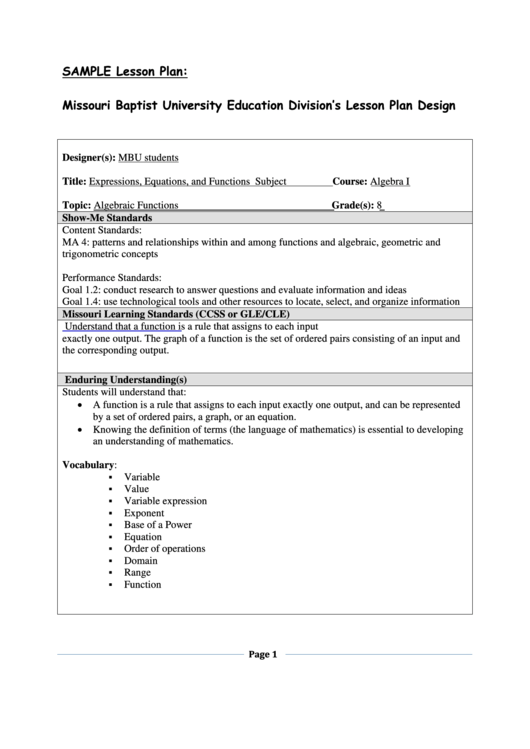 530×749 math lesson plan template printable from www.formsbank.com
  744×589 lesson plan template math simple template design from pictimilitude.com
  532×667 math lesson plan template sampletemplatess sampletemplatess from www.sampletemplatess.com



Math Lesson Plan Template With Activities :
Math Lesson Plan Template With Activities was posted in May 23, 2025 at 10:45 pm. If you wanna have it as yours, please click the Pictures and you will go to click right mouse then Save Image As and Click Save and download the Math Lesson Plan Template With Activities Picture.. Don’t forget to share this picture with others via Facebook, Twitter, Pinterest or other social medias! we do hope you'll get inspired by SampleTemplates123... Thanks again! If you have any DMCA issues on this post, please contact us!