Committee Meeting Agenda PDF
Here’s an HTML rendition focusing on the essence of a committee meeting agenda PDF, formatted for readability and clarity: “`html
Decoding the Committee Meeting Agenda PDF
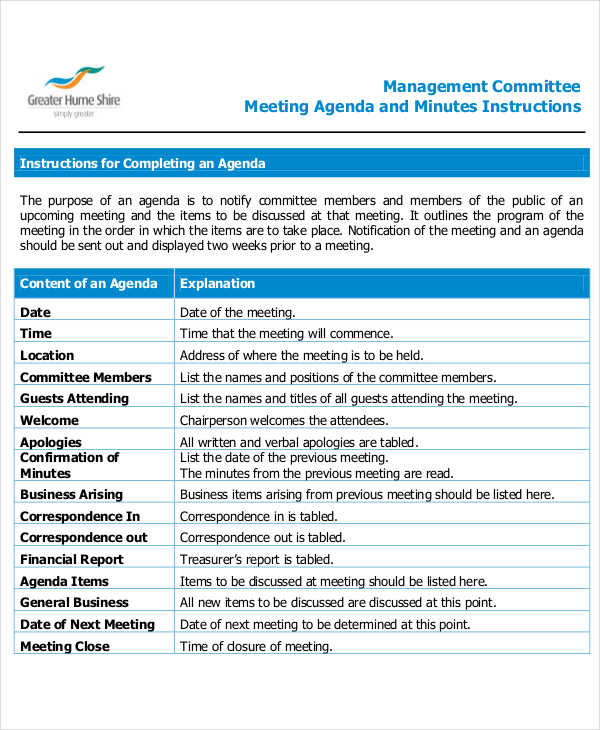
A committee meeting agenda PDF is your roadmap to a productive and focused discussion. It’s a critical document that, when well-crafted and understood, ensures meetings are efficient, purposeful, and achieve their objectives. Understanding its components empowers you to participate effectively and contribute meaningfully.
The Purpose of an Agenda
At its core, the agenda serves several essential functions:
- Provides Structure: It outlines the topics to be discussed, preventing the meeting from veering off course or becoming unproductive.
- Sets Expectations: It informs attendees about the meeting’s objectives, allowing them to prepare relevant information and perspectives.
- Promotes Efficiency: By allocating time for each item, it helps keep the meeting on schedule and prevents any single topic from dominating the discussion.
- Facilitates Preparation: It allows members to anticipate the discussion and gather necessary data, reports, or insights beforehand.
- Documents the Meeting Plan: Serves as a record of what was planned for the meeting, which can be useful for future reference.
Key Components of a Standard Agenda PDF
While specific formats may vary, most committee meeting agenda PDFs include the following elements:
1. Heading Information
This section typically includes:
- Committee Name: Clearly identifies the specific committee holding the meeting (e.g., Finance Committee, Marketing Committee, Board of Directors).
- Meeting Date and Time: Specifies the exact date and time the meeting will commence and its anticipated duration.
- Location: Indicates the physical location of the meeting or the platform for virtual meetings (e.g., Conference Room A, Zoom Meeting Link).
2. Call to Order
This is a formal start to the meeting, often conducted by the committee chairperson.
3. Roll Call/Attendance
A record of attendees present. This ensures quorum requirements are met and documents participation.
4. Approval of Minutes from Previous Meeting
Attendees review and approve the minutes from the previous meeting, ensuring an accurate record of past decisions and actions. Any corrections or amendments are noted.
5. Agenda Items
This is the core of the agenda, listing the topics to be discussed. Each item typically includes:
- Item Title: A brief description of the topic.
- Presenter/Responsible Party: The person responsible for leading the discussion or providing information on the topic.
- Time Allocation: The estimated time allotted for discussion of the item.
- Type of Item: Indicates the purpose of the item (e.g., Discussion, Action Item, Information Only). Common classifications are:
- Action Item: Requires a decision or vote by the committee.
- Discussion Item: Intended for open discussion and exploration of the topic.
- Information Item: Presents updates or reports for informational purposes, usually without requiring immediate action.
- Supporting Documents: References any relevant documents (reports, proposals, data) that attendees should review beforehand. Often included as hyperlinks or attachments within the PDF.
6. Reports
This section may include standing reports from committee members, subcommittees, or external stakeholders. Examples include financial reports, progress updates on projects, or market analyses.
7. New Business
An opportunity to introduce topics not previously included on the agenda. However, it’s important to note that significant decisions are usually not made on new business items without prior notice.
8. Old Business
Allows for follow-up on items discussed in previous meetings that require further attention or action.
9. Adjournment
The formal conclusion of the meeting, usually announced by the chairperson.
Tips for Effectively Using the Agenda PDF
- Review the Agenda in Advance: Familiarize yourself with the topics to be discussed and gather any relevant information.
- Read Supporting Documents: Carefully examine any reports, proposals, or data referenced in the agenda.
- Prepare Questions or Comments: Formulate questions or comments you want to contribute during the meeting.
- Prioritize Items: Identify the agenda items that are most relevant to your responsibilities or interests.
- Take Notes During the Meeting: Record key decisions, action items, and assigned responsibilities.
- Follow Up on Action Items: If you are assigned an action item, ensure you complete it by the agreed-upon deadline.
Accessibility Considerations for Agenda PDFs
To ensure inclusivity, agenda PDFs should be accessible to individuals with disabilities. This involves:
- Proper Tagging: Using tags to structure the document logically for screen readers.
- Alternative Text for Images: Providing descriptive text for all images and graphics.
- Sufficient Contrast: Ensuring sufficient color contrast between text and background.
- Readable Font Sizes: Using font sizes that are easy to read and can be enlarged without distortion.
- Proper Document Structure: Using headings, lists, and other formatting elements to create a clear and navigable structure.
Conclusion
The committee meeting agenda PDF is a powerful tool for effective meeting management. By understanding its components and using it proactively, you can ensure that meetings are productive, focused, and contribute to achieving your committee’s goals. Careful preparation and active participation, guided by the agenda, are key to successful committee work.
“`
 390×505 committee meeting agenda examples from www.examples.com
  600×730 committee meeting agenda template word documents from www.template.net
  2550×3300 safety committee meeting agenda templates allbusinesstemplatescom from www.allbusinesstemplates.com
  600×730 committee meeting agenda templates sample format from www.template.net
  600×730 committee meeting agenda templates sample format from www.template.net
  2550×3300 committee meeting agenda sample templates allbusinesstemplatescom from www.allbusinesstemplates.com
  600×730 committee agenda examples from www.examples.com


Committee Meeting Agenda PDF :
Committee Meeting Agenda PDF was posted in October 30, 2025 at 3:07 am. If you wanna have it as yours, please click the Pictures and you will go to click right mouse then Save Image As and Click Save and download the Committee Meeting Agenda PDF Picture.. Don’t forget to share this picture with others via Facebook, Twitter, Pinterest or other social medias! we do hope you'll get inspired by SampleTemplates123... Thanks again! If you have any DMCA issues on this post, please contact us!