Business Plan Template For Online Store
Business Plan Template for Online Store
Creating a comprehensive business plan is crucial for the success of any online store. It acts as a roadmap, guiding your decisions, attracting investors, and securing funding. This template outlines the key components necessary for a well-structured business plan tailored for an online retail venture.
I. Executive Summary
This is a concise overview of your entire business plan, highlighting the key aspects. It should be written last, but placed at the beginning. Include:
- Business Concept: Briefly describe your online store, the products/services you offer, and your target market.
- Mission Statement: Articulate your company’s purpose and values.
- Goals and Objectives: State specific, measurable, achievable, relevant, and time-bound (SMART) goals for the next 3-5 years. Examples include revenue targets, customer acquisition rates, and market share.
- Financial Highlights: Summarize key financial projections, such as revenue, profitability, and funding requirements.
- Management Team: Briefly introduce the key personnel and their expertise.
II. Company Description
Provide a detailed description of your online store and its operations. Include:
- Company Overview: Describe the legal structure of your business (e.g., sole proprietorship, LLC, corporation). Include the company’s history (if any), location of operations, and contact information.
- Products/Services: Clearly define the products or services you will offer. Highlight unique selling propositions (USPs) and what differentiates you from competitors. Detail sourcing strategies: will you manufacture, wholesale, dropship, or use a combination? Consider adding a product catalog or price list as an appendix.
- Target Market: Identify your ideal customer. Include demographics (age, gender, location, income), psychographics (lifestyle, interests, values), and buying behavior. The more specific you are, the better you can tailor your marketing efforts.
- Value Proposition: Explain the value you provide to your customers. Why should they choose your store over others? This could be related to product quality, price, customer service, convenience, or a unique brand experience.
- Online Platform: Describe the platform you will use to host your online store (e.g., Shopify, WooCommerce, Magento, Etsy). Explain why you chose this platform and its benefits. Also, detail your plan for maintaining and updating the platform.
III. Market Analysis
Demonstrate your understanding of the market you are entering. This section should be based on thorough research.
- Industry Overview: Describe the overall market for your products/services. Include its size, growth rate, trends, and key drivers. Use credible sources to support your claims.
- Target Market Analysis (Deeper Dive): Expand on your target market description, including specific needs, pain points, and buying habits. What motivates them to purchase online? What are their preferred payment methods?
- Competitive Analysis: Identify your main competitors, both direct and indirect. Analyze their strengths and weaknesses, pricing strategies, marketing tactics, and customer reviews. Create a competitive matrix comparing your business to the competition based on key factors such as price, quality, service, and selection.
- SWOT Analysis: Conduct a SWOT (Strengths, Weaknesses, Opportunities, Threats) analysis of your business. This will help you identify your competitive advantages and potential challenges.
- Market Trends: Analyze the latest trends in online retail and your specific product category. Examples include mobile commerce, social commerce, personalized shopping experiences, and sustainable practices.
IV. Marketing and Sales Strategy
Outline your plan for attracting customers and generating sales.
- Marketing Objectives: Define specific, measurable marketing goals, such as website traffic, conversion rates, customer acquisition cost, and brand awareness.
- Marketing Channels: Describe the marketing channels you will use to reach your target market. This could include:
- Search Engine Optimization (SEO): How will you optimize your website and content to rank higher in search engine results?
- Search Engine Marketing (SEM): Will you use paid advertising on search engines like Google?
- Social Media Marketing (SMM): Which social media platforms will you use, and what type of content will you create?
- Email Marketing: How will you build your email list and use email marketing to nurture leads and drive sales?
- Content Marketing: Will you create blog posts, articles, videos, or other content to attract and engage your target audience?
- Influencer Marketing: Will you partner with influencers to promote your products/services?
- Affiliate Marketing: Will you create an affiliate program to incentivize others to promote your store?
- Pricing Strategy: Explain your pricing strategy. Will you use cost-plus pricing, competitive pricing, value-based pricing, or a combination? How will you handle discounts and promotions?
- Sales Process: Describe the customer journey from initial contact to purchase. How will you handle customer inquiries, orders, and returns?
- Customer Service: Outline your customer service policies and procedures. How will you provide excellent customer service and build customer loyalty?
V. Management Team
Introduce the key members of your management team and highlight their relevant experience and skills.
- Organizational Structure: Describe the organizational structure of your company. Include an organizational chart showing reporting relationships.
- Management Team Profiles: Provide brief biographies of each key team member, highlighting their relevant experience and expertise.
- Advisory Board (Optional): If you have an advisory board, list its members and their expertise.
VI. Financial Plan
Provide a detailed financial plan that demonstrates the financial viability of your business.
- Start-up Costs: List all the initial expenses required to launch your online store, such as website development, inventory, marketing, and legal fees.
- Funding Request (If Applicable): If you are seeking funding, specify the amount of funding you need and how you plan to use it.
- Revenue Projections: Forecast your revenue for the next 3-5 years. Base your projections on realistic assumptions and market research.
- Cost of Goods Sold (COGS): Estimate the cost of goods sold for each product or service.
- Operating Expenses: Estimate your operating expenses, such as rent, utilities, salaries, and marketing expenses.
- Profit and Loss (P&L) Statement: Project your profit and loss statement for the next 3-5 years.
- Cash Flow Statement: Project your cash flow statement for the next 3-5 years.
- Balance Sheet: Project your balance sheet for the next 3-5 years.
- Key Financial Ratios: Calculate key financial ratios, such as gross profit margin, net profit margin, return on investment, and debt-to-equity ratio.
- Break-Even Analysis: Determine the break-even point for your business.
VII. Appendix
Include supporting documents, such as:
- Product catalog
- Price list
- Market research data
- Resumes of key team members
- Letters of intent
- Permits and licenses
- Legal documents
Remember to tailor this template to your specific business and industry. Regularly review and update your business plan as your business evolves.
 638×903 business plan template store printable schedule template from www.printablescheduletemplate.com
 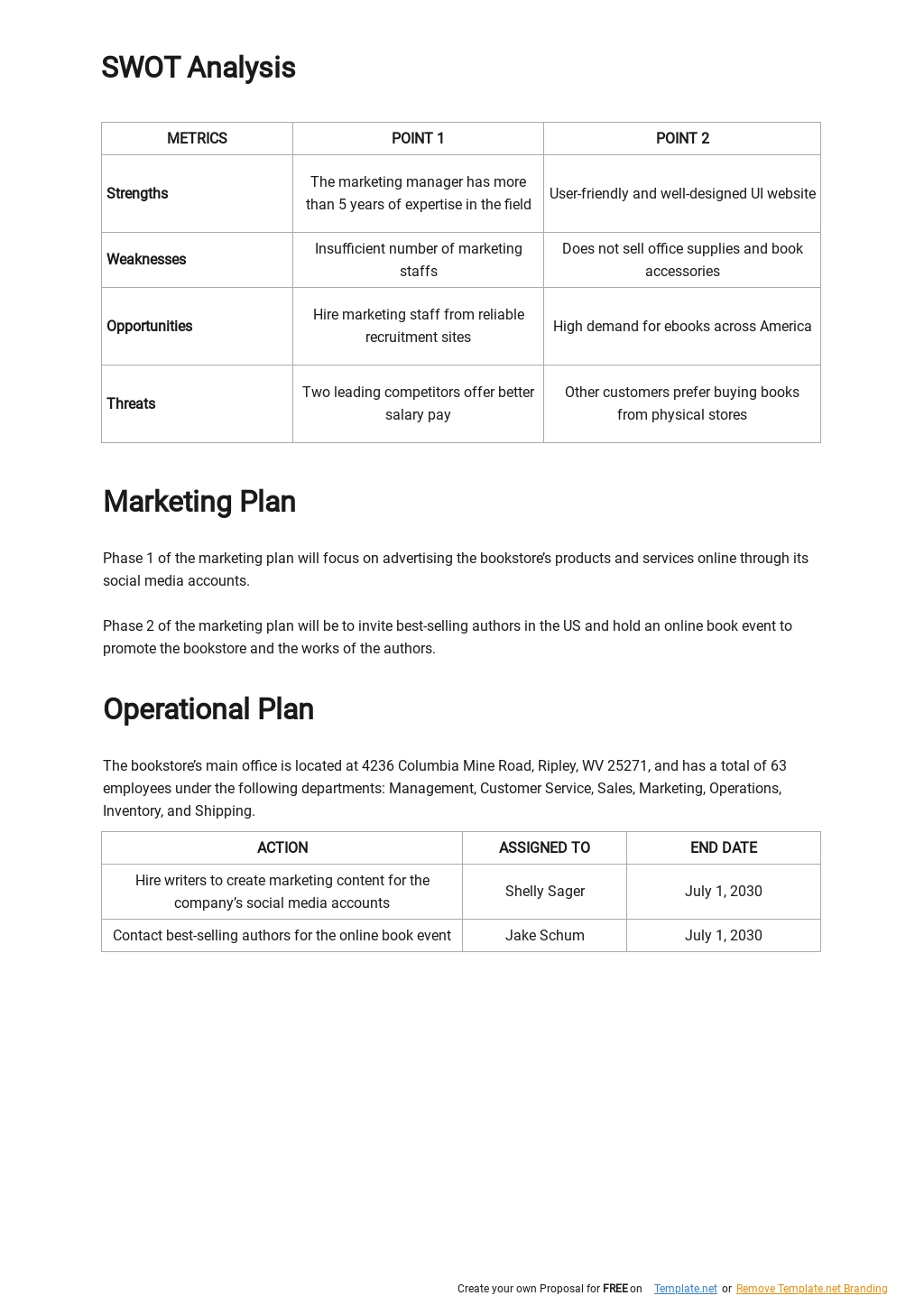 1024×1446 book store business plan template google docs word from www.template.net


Business Plan Template For Online Store :
Business Plan Template For Online Store was posted in May 25, 2025 at 3:48 pm. If you wanna have it as yours, please click the Pictures and you will go to click right mouse then Save Image As and Click Save and download the Business Plan Template For Online Store Picture.. Don’t forget to share this picture with others via Facebook, Twitter, Pinterest or other social medias! we do hope you'll get inspired by SampleTemplates123... Thanks again! If you have any DMCA issues on this post, please contact us!