Budgeting Plan Template For Debt Reduction
Creating a budget is a cornerstone of effective debt reduction. A well-structured budgeting plan acts as a roadmap, guiding your financial decisions and helping you prioritize debt repayment. This template outlines a step-by-step approach to building a budget specifically designed to aggressively tackle your debt within a reasonable timeframe.
Step 1: Calculate Your Net Income
Your net income is the foundation of your budget. This is the money you actually take home after taxes, insurance, and other mandatory deductions. Don’t estimate; pull out your pay stubs and calculate the average net income over the last 3-6 months for a more accurate picture. If your income fluctuates, use the lowest month as a conservative starting point.
- Salary/Wages: (After taxes, insurance, retirement contributions, etc.)
- Side Hustle Income: (Freelancing, part-time work, etc.)
- Other Income: (Child support, alimony, investment income, etc.)
Total Net Income: $________
Step 2: List Your Expenses
This is where a detailed breakdown is crucial. Track every penny you spend for at least one month to get a true understanding of your spending habits. Use budgeting apps, spreadsheets, or a simple notebook – whatever works best for you. Divide your expenses into fixed and variable categories.
Fixed Expenses: These are expenses that remain relatively consistent month to month.
- Rent/Mortgage: $________
- Car Payment: $________
- Insurance (Health, Auto, Home): $________
- Student Loan Payments: $________
- Minimum Credit Card Payments: $________
- Other Loan Payments: $________
- Utilities (Electricity, Gas, Water): $________
- Internet/Phone: $________
- Subscriptions (Recurring): $________
Total Fixed Expenses: $________
Variable Expenses: These are expenses that fluctuate from month to month.
- Groceries: $________
- Dining Out/Takeout: $________
- Transportation (Gas, Public Transit): $________
- Entertainment: $________
- Clothing: $________
- Personal Care (Haircuts, etc.): $________
- Household Supplies: $________
- Medical Expenses (Non-recurring): $________
- Gifts: $________
- Miscellaneous: $________
Total Variable Expenses: $________
Total Expenses (Fixed + Variable): $________
Step 3: Identify Debt Obligations
List all your outstanding debts, including the creditor, interest rate, and minimum monthly payment. This provides a clear picture of your debt burden.
- Credit Card 1: Creditor: ________, Interest Rate: ________%, Minimum Payment: $________, Balance: $________
- Credit Card 2: Creditor: ________, Interest Rate: ________%, Minimum Payment: $________, Balance: $________
- Student Loan 1: Creditor: ________, Interest Rate: ________%, Minimum Payment: $________, Balance: $________
- Student Loan 2: Creditor: ________, Interest Rate: ________%, Minimum Payment: $________, Balance: $________
- Car Loan: Creditor: ________, Interest Rate: ________%, Minimum Payment: $________, Balance: $________
- Personal Loan: Creditor: ________, Interest Rate: ________%, Minimum Payment: $________, Balance: $________
Total Debt: $________
Step 4: Calculate Your Debt Repayment Capacity
Subtract your total expenses from your total net income. The result is your potential debt repayment capacity – the amount of money you can realistically allocate towards debt repayment each month.
Net Income – Total Expenses = Debt Repayment Capacity: $________
If your debt repayment capacity is negative (you’re spending more than you earn), you need to aggressively cut expenses before proceeding.
Step 5: Choose a Debt Reduction Strategy
Two popular debt reduction strategies are the debt snowball and the debt avalanche.
- Debt Snowball: Focus on paying off the debt with the smallest balance first, regardless of the interest rate. This provides quick wins and motivates you to keep going.
- Debt Avalanche: Focus on paying off the debt with the highest interest rate first, regardless of the balance. This saves you the most money in the long run.
Choose the method that best suits your personality and financial situation. Consistency is key.
Step 6: Allocate Funds to Debt Repayment
Based on your chosen strategy and debt repayment capacity, allocate funds to each debt. Continue making minimum payments on all debts except the one you’re focusing on, where you’ll apply the extra funds.
Example (Debt Snowball): Let’s say your debt repayment capacity is $500 and you’re using the debt snowball method. Your smallest debt is Credit Card 1 with a minimum payment of $50. You would allocate $500 to Credit Card 1 ($50 minimum + $450 extra) and continue making minimum payments on all other debts.
Debt Allocation Table:
- Credit Card 1: $________
- Credit Card 2: $________
- Student Loan 1: $________
- Student Loan 2: $________
- Car Loan: $________
- Personal Loan: $________
Total Debt Allocation: $________ (Should equal your Debt Repayment Capacity)
Step 7: Track Your Progress and Adjust
Regularly monitor your budget and debt repayment progress. Use a spreadsheet, budgeting app, or notebook to track your spending and debt balances. At the end of each month, review your progress and make adjustments as needed. Did you stick to your budget? Did you overspend in any areas? Can you find additional ways to cut expenses and accelerate your debt repayment?
Step 8: Re-evaluate and Optimize
As your income or expenses change, re-evaluate your budget and debt repayment plan. Perhaps you received a raise, or you found a cheaper insurance provider. Use these opportunities to optimize your strategy and further accelerate your debt reduction.
Step 9: Celebrate Milestones
Debt repayment can be a long and challenging process. Celebrate your milestones along the way to stay motivated. Did you pay off a credit card? Did you reach a significant debt balance reduction? Acknowledge your progress and reward yourself (within your budget, of course!).
This budgeting plan template provides a framework for debt reduction. Customize it to fit your unique financial situation and commit to consistent action. With discipline and persistence, you can achieve your debt-free goals.
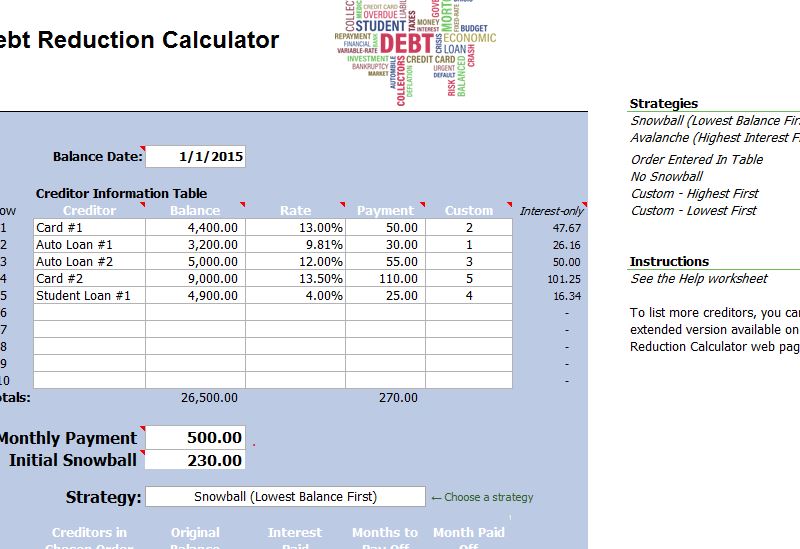 800×549 debt reduction template template haven from templatehaven.com
  950×735 debt reduction schedule template printable templateroller from www.templateroller.com
  1833×810 debt management spreadsheet template pertaining debt reduction from db-excel.com
  728×943 debt reduction plan from www.formsbirds.com
  1468×767 debt management spreadsheet template debt reduction excel template from db-excel.com
  400×624 debt reduction plan debt journey from www.thedebtfreejourney.com
  1003×645 debt management plan template word templates from www.wordtemplates.org
  601×849 debt reduction plan spreadsheet regard debt reduction from db-excel.com
  1920×2484 debt reduction plan spreadsheet db excelcom from db-excel.com
  480×367 debt debt reduction spreadsheet squawkfox from www.squawkfox.com


Budgeting Plan Template For Debt Reduction :
Budgeting Plan Template For Debt Reduction was posted in December 10, 2025 at 8:51 am. If you wanna have it as yours, please click the Pictures and you will go to click right mouse then Save Image As and Click Save and download the Budgeting Plan Template For Debt Reduction Picture.. Don’t forget to share this picture with others via Facebook, Twitter, Pinterest or other social medias! we do hope you'll get inspired by SampleTemplates123... Thanks again! If you have any DMCA issues on this post, please contact us!