Budgeting Plan Template For Special Events
Here’s an HTML outline for a special event budgeting template guide, adhering to your specifications: “`html
Special Event Budgeting: A Template for Success
Planning a special event, whether it’s a wedding, a corporate conference, a fundraising gala, or even a large family reunion, involves managing numerous details and, crucially, staying within budget. A well-structured budget is the cornerstone of a successful and stress-free event. This guide provides a comprehensive template you can adapt to your specific needs.
Why Use a Budget Template?
- Clarity and Control: A budget template provides a clear overview of all expected income and expenses, giving you control over your finances.
- Prevents Overspending: By setting limits for each category, you’re less likely to overspend impulsively.
- Informed Decision-Making: The budget helps you prioritize expenses and make informed decisions about where to allocate funds.
- Negotiating Power: Having a detailed budget strengthens your position when negotiating with vendors.
- Tracking and Analysis: You can easily track actual expenses against your budget, allowing you to identify areas where you’re on track or where adjustments are needed.
- Peace of Mind: Knowing you have a plan in place reduces stress and allows you to focus on other aspects of event planning.
The Special Event Budget Template: Key Categories
This template is broken down into common categories, but remember to customize it based on the specifics of your event.
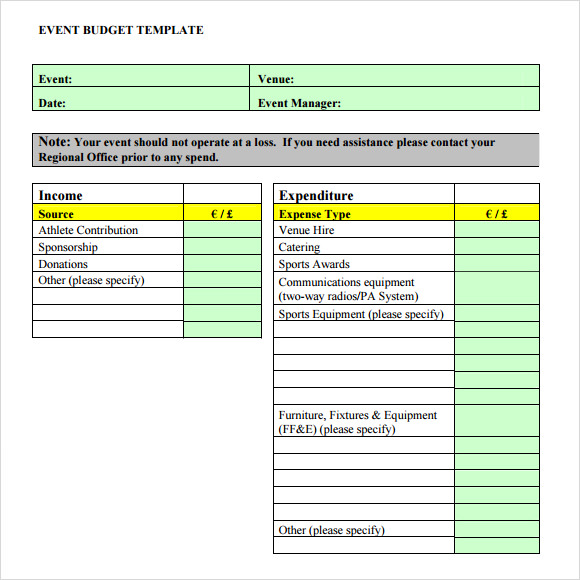
I. Income
This section tracks all anticipated sources of revenue.
- Ticket Sales: Projected number of tickets multiplied by the ticket price. Consider different ticket tiers (e.g., early bird, VIP).
- Sponsorships: Funds received from sponsors. List each sponsor and the amount they’re contributing.
- Donations: Expected donations from individuals or organizations.
- Grants: Any grants received for the event.
- Merchandise Sales: Projected income from selling event-related merchandise.
- Other Income: Include any other sources of revenue, such as raffle proceeds or advertising income.
- Personal Contribution (if applicable): This is the amount you are personally investing in the event.
- Loans (if applicable): The amount borrowed for the event.
II. Expenses
This is the most detailed section and should cover all anticipated costs.
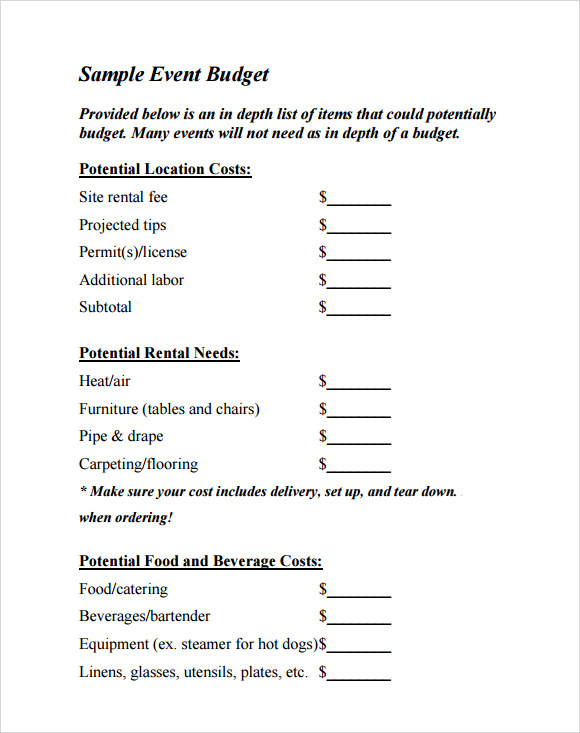
A. Venue
- Rental Fee: Cost of renting the venue space.
- Insurance: Event insurance to cover potential liabilities.
- Permits & Licenses: Fees for any required permits or licenses.
- Cleaning Fee: Cost of cleaning the venue after the event.
- Security: Cost of security personnel.
- Parking: Cost associated with providing or managing parking.
- Utilities: Costs of utilities such as electricity or water if not included in rental fee.
B. Catering & Beverages
- Food: Cost of food per person or total catering bill.
- Beverages: Cost of beverages, including alcohol and non-alcoholic options.
- Bartenders: Cost of hiring bartenders.
- Serving Staff: Cost of hiring wait staff.
- Linens & Tableware: Rental or purchase cost of linens, plates, cutlery, and glassware.
- Cake/Dessert: Cost of the cake or other desserts.
C. Entertainment
- Band/DJ: Cost of hiring a band or DJ.
- Performers: Cost of hiring other performers (e.g., dancers, magicians).
- Sound System: Rental or purchase cost of a sound system.
- Lighting: Rental or purchase cost of lighting equipment.
- Stage: Rental or construction cost of a stage.
- Entertainment Insurance: Cost of insurance for performers or entertainment related equipment.
D. Decorations & Ambiance
- Flowers: Cost of floral arrangements.
- Decorations: Cost of other decorations, such as balloons, banners, and centerpieces.
- Lighting: Cost of decorative lighting.
- Rentals: Cost of renting decorations or props.
- Signage: Cost of creating signs for the event.
E. Marketing & Promotion
- Advertising: Cost of advertising in print, online, or on radio.
- Printing: Cost of printing invitations, flyers, and other promotional materials.
- Website/Online Marketing: Costs associated with website development, social media marketing, and online advertising.
- Public Relations: Costs associated with hiring a PR firm or consultant.
- Photography/Videography: Cost of hiring a photographer or videographer to document the event.
F. Staffing & Volunteers
- Event Planner: Fees paid to an event planner.
- Staff Wages: Wages paid to event staff.
- Volunteer Expenses: Reimbursement for volunteer expenses (e.g., meals, transportation).
G. Miscellaneous
- Contingency Fund: A percentage (typically 5-10%) of the total budget set aside for unexpected expenses.
- Gifts/Favors: Cost of gifts or favors for guests.
- Transportation: Costs associated with guest or staff transportation.
- Stationery: Cost of stationery, such as thank-you notes.
- Postage: Cost of postage for invitations and thank-you notes.
- Equipment Rentals: Cost of renting any other necessary equipment.
- Security Deposit Returns: Note the return amount to be expected.
Template Structure (Example)
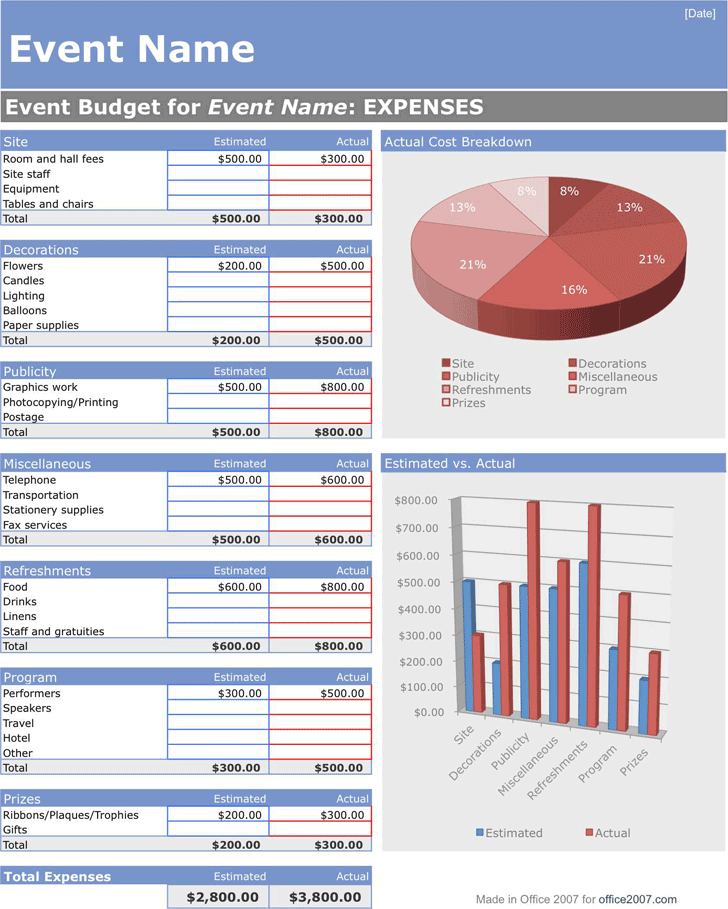
You can create this budget in a spreadsheet program like Google Sheets or Microsoft Excel. Here’s a basic structure:
| Category | Item | Estimated Cost | Actual Cost | Variance | Notes |
|---|---|---|---|---|---|
| Income | Ticket Sales | $10,000 | $9,500 | -$500 | Lower attendance than expected. |
| Venue | Rental Fee | $3,000 | $3,000 | $0 | Contract price. |
| Catering | Food | $5,000 | $5,200 | $200 | Guest count slightly higher than anticipated. |
Tips for Successful Budgeting
- Start Early: Begin creating your budget as soon as you start planning the event.
- Be Realistic: Research costs thoroughly and avoid underestimating expenses.
- Prioritize: Determine which aspects of the event are most important and allocate funds accordingly.
- Get Multiple Quotes: Obtain quotes from several vendors before making any decisions.
- Track Expenses Regularly: Update your budget with actual expenses as they occur.
- Adjust as Needed: Be prepared to make adjustments to your budget as the event planning progresses.
- Don’t Forget Hidden Costs: Account for taxes, gratuities, and delivery fees.
- Review Contracts Carefully: Understand the terms and conditions of all contracts before signing.
- Seek Professional Help: If you’re feeling overwhelmed, consider hiring an event planner or financial advisor.
- Regularly Reconcile: Compare all bank statements, receipts, and bills against the allocated budget.
Conclusion
A well-crafted budget is an invaluable tool for planning a successful special event. By using this template as a starting point and following the tips outlined above, you can stay on track, avoid overspending, and enjoy a memorable and financially sound event.
“`
 580×580 event planning budget template sampletemplatess sampletemplatess from www.sampletemplatess.com
  696×900 event budget template documents word excel from www.dexform.com
  580×733 event budget templates sample templates from www.sampletemplates.com
  585×600 event budget template word templates from www.wordstemplates.org
  728×909 event budget template template speedy template from www.speedytemplate.com
  1996×2500 event budget templates party budget planners from templatelab.com
  585×620 event budget templates ms word excel formats samples from www.excelstemplates.com



Budgeting Plan Template For Special Events :
Budgeting Plan Template For Special Events was posted in June 1, 2025 at 4:28 pm. If you wanna have it as yours, please click the Pictures and you will go to click right mouse then Save Image As and Click Save and download the Budgeting Plan Template For Special Events Picture.. Don’t forget to share this picture with others via Facebook, Twitter, Pinterest or other social medias! we do hope you'll get inspired by SampleTemplates123... Thanks again! If you have any DMCA issues on this post, please contact us!