SEO Marketing Plan Template
SEO Marketing Plan Template: A Comprehensive Guide An SEO marketing plan is a roadmap that outlines the strategies and tactics you will use to improve your website’s visibility in search engine results pages (SERPs). It’s a crucial document for guiding your SEO efforts and ensuring you’re working towards specific, measurable goals. A well-structured plan can significantly increase organic traffic, boost brand awareness, and drive conversions. This template will guide you through the key components of a successful SEO marketing plan. **1. Executive Summary:** Start with a concise overview of the entire plan. Briefly state the overall goal of your SEO efforts, the target audience, and the key strategies you will employ. This section should be no more than a paragraph or two and serve as a quick reference point for stakeholders. Mention the overall budget and anticipated return on investment (ROI). **2. Situation Analysis:** This section provides a snapshot of your current SEO performance and the competitive landscape. It helps you understand where you stand and identify opportunities for improvement. * **Website Audit:** Conduct a thorough audit of your website to identify technical SEO issues, content gaps, and areas for optimization. Use tools like Google Search Console, Google Analytics, and various SEO audit tools to assess the following: * **Technical SEO:** Crawlability, indexability, mobile-friendliness, site speed, URL structure, site architecture, broken links, duplicate content, and SSL certificate. * **On-Page SEO:** Keyword usage, title tags, meta descriptions, header tags, image optimization, internal linking, and content quality. * **Off-Page SEO:** Backlink profile, domain authority, and social media presence. * **Keyword Research:** Identify the keywords your target audience is using to search for products or services related to your business. Use keyword research tools like Google Keyword Planner, Ahrefs, SEMrush, or Moz Keyword Explorer to find relevant keywords with high search volume and low competition. Group keywords into topic clusters for content planning. Consider both short-tail (broad) and long-tail (specific) keywords. * **Competitive Analysis:** Analyze your top competitors’ websites and SEO strategies. Identify their strengths and weaknesses, the keywords they are targeting, and the backlinks they have acquired. Use tools like Ahrefs or SEMrush to analyze their backlink profiles and content strategy. Identify gaps in their strategy that you can exploit. * **Target Audience Analysis:** Define your ideal customer. Understand their demographics, interests, online behavior, and search queries. This information will help you tailor your SEO efforts to attract the right audience. Create buyer personas to represent different segments of your target audience. **3. Goals and Objectives:** Clearly define your SEO goals and objectives. Goals should be broad and aspirational, while objectives should be specific, measurable, achievable, relevant, and time-bound (SMART). * **Examples of Goals:** * Increase organic traffic to the website. * Improve brand awareness and visibility. * Generate more leads and sales. * **Examples of SMART Objectives:** * Increase organic traffic by 20% in the next 6 months. * Improve keyword rankings for 10 target keywords within 3 months. * Increase the number of backlinks from authoritative websites by 15% in the next year. * Improve the website’s conversion rate from organic traffic by 5% in the next quarter. **4. Strategies and Tactics:** This section outlines the specific strategies and tactics you will use to achieve your SEO goals and objectives. * **Technical SEO Optimization:** * Fix technical SEO issues identified in the website audit. * Improve site speed by optimizing images, leveraging browser caching, and using a Content Delivery Network (CDN). * Ensure the website is mobile-friendly and responsive. * Implement structured data markup to help search engines understand the content on your pages. * Create and submit an XML sitemap to search engines. * Fix broken links and redirect them to relevant pages. * **On-Page SEO Optimization:** * Optimize title tags and meta descriptions for target keywords. * Use header tags (H1-H6) to structure content and improve readability. * Optimize images with descriptive alt text. * Improve internal linking by linking to relevant pages within your website. * Create high-quality, engaging, and informative content that is optimized for target keywords. * Focus on user experience (UX) to improve engagement and reduce bounce rate. * **Content Marketing:** * Create a content calendar outlining the topics and formats of your content. * Develop blog posts, articles, infographics, videos, and other types of content that are relevant to your target audience. * Promote your content on social media and other channels. * Repurpose existing content into different formats to reach a wider audience. * **Link Building:** * Identify opportunities to earn backlinks from authoritative websites in your industry. * Create high-quality content that other websites will want to link to. * Reach out to influencers and bloggers to request backlinks. * Participate in online communities and forums to build relationships and earn backlinks. * Monitor your backlink profile and disavow any spammy or low-quality links. * **Local SEO (if applicable):** * Claim and optimize your Google My Business listing. * Get listed in relevant online directories. * Encourage customers to leave reviews on Google and other review platforms. * Optimize your website for local keywords. **5. Implementation and Timeline:** Create a detailed timeline for implementing your SEO strategies and tactics. Assign responsibilities to specific team members and set deadlines for each task. Use project management software to track progress and ensure accountability. **6. Budget:** Outline the budget for your SEO marketing plan. Include costs for tools, software, content creation, link building, and any other expenses. **7. Measurement and Reporting:** Define the key performance indicators (KPIs) you will use to measure the success of your SEO efforts. Track your progress regularly and generate reports to share with stakeholders. * **Examples of KPIs:** * Organic traffic * Keyword rankings * Backlink profile * Conversion rate * Bounce rate * Time on page Use Google Analytics, Google Search Console, and other SEO tools to track your KPIs and generate reports. **8. Contingency Planning:** Address potential challenges and risks that could impact your SEO performance. Develop contingency plans to mitigate these risks. For example, if a major algorithm update occurs, outline the steps you will take to adapt your SEO strategy. **9. Conclusion:** Summarize the key takeaways from your SEO marketing plan and reiterate your commitment to achieving your goals and objectives. By following this template, you can create a comprehensive SEO marketing plan that will guide your efforts and help you achieve your desired results. Remember to regularly review and update your plan as needed to adapt to changes in the search engine landscape. Good luck!
 440×570 seo plan templates downloads templatenet from www.template.net
  1024×1446 seo plan templates edit templatenet from www.template.net
  1920×1080 seo marketing plan template from lesboucans.com
  2666×1596 page seo template hubspot from offers.hubspot.com
 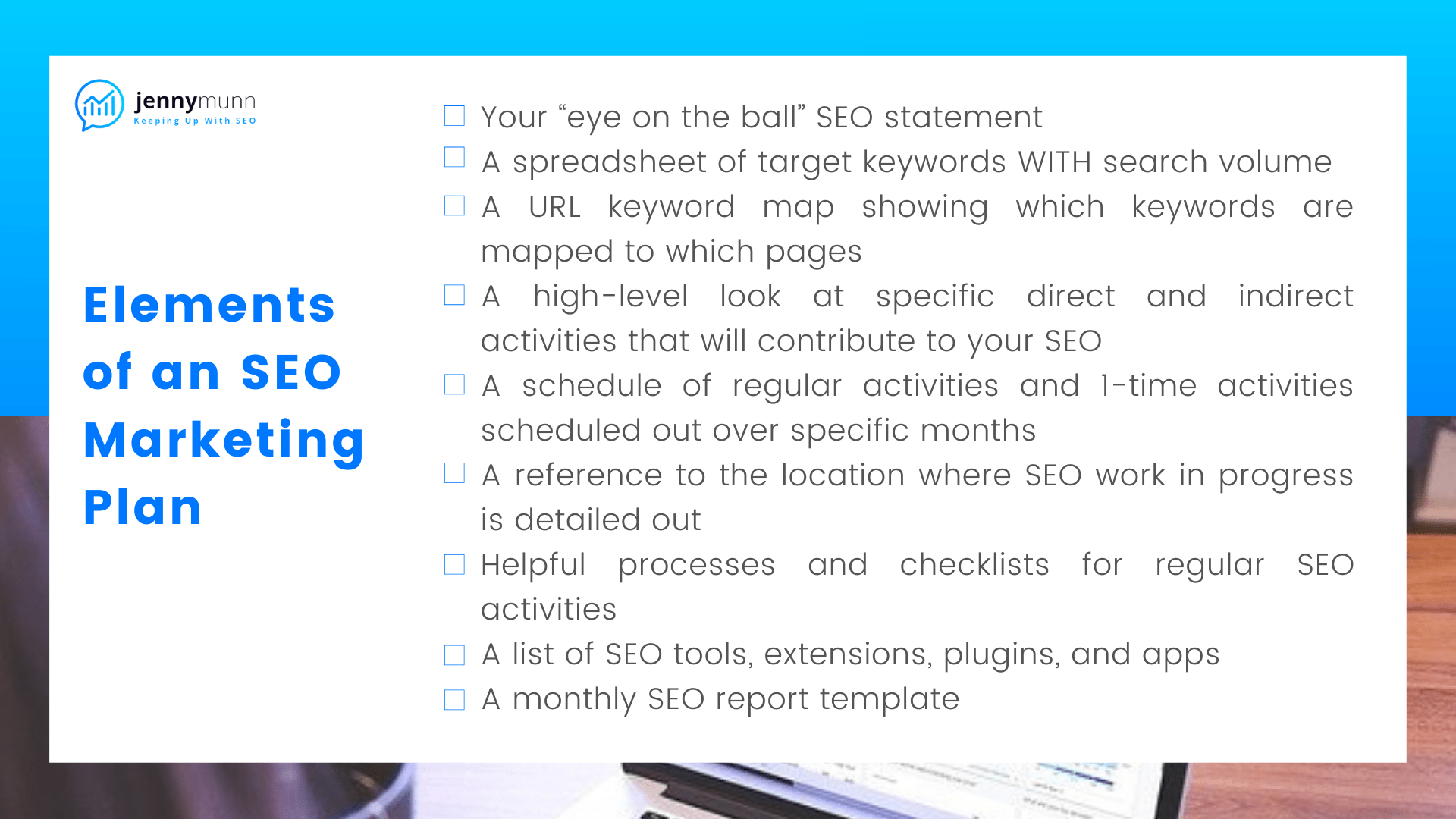 1920×1080 secret successful seo marketing plan jenny munn from jennymunn.com
  1200×840 seo marketing plan template word apple pages from www.besttemplates.com



SEO Marketing Plan Template :
SEO Marketing Plan Template was posted in October 21, 2025 at 7:36 am. If you wanna have it as yours, please click the Pictures and you will go to click right mouse then Save Image As and Click Save and download the SEO Marketing Plan Template Picture.. Don’t forget to share this picture with others via Facebook, Twitter, Pinterest or other social medias! we do hope you'll get inspired by SampleTemplates123... Thanks again! If you have any DMCA issues on this post, please contact us!