Minimalist Weekly Budget Template Excel
Minimalist Weekly Budget Template in Excel
Creating and sticking to a budget doesn’t have to be a complicated or overwhelming task. A minimalist weekly budget template in Excel provides a simple and effective way to track your income and expenses, allowing you to gain control of your finances without getting bogged down in unnecessary details. This guide will explore the benefits of a minimalist approach, outline the essential components of a weekly budget template, and provide step-by-step instructions for creating your own.
Why Choose a Minimalist Budget?
Minimalist budgeting focuses on simplicity and clarity. It avoids unnecessary categories and intricate calculations, making it easier to understand and maintain. Here are some key advantages:
- Easy to Understand: Fewer categories and formulas translate to a budget that’s quick to grasp, even for beginners.
- Less Time-Consuming: Requires less effort to set up and update, freeing up your time for other priorities.
- Greater Compliance: The simplicity makes it more likely that you’ll stick to your budget. Complex spreadsheets can be discouraging, leading to abandonment.
- Focus on the Big Picture: Highlights the key areas where you’re spending your money, allowing you to identify potential savings opportunities more easily.
- Adaptable: Can be easily modified to suit your individual needs and changing financial circumstances.
Essential Components of a Minimalist Weekly Budget Template
A functional minimalist weekly budget template needs just a few key elements:
- Income: All sources of income received during the week (e.g., salary, freelance income, investment income).
- Expenses: Categorized into broad categories to simplify tracking. These should include both fixed and variable expenses.
- Fixed Expenses: Expenses that remain relatively constant each week (e.g., rent/mortgage, loan payments, subscriptions).
- Variable Expenses: Expenses that fluctuate from week to week (e.g., groceries, transportation, entertainment, dining out).
- Savings/Debt Repayment: Allocations for savings goals (emergency fund, retirement) and debt reduction.
- Budgeted vs. Actual: Columns to compare your planned spending with your actual spending.
- Difference/Variance: A column that calculates the difference between your budgeted and actual amounts, highlighting overspending or underspending.
- Weekly Summary: Total income, total expenses, and net income (income minus expenses).
Step-by-Step Guide to Creating Your Minimalist Budget Template in Excel
- Open a New Excel Spreadsheet: Launch Microsoft Excel and create a new blank workbook.
- Set Up Headings: In the first row, enter the following headings in different columns:
- Week Starting (Date)
- Income
- Fixed Expenses
- Variable Expenses
- Savings/Debt Repayment
- Total Budgeted
- Total Actual
- Difference
- Define Income: Under the “Income” heading, create rows for each income source. Examples:
- Salary
- Freelance Income
- Other Income
- Total Income
- List Fixed Expenses: Under the “Fixed Expenses” heading, list your recurring monthly expenses. Divide monthly amounts by 4 to estimate the weekly amount. Examples:
- Rent/Mortgage
- Loan Payments
- Insurance
- Subscriptions
- Utilities (estimate weekly average)
- Total Fixed Expenses
- Outline Variable Expenses: Under the “Variable Expenses” heading, list your flexible spending categories. Choose broad categories to keep it minimalist. Examples:
- Groceries
- Transportation
- Dining Out
- Entertainment
- Personal Care
- Miscellaneous
- Total Variable Expenses
- Allocate Savings and Debt Repayment: Under the “Savings/Debt Repayment” heading, dedicate rows for these important financial goals:
- Emergency Fund
- Retirement Savings
- Debt Repayment (Specific Debt)
- Total Savings/Debt Repayment
- Add Formulas:
- Total Income: Use the `SUM()` function to add up all income sources (e.g., `=SUM(B3:B5)` if your income sources start in cell B3 and end in B5).
- Total Fixed Expenses: Use the `SUM()` function to add up all fixed expenses.
- Total Variable Expenses: Use the `SUM()` function to add up all variable expenses.
- Total Savings/Debt Repayment: Use the `SUM()` function to add up all savings and debt repayment allocations.
- Total Budgeted: Add Total Fixed Expenses, Total Variable Expenses, and Total Savings/Debt Repayment. This represents your total planned expenses. Example: `=SUM(C10+D10+E10)`
- Create Columns for Actual Spending: Create a column next to each budgeted category to record your actual spending for the week. For example, next to “Budgeted Groceries,” add an “Actual Groceries” column.
- Calculate the Difference (Variance): In the “Difference” column, subtract the “Actual” amount from the “Budgeted” amount for each category. For example, if your budgeted groceries were $100 and your actual groceries were $120, the formula would be `=$B$3-C3` (assuming budgeted groceries are in B3 and actual groceries are in C3). A positive number indicates you spent less than budgeted, while a negative number indicates you overspent.
- Calculate Total Actual Expenses: Sum up all the “Actual” expense categories to get your total actual expenses.
- Calculate Final Difference: Subtract “Total Actual Expenses” from “Total Budgeted”.
- Format the Spreadsheet: Use Excel’s formatting tools to make the spreadsheet easier to read. This includes:
- Bold headings
- Use currency formatting for monetary values (e.g., $1,234.56)
- Add borders to cells
- Use color-coding to highlight variances (e.g., red for overspending, green for underspending). Conditional formatting is especially helpful here.
- Add More Rows for Future Weeks: Copy and paste the rows for a few more weeks (4-6 to start). Update the “Week Starting” date for each week.
- Save Your Template: Save the file as an Excel template (.xltx) so you can reuse it each week without overwriting your data.
Tips for Using Your Minimalist Budget Template
- Track Your Spending Regularly: The more often you track your spending, the more accurate your budget will be. Aim to update your spreadsheet daily or at least every other day.
- Be Realistic: Don’t underestimate your expenses. It’s better to overestimate and have money left over than to underestimate and run out of funds.
- Review and Adjust Regularly: Review your budget at the end of each week and identify areas where you can improve. Adjust your budget as needed to reflect changes in your income or expenses.
- Use Technology to Help: Connect your bank accounts and credit cards to a budgeting app that can automatically track your spending and categorize transactions. Then, simply transfer the totals to your Excel template.
- Focus on Progress, Not Perfection: Don’t get discouraged if you occasionally overspend. The goal is to make progress towards your financial goals, not to achieve perfection.
Example Template Structure (Simplified)
| Week Starting | Income | Fixed Expenses | Variable Expenses | Savings | Budgeted Total | Actual Total | Difference | |—|—|—|—|—|—|—|—| | 2024-10-27 | $1000 | $400 | $300 | $100 | $800 | $850 | -$50 | | Salary: $1000| Rent: $300 | Groceries: $150 | Emergency: $50 | | | Loan: $100 | Transport: $50 | Debt Pay: $50 | | | | Fun: $100 | | | **Total:** | **$1000** | **$400** | **$300** | **$100** | **$800** | **$850** | **-$50** |
Conclusion
A minimalist weekly budget template in Excel is a powerful tool for managing your finances effectively. By focusing on simplicity and clarity, you can gain control of your spending, save more money, and achieve your financial goals. Remember to track your spending regularly, review your budget frequently, and adjust it as needed to stay on track. With consistent effort, you’ll be well on your way to financial freedom.
 1024×791 weekly budget template excel simple bogiolo from www.bogiolo.com
  1760×1140 editable budget plan templates excel from www.template.net
  727×373 weekly budget template personal weekly budget from www.someka.net
  1169×913 minimalist ms excel budget template spreadsheet etsy from www.etsy.com
  1670×1676 personal weekly budget template exceltemplate from www.exceltemplates.com
  2048×2048 weekly budget template excel designs blue star from www.designsbybluestar.com
  736×1104 simple monthly budget spreadsheet dashboard excel minimalist from www.pinterest.com
  1490×767 excel weekly budget template from old.sermitsiaq.ag
  879×681 weekly budget template excel from templates.rjuuc.edu.np
  1073×792 smart weekly budget templates word excel templates show from templatesshow.com
  1414×920 minimalist budget template digital excel google personal from www.etsy.com
  1080×844 minimalist monthly budget excel spreadsheet template financial from www.etsy.com
 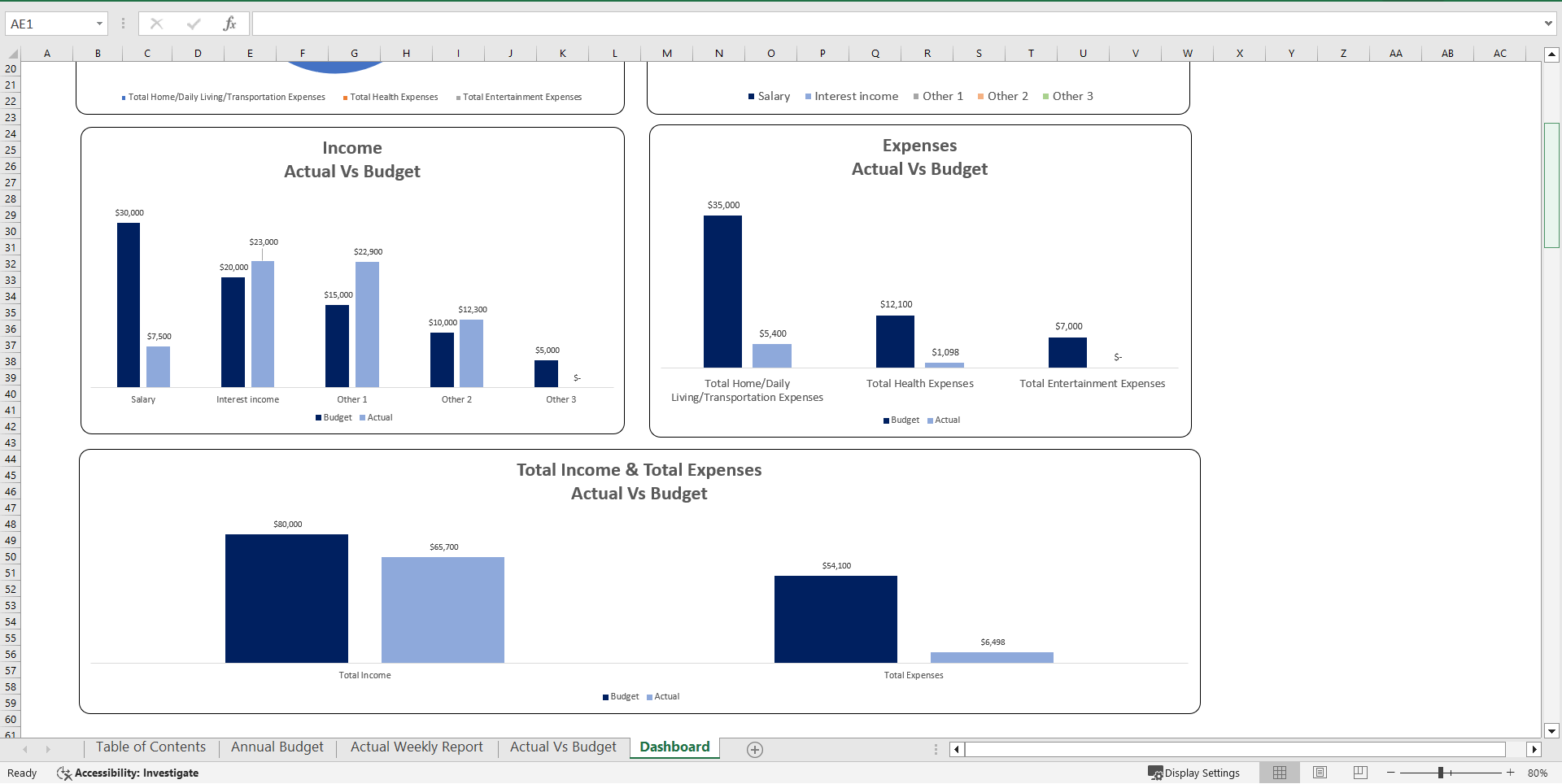 1920×964 weekly budget planner template excel xls from flevy.com
  1024×740 weekly budget template excel template from online.visual-paradigm.com
  1366×768 simple minimalistic budget spreadsheet etsy from www.etsy.com
  1200×1200 weekly budget templates excel from www.wordtemplatesonline.net


Minimalist Weekly Budget Template Excel :
Minimalist Weekly Budget Template Excel was posted in June 9, 2025 at 12:42 am. If you wanna have it as yours, please click the Pictures and you will go to click right mouse then Save Image As and Click Save and download the Minimalist Weekly Budget Template Excel Picture.. Don’t forget to share this picture with others via Facebook, Twitter, Pinterest or other social medias! we do hope you'll get inspired by SampleTemplates123... Thanks again! If you have any DMCA issues on this post, please contact us!
Related For Minimalist Weekly Budget Template Excel
Dental Care Budget Worksheet
Dental Care Budget Worksheet Creating a Dental Care Budget
Simple Budget Planner
Simple Budget Planner Mortgage Payment Tracker SpreadsheetHousehold Budget Template