$5 Savings Challenge Budget Sheet
Here’s an HTML formatted guide to a $5 Savings Challenge Budget Sheet, aiming for around 1000 words: “`html
The $5 Savings Challenge: Your Path to $5,000 (and Beyond!)
Saving money can feel daunting, especially when facing larger financial goals. The $5 Savings Challenge offers a fun, manageable, and surprisingly effective way to build a substantial nest egg. This method is simple: whenever you receive a $5 bill, you set it aside instead of spending it. It’s about creating a consistent habit and leveraging the power of small, seemingly insignificant amounts to achieve a significant outcome.
Why the $5 Savings Challenge Works
Several factors contribute to the popularity and success of this challenge:
- Simplicity: The rules are incredibly easy to understand and follow. There’s no complicated budgeting or financial analysis required. If you get a $5 bill, you save it.
- Accessibility: Anyone can participate, regardless of income level. You don’t need to make drastic lifestyle changes or cut back on essential expenses to start saving.
- Psychological Impact: It’s a gamified approach to saving. Each time you save a $5 bill, you get a small sense of accomplishment, reinforcing the positive behavior and motivating you to continue.
- Tangible Results: Unlike many abstract saving methods, you physically see your savings accumulate. This visual reinforcement can be incredibly powerful.
- Flexibility: You can adapt the challenge to your own needs and preferences. There are no strict deadlines or minimum saving amounts.
Creating Your $5 Savings Challenge Budget Sheet
While the challenge itself is straightforward, using a budget sheet or tracker can enhance your progress and keep you motivated. Here’s a guide to creating an effective $5 Savings Challenge Budget Sheet:
1. Choose Your Medium: Digital vs. Paper
You have two primary options for creating your budget sheet:
- Digital Spreadsheet (Excel, Google Sheets): Offers flexibility, automatic calculations, and easy access across devices. It’s ideal for those who prefer to track their progress electronically.
- Physical Notebook or Printable Sheet: Provides a tangible and visually appealing way to monitor your savings. It can be especially helpful for those who prefer a more hands-on approach.
Choose the method that best suits your learning style and accessibility needs.
2. Essential Elements of Your Budget Sheet
Regardless of the medium you choose, your budget sheet should include the following key elements:
- Date: Record the date each time you add a $5 bill to your savings. This helps you track your consistency and identify periods of high and low saving activity.
- Description: Briefly note the source of the $5 bill (e.g., “Grocery store change,” “Birthday gift,” “Sold an item”). This can help you understand where your savings are coming from and potentially identify opportunities to find more $5 bills.
- $5 Bills Saved: Indicate the number of $5 bills you are saving on that particular day. It might just be “1” most days but sometimes you might have several.
- Total $ Amount Saved (Daily): Calculate the total dollar amount saved each day (Number of Bills Saved x $5).
- Cumulative Total: This is the most important column. It tracks the running total of your savings. Each day you add your “Total $ Amount Saved (Daily)” to the previous day’s cumulative total.
- Notes (Optional): Use this space to add any relevant comments or observations, such as “Had a lucky day at the casino!” or “Found a $5 bill in an old coat pocket!”
3. Structuring Your Digital Spreadsheet
Here’s how you can set up your $5 Savings Challenge Budget Sheet in a digital spreadsheet:
- Column Headers: Create column headers for “Date,” “Description,” “$5 Bills Saved,” “Total $ Amount Saved (Daily),” “Cumulative Total,” and “Notes.”
- Data Entry: Enter the relevant information for each $5 bill you save.
- Formulas: Use formulas to automate calculations:
- Total $ Amount Saved (Daily): `= [Cell containing “$5 Bills Saved”] * 5`
- Cumulative Total: In the first row, simply enter the “Total $ Amount Saved (Daily)” value. In subsequent rows, use the formula `= [Cell containing “Total $ Amount Saved (Daily)” for that row] + [Cell containing “Cumulative Total” from the previous row]`
- Formatting: Format the columns to display dates and currency appropriately.
- Charts (Optional): Create charts to visualize your savings progress. A line chart showing the cumulative total over time can be particularly motivating.
4. Creating a Printable Budget Sheet
If you prefer a physical budget sheet, you can create a simple table with the same column headers. You can either design your own table using a word processor or find pre-designed printable templates online.
- Table Creation: Draw a table with the columns listed above. Ensure you have enough rows to track your savings over time.
- Print and Bind: Print out the table and bind it in a notebook or keep it in a folder.
- Manual Entry: Fill in the table manually each time you save a $5 bill.
- Visual Tracking: Consider using colored pens or markers to highlight milestones or to visually represent your progress.
5. Customizing Your Budget Sheet
Feel free to customize your budget sheet to better suit your needs and preferences:
- Goal Setting: Add a section to set a savings goal and track your progress towards it. For example, you might set a goal to save $5,000 within a year.
- Reward System: Incorporate a reward system to celebrate milestones. For example, treat yourself to something special when you reach $500, $1,000, etc.
- Visual Aids: Include images or drawings that inspire you to save. This could be a picture of your dream vacation, a new car, or anything else that motivates you.
- Category Tracking: If you want to be more detailed, add a category column to track where the $5 bills came from (e.g., work, sales, gifts, found money).
6. Tips for Success with the $5 Savings Challenge
Here are some tips to maximize your success with the $5 Savings Challenge:
- Be Consistent: The key to success is consistency. Make it a habit to save every $5 bill you receive.
- Avoid Dipping In: Resist the temptation to withdraw money from your savings account. This will derail your progress and undermine your motivation.
- Track Your Progress: Regularly update your budget sheet and monitor your progress. This will help you stay on track and identify any areas where you can improve.
- Automate Your Savings: If possible, automate your savings by setting up a recurring transfer from your checking account to your savings account. This will make it easier to save consistently.
- Spread the Word: Encourage your friends and family to participate in the challenge. This will create a supportive environment and help you stay motivated.
- Get Creative: Look for creative ways to find $5 bills. Sell unwanted items, offer your services for small tasks, or participate in contests and giveaways.
- Use Found Money: Dedicate all “found money” (unexpected refunds, rebates, or small amounts) to your $5 Savings Challenge.
7. How Long Will It Take to Save $5,000?
The time it takes to save $5,000 depends on how frequently you encounter $5 bills. Here’s a rough estimate:
- Saving one $5 bill per day: 1000 days (approximately 2.7 years)
- Saving two $5 bills per day: 500 days (approximately 1.4 years)
- Saving five $5 bills per week: Approximately 3.8 years
Remember, these are just estimates. Your actual saving rate will vary depending on your individual circumstances.
Beyond $5,000: What to Do With Your Savings
Once you reach your initial goal of $5,000, you have several options:
- Invest: Consider investing your savings to generate long-term growth. Consult with a financial advisor to determine the best investment strategy for your needs.
- Pay Off Debt: Use your savings to pay off high-interest debt, such as credit card debt or student loans.
- Emergency Fund: Build a robust emergency fund to cover unexpected expenses.
- Large Purchase: Use your savings to make a large purchase, such as a down payment on a house or a new car.
- Retirement Savings: Contribute to your retirement savings account.
Conclusion
The $5 Savings Challenge is a simple yet powerful way to build a substantial savings. By creating a budget sheet and tracking your progress, you can stay motivated and achieve your financial goals. Start saving today and watch your savings grow!
“`
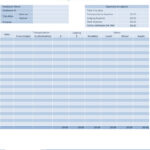


$5 Savings Challenge Budget Sheet :
$5 Savings Challenge Budget Sheet was posted in August 19, 2025 at 7:49 am. If you wanna have it as yours, please click the Pictures and you will go to click right mouse then Save Image As and Click Save and download the $5 Savings Challenge Budget Sheet Picture.. Don’t forget to share this picture with others via Facebook, Twitter, Pinterest or other social medias! we do hope you'll get inspired by SampleTemplates123... Thanks again! If you have any DMCA issues on this post, please contact us!
Related For $5 Savings Challenge Budget Sheet

Sample Business Budget Template Dow
Sample Business Budget Template Download excel free download templates
Free Manufacturing Department Budge
Free Manufacturing Department Budget Template PDF Format Automobile Resume
Monthly Budgeting Template
Monthly Budgeting Template Standard Invitation Size Template BestMultipurpose Class