Networking Event Agenda Example
Networking events are crucial for professionals seeking to expand their connections, explore new opportunities, and stay updated on industry trends. A well-structured agenda is the backbone of a successful networking event, ensuring participants maximize their time and achieve their objectives. This document outlines a sample agenda, providing detailed descriptions and suggested timings for each component, suitable for a general business networking event.
Sample Networking Event Agenda
Event Title: Connect & Grow: Business Networking for Professionals
Date: October 26, 2023
Location: The Grand Ballroom, City Center
This agenda is designed for a half-day event (approximately 4 hours) and can be adjusted based on specific needs and target audience.
1. Registration & Welcome (8:30 AM – 9:00 AM) – 30 minutes
This initial phase sets the tone for the entire event. A smooth and welcoming registration process is essential.
* **Registration Table Setup:** Clearly marked registration tables with friendly staff readily available to assist attendees. Ensure adequate signage directing attendees to the registration area. * **Welcome Packets:** Prepare welcome packets containing essential information such as the event agenda, attendee list (optional, with consent), speaker bios, company information (from sponsors or exhibitors), and promotional materials. Consider including a name tag that is easy to read. * **Light Refreshments:** Offer coffee, tea, water, and light snacks to create a comfortable and welcoming atmosphere. * **Icebreaker Activity (Optional):** Have a simple icebreaker activity available at the registration table to encourage early interaction. This could be a question card or a “find someone who…” game. * **Music:** Play soft, background music to create a positive and energetic ambiance.
The objective is to make attendees feel welcome and prepared for the event ahead.
2. Opening Remarks & Keynote Speaker (9:00 AM – 9:45 AM) – 45 minutes
The opening remarks provide context for the event and highlight its objectives. The keynote speaker should be engaging and inspiring, setting a positive tone for the networking activities.
* **Welcome Address (9:00 AM – 9:10 AM):** A brief welcome address by the event organizer or a senior executive. This should include thanking sponsors, introducing the event’s theme, and outlining the benefits of attending. * **Introduction of Keynote Speaker (9:10 AM – 9:15 AM):** A compelling introduction of the keynote speaker, emphasizing their expertise and relevance to the event’s theme. * **Keynote Presentation (9:15 AM – 9:45 AM):** The keynote speaker delivers a thought-provoking presentation related to the event’s theme. This presentation should be engaging, informative, and inspiring, providing attendees with valuable insights. Ensure the speaker sticks to the allotted time.
The objective is to set the stage for a productive and engaging networking event.
3. Structured Networking Session 1 (9:45 AM – 10:45 AM) – 60 minutes
This is a crucial part of the event, designed to facilitate meaningful interactions between attendees. A structured format helps to ensure that everyone has the opportunity to connect with others.
* **Speed Networking (30 minutes):** Implement a speed networking format where attendees are paired up for short, timed conversations (e.g., 3 minutes per person). A bell or signal indicates when it’s time to switch partners. This allows attendees to meet a large number of people quickly. Provide conversation starters to help break the ice. * **Industry-Specific Breakout Groups (30 minutes):** Divide attendees into smaller groups based on their industry or area of interest. This allows for more focused discussions and the opportunity to connect with individuals in their specific field. Designate a facilitator for each group to guide the conversation and ensure that everyone has a chance to participate.
The objective is to facilitate structured interactions and encourage attendees to build connections with relevant individuals.
4. Coffee Break & Open Networking (10:45 AM – 11:15 AM) – 30 minutes
This break allows attendees to relax, recharge, and continue networking in a more informal setting.
* **Refreshments:** Provide coffee, tea, water, and snacks to keep attendees energized. * **Open Networking:** Encourage attendees to mingle and connect with individuals they met during the structured sessions or with others who pique their interest. * **Exhibitor Booths (Optional):** If applicable, provide opportunities for exhibitors to showcase their products and services. Encourage attendees to visit the booths and learn more about the companies present.
The objective is to provide a relaxed atmosphere for informal networking and allow attendees to explore exhibitor offerings.
5. Panel Discussion (11:15 AM – 12:15 PM) – 60 minutes
A panel discussion provides attendees with valuable insights and perspectives from industry experts on a relevant topic. This session should be interactive, with opportunities for audience Q&A.
* **Panelist Introductions (11:15 AM – 11:20 AM):** Briefly introduce the panelists, highlighting their expertise and credentials. * **Panel Discussion (11:20 AM – 12:00 PM):** The moderator leads the discussion, asking insightful questions and encouraging interaction between the panelists. * **Audience Q&A (12:00 PM – 12:15 PM):** Open the floor for questions from the audience. Ensure the moderator manages the Q&A session effectively and keeps it within the allotted time.
The objective is to provide attendees with valuable insights from industry experts and encourage audience participation.
6. Structured Networking Session 2 (12:15 PM – 12:45 PM) – 30 minutes
A second structured networking session provides attendees with a final opportunity to connect with others before the event concludes.
* **”Ask Me About” Board:** Have a large board where attendees can write their name and what they are hoping to connect on (e.g., “Ask me about project management software” or “Ask me about marketing strategies for startups”). Attendees can then seek out individuals with relevant expertise or interests. * **Theme-Based Conversation Stations:** Designate different areas with specific themes (e.g., “Future of Technology,” “Sustainable Business Practices”) and encourage attendees to gather at the stations that interest them.
The objective is to facilitate targeted connections and ensure attendees leave with valuable new contacts.
7. Closing Remarks & Event Wrap-Up (12:45 PM – 1:00 PM) – 15 minutes
The closing remarks provide a final opportunity to thank attendees, summarize key takeaways, and encourage continued engagement.
* **Thank You & Appreciation:** Express gratitude to attendees, speakers, sponsors, and volunteers for their participation. * **Summary of Key Takeaways:** Briefly recap the key insights and takeaways from the event. * **Call to Action:** Encourage attendees to follow up with their new connections and stay engaged with the event organizers through social media or email. * **Future Events:** Announce any upcoming events or initiatives that may be of interest to attendees.
The objective is to leave a positive lasting impression and encourage continued engagement with the networking community.
 768×1024 event agenda template templates word excel from www.formsbirds.com
  600×730 event agenda examples from www.examples.com
  585×650 event agenda templates sample format from www.template.net
 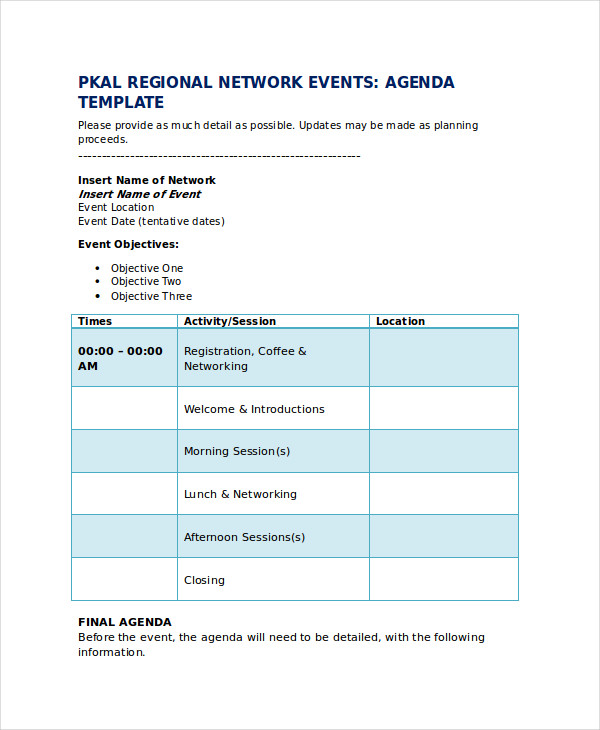 600×730 agenda examples format examples from www.examples.com
  390×475 event agenda samples from www.sampletemplates.com
  600×730 sample event agenda templates ms word from www.sampletemplates.com


Networking Event Agenda Example :
Networking Event Agenda Example was posted in October 30, 2025 at 12:44 am. If you wanna have it as yours, please click the Pictures and you will go to click right mouse then Save Image As and Click Save and download the Networking Event Agenda Example Picture.. Don’t forget to share this picture with others via Facebook, Twitter, Pinterest or other social medias! we do hope you'll get inspired by SampleTemplates123... Thanks again! If you have any DMCA issues on this post, please contact us!