Project Plan Template For Disaster Recovery
Disaster Recovery Project Plan Template
A robust disaster recovery (DR) plan is crucial for business continuity in the face of unforeseen events. This template provides a structured approach to developing a comprehensive DR project plan, ensuring minimal disruption and rapid recovery.
I. Project Overview
1.1. Project Name:
Example: Enterprise Disaster Recovery Implementation Project
1.2. Project Goals:
Clearly define the objectives of the DR project. These should be SMART (Specific, Measurable, Achievable, Relevant, Time-bound). Examples include:
- Reduce Recovery Time Objective (RTO) for critical applications to under 4 hours.
- Implement offsite data replication to ensure minimal data loss (Recovery Point Objective – RPO).
- Establish a documented and tested DR plan for all critical business functions.
- Ensure compliance with relevant industry regulations and legal requirements.
1.3. Project Scope:
Define what is included and excluded from the project. This helps manage expectations and prevent scope creep. Examples:
- In Scope: Server infrastructure, critical applications (list specific applications), network infrastructure, data storage, backup and recovery processes, documentation, training, testing.
- Out of Scope: Non-critical applications (list specific applications), personal devices, building infrastructure (addressed by separate facility management plans).
1.4. Project Success Criteria:
Outline the specific criteria that will determine the success of the project. These should be measurable and aligned with the project goals. Examples:
- Successful failover and failback testing for all critical applications within the defined RTO.
- Verification of data integrity after failover.
- Complete documentation of the DR plan, including roles, responsibilities, and procedures.
- Training completion for all key personnel.
- Successful completion of a full-scale DR simulation exercise.
II. Risk Assessment
2.1. Identify Potential Disasters:
List potential disasters that could impact the organization. Examples:
- Natural Disasters: Floods, earthquakes, hurricanes, wildfires.
- Technological Disasters: Hardware failures, software bugs, cyberattacks (ransomware, DDoS), power outages.
- Human-Caused Disasters: Accidental data deletion, sabotage, terrorism.
2.2. Impact Analysis:
Assess the potential impact of each disaster on critical business functions. Consider factors like:
- Financial losses
- Reputational damage
- Legal and regulatory penalties
- Operational downtime
- Data loss
2.3. Risk Prioritization:
Prioritize risks based on their likelihood and impact. This helps focus resources on the most critical threats.
Use a risk assessment matrix to categorize risks (e.g., High, Medium, Low).
III. DR Strategy
3.1. Data Backup and Recovery:
Specify the data backup and recovery strategy. Consider factors like:
- Backup frequency (daily, weekly, etc.)
- Backup type (full, incremental, differential)
- Backup location (onsite, offsite, cloud)
- Data retention policy
- Recovery procedures
- Technology used (e.g., Veeam, Azure Backup, AWS Backup)
3.2. System Redundancy and Failover:
Describe how systems will be made redundant to ensure high availability. Consider:
- Failover mechanisms (automatic, manual)
- Replication strategies (synchronous, asynchronous)
- Use of virtualization and cloud technologies
- Load balancing
3.3. Network Recovery:
Outline the plan for restoring network connectivity. Consider:
- Redundant network connections
- Backup network configurations
- Use of VPNs and other secure access methods
- Contact information for network providers
3.4. Alternate Site (if applicable):
If using an alternate site (e.g., a hot site, warm site, or cold site), describe its location, capabilities, and how it will be used during a disaster.
3.5. Communication Plan:
Detail how communication will be maintained during a disaster. Consider:
- Contact information for key personnel
- Communication channels (phone, email, SMS, emergency notification systems)
- Procedures for communicating with employees, customers, and stakeholders
IV. Project Tasks and Timeline
Create a detailed work breakdown structure (WBS) outlining all tasks required for the project. This includes:
- Task Name
- Task Description
- Assigned Resources
- Start Date
- End Date
- Dependencies
- Estimated Effort
Use a Gantt chart or project management software to visualize the timeline and dependencies.
V. Resources and Budget
5.1. Resources:
Identify all resources needed for the project, including:
- Personnel (project manager, IT staff, consultants)
- Hardware and software
- Training materials
- Alternate site costs
5.2. Budget:
Develop a detailed budget for the project, including costs for:
- Hardware and software purchases
- Implementation services
- Training
- Testing
- Ongoing maintenance and support
- Alternate site (if applicable)
VI. Testing and Maintenance
6.1. Testing Plan:
Outline the plan for testing the DR plan. Include:
- Types of tests (e.g., tabletop exercises, failover tests, full-scale simulations)
- Testing frequency
- Testing procedures
- Testing metrics
- Roles and responsibilities for testing
6.2. Maintenance Plan:
Describe how the DR plan will be maintained and updated. Include:
- Regular reviews of the plan
- Updates to the plan to reflect changes in the IT environment or business requirements
- Training for new employees
- Documentation updates
VII. Roles and Responsibilities
Clearly define the roles and responsibilities of all key personnel involved in the DR plan. Examples:
- Project Sponsor: Provides overall guidance and support for the project.
- Project Manager: Manages the project, tracks progress, and resolves issues.
- IT Manager: Oversees the technical aspects of the DR plan.
- System Administrators: Responsible for implementing and maintaining the DR infrastructure.
- Application Owners: Responsible for ensuring the recovery of their applications.
- Communication Team: Responsible for communicating with stakeholders during a disaster.
VIII. Approval and Sign-off
Obtain approval and sign-off from all key stakeholders before implementing the DR plan. This ensures that everyone is aware of their responsibilities and committed to the success of the project.
This template provides a framework for developing a comprehensive disaster recovery project plan. It should be customized to meet the specific needs of your organization.
 2500×1932 disaster recovery plan template template lab from templatelab.com
  1932×2500 effective disaster recovery plan templates drp templatelab from templatelab.com
  1024×1446 project recovery plan template google docs word from www.template.net
  1024×1446 disaster recovery plan templates edit templatenet from www.template.net
  1767×2500 effective disaster recovery plan templates drp template lab from templatelab.com
  1025×815 disaster recovery plan template essential cover from business-docs.co.uk
  600×730 disaster recovery plan templates sample format from www.template.net
  791×1024 disaster recovery plan template from studylib.net
 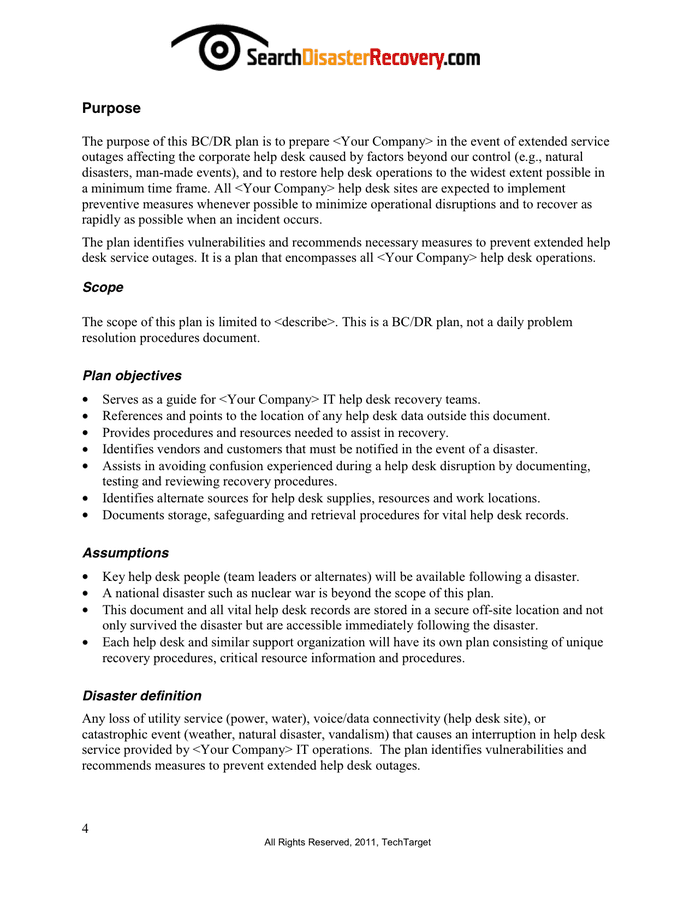 696×900 disaster recovery plan template word formats page from www.dexform.com


Project Plan Template For Disaster Recovery :
Project Plan Template For Disaster Recovery was posted in November 4, 2025 at 3:54 am. If you wanna have it as yours, please click the Pictures and you will go to click right mouse then Save Image As and Click Save and download the Project Plan Template For Disaster Recovery Picture.. Don’t forget to share this picture with others via Facebook, Twitter, Pinterest or other social medias! we do hope you'll get inspired by SampleTemplates123... Thanks again! If you have any DMCA issues on this post, please contact us!