Project Plan Template For Sustainability Projects
“`html
Project Plan Template: Sustainability Projects
A well-structured project plan is crucial for the success of any sustainability initiative. This template outlines the key components necessary for planning and executing impactful sustainability projects. It’s designed to be adaptable, allowing you to tailor it to the specific needs and scope of your project.
1. Project Overview
1.1 Project Title:
Clearly define the name of your project. This should be concise and indicative of the project’s overall aim. Examples: “Community Solar Panel Installation,” “Waste Reduction Program at XYZ Company,” “Sustainable Agriculture Training for Local Farmers.”
1.2 Project Goal:
State the overarching goal of the project. What positive change are you aiming to achieve? This should be a broad statement of intent. Example: “To reduce our company’s carbon footprint,” “To improve access to healthy, locally sourced food within the community,” “To conserve water resources in the region.”
1.3 Project Objectives:
Break down the overarching goal into specific, measurable, achievable, relevant, and time-bound (SMART) objectives. These are the concrete steps you’ll take to achieve your goal. Examples:
- “Reduce greenhouse gas emissions by 15% within the next year.”
- “Increase the percentage of locally sourced produce used in our cafeteria to 40% by the end of Q2.”
- “Conduct three workshops on water-efficient irrigation techniques for local farmers by December.”
1.4 Project Scope:
Clearly define the boundaries of the project. What is included, and what is explicitly excluded? This prevents scope creep and ensures focused effort. Example: “This project will focus on reducing waste generated in the office building only. It will not include the manufacturing facility.”
1.5 Project Justification:
Explain why this project is necessary and important. What problem are you addressing, and what benefits will it bring? This should highlight the environmental, social, and economic advantages of the project. Examples:
- “This project addresses the growing concern of plastic pollution and promotes a circular economy.”
- “This project will improve the health and well-being of community members by providing access to fresh produce.”
- “Implementing energy-efficient technologies will reduce our operating costs and improve our company’s competitiveness.”
2. Project Team & Roles
2.1 Project Manager:
Identify the individual responsible for overseeing the project’s execution. This person will be the primary point of contact and will ensure that the project stays on track. Responsibilities include planning, organizing, leading, and controlling project activities.
2.2 Project Team Members:
List all other individuals involved in the project, along with their specific roles and responsibilities. Examples: “Sustainability Coordinator (data collection and analysis),” “Marketing Manager (communication and outreach),” “Finance Officer (budget management),” “Volunteer Coordinator (volunteer recruitment and training).”
2.3 Stakeholder Analysis:
Identify all stakeholders who will be affected by the project, either positively or negatively. This includes internal stakeholders (employees, management) and external stakeholders (community members, suppliers, regulatory agencies). Analyze their interests, concerns, and potential impact on the project. Develop a communication plan to engage with stakeholders effectively.
3. Project Schedule
3.1 Work Breakdown Structure (WBS):
Break down the project into smaller, manageable tasks and sub-tasks. This helps to define the work required and allows for better planning and tracking. Examples: “Waste Audit,” “Procurement of Recycling Bins,” “Employee Training Sessions,” “Monitoring and Evaluation.”
3.2 Gantt Chart or Project Timeline:
Create a visual representation of the project schedule, showing the start and end dates of each task, dependencies between tasks, and milestones. This helps to track progress and identify potential delays. Use project management software or a spreadsheet to create the Gantt chart.
3.3 Key Milestones:
Identify significant milestones that mark important progress points in the project. These milestones should be measurable and trackable. Examples: “Completion of Baseline Assessment,” “Approval of Funding,” “Installation of Equipment,” “Launch of Public Awareness Campaign.”
4. Project Budget
4.1 Cost Breakdown:
Identify all the costs associated with the project, including personnel costs, materials, equipment, travel, training, and administrative expenses. Provide a detailed breakdown of each cost item.
4.2 Funding Sources:
Identify the sources of funding for the project, including grants, internal funding, donations, and sponsorships. Indicate the amount of funding secured from each source.
4.3 Budget Management Plan:
Outline the procedures for managing the project budget, including tracking expenses, approving invoices, and reporting on budget variances. Establish a process for requesting and approving budget changes.
5. Risk Management
5.1 Risk Identification:
Identify potential risks that could jeopardize the success of the project. Examples: “Lack of stakeholder support,” “Unexpected increase in material costs,” “Delays in obtaining permits,” “Adverse weather conditions.”
5.2 Risk Assessment:
Assess the likelihood and impact of each identified risk. Use a risk matrix to prioritize risks based on their severity. Examples: “High Likelihood, Medium Impact,” “Low Likelihood, High Impact.”
5.3 Risk Mitigation Strategies:
Develop strategies to mitigate or avoid the identified risks. Examples: “Conduct stakeholder engagement activities to build support,” “Secure price quotes from multiple suppliers,” “Apply for permits early in the project planning process,” “Develop a contingency plan for adverse weather conditions.”
6. Monitoring & Evaluation
6.1 Key Performance Indicators (KPIs):
Define the KPIs that will be used to measure the project’s progress and success. KPIs should be aligned with the project objectives and should be measurable and trackable. Examples: “Reduction in waste generated (tons/year),” “Increase in renewable energy consumption (kWh/year),” “Increase in community awareness of sustainability issues (# of participants).”
6.2 Data Collection Methods:
Describe the methods that will be used to collect data for tracking KPIs. Examples: “Waste audits,” “Energy consumption monitoring,” “Surveys,” “Focus groups.”
6.3 Reporting Frequency:
Specify how often progress reports will be prepared and distributed to stakeholders. Examples: “Monthly,” “Quarterly,” “Annually.”
6.4 Evaluation Plan:
Outline the plan for evaluating the overall impact of the project. This should include both formative evaluation (ongoing monitoring and feedback) and summative evaluation (assessment of the project’s final outcomes).
7. Communication Plan
7.1 Communication Objectives:
Define the goals of the communication plan. What information needs to be shared, with whom, and why?
7.2 Target Audiences:
Identify the key target audiences for communication, including internal stakeholders, community members, media, and funders.
7.3 Communication Channels:
Determine the most effective communication channels for reaching each target audience. Examples: “Email newsletters,” “Website updates,” “Social media posts,” “Press releases,” “Community meetings.”
7.4 Key Messages:
Develop clear and concise key messages that will be communicated to stakeholders. Messages should be tailored to the specific interests and concerns of each audience.
8. Sustainability Considerations
8.1 Environmental Impact Assessment:
Assess the potential environmental impacts of the project, both positive and negative. Identify measures to minimize negative impacts and maximize positive impacts.
8.2 Social Equity Considerations:
Consider the social equity implications of the project. Will the project benefit all members of the community, particularly vulnerable populations? Address potential inequalities and ensure that the project promotes social justice.
8.3 Economic Viability:
Assess the economic viability of the project. Is the project financially sustainable in the long term? Consider the potential for cost savings, revenue generation, and job creation.
“`
 2400×1350 sustainability plan from flpquiz.gsk.com
  880×1243 sustainability plan template google docs word apple pages from www.template.net
 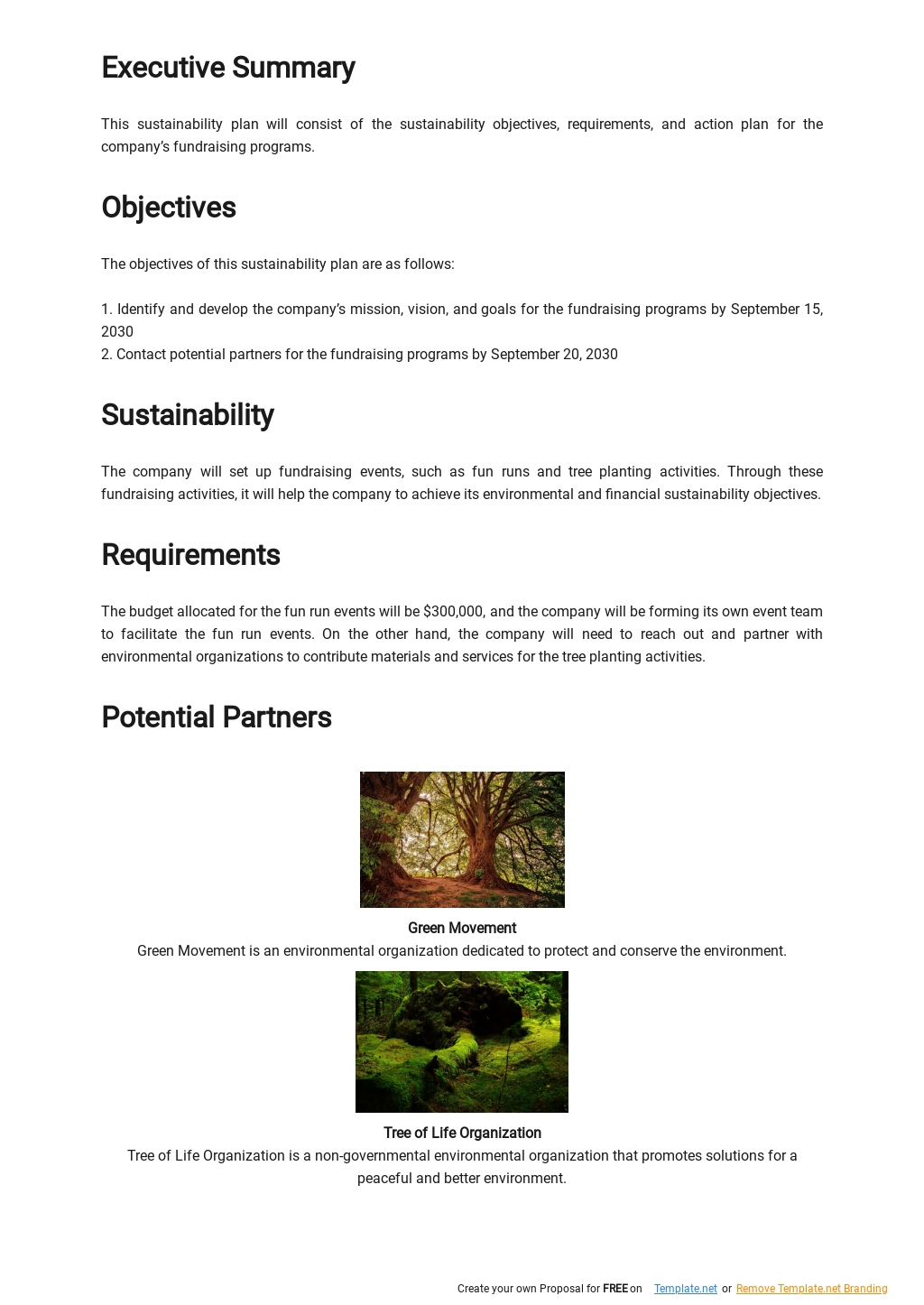 1024×1446 sustainability plan template google docs word templatenet from www.template.net
  1024×1446 corporate sustainability plan template google docs word from www.template.net
  400×216 developing sustainability plan project proposal proposalforngos from proposalsforngos.com


Project Plan Template For Sustainability Projects :
Project Plan Template For Sustainability Projects was posted in November 5, 2025 at 4:07 pm. If you wanna have it as yours, please click the Pictures and you will go to click right mouse then Save Image As and Click Save and download the Project Plan Template For Sustainability Projects Picture.. Don’t forget to share this picture with others via Facebook, Twitter, Pinterest or other social medias! we do hope you'll get inspired by SampleTemplates123... Thanks again! If you have any DMCA issues on this post, please contact us!