Event Planning Template For Parties & Small Events
Event Planning Template for Parties & Small Events
Planning a party or small event can be exciting, but also overwhelming. Using a well-structured event planning template can significantly streamline the process, ensuring that no detail is overlooked and that your event runs smoothly. This template outlines the key stages of event planning, providing a framework for organizing all aspects of your party or small event, from initial concept to post-event follow-up.
I. Event Definition & Objectives
Before diving into logistics, it’s crucial to define the event’s purpose and objectives. This foundational stage guides all subsequent decisions.
A. Event Purpose
Clearly define the reason for the event. Is it a birthday celebration, a holiday gathering, a corporate team-building exercise, or something else? Understanding the event’s purpose helps shape the overall theme, atmosphere, and activities.
B. Target Audience
Identify the intended audience. Consider factors like age, interests, demographics, and their relationship to the host. This information will influence choices regarding the venue, entertainment, food, and invitations.
C. Event Objectives
What do you want to achieve with this event? Examples include:
- Celebrating a milestone
- Networking opportunities
- Raising awareness for a cause
- Strengthening relationships
- Simply having fun!
D. Event Theme (Optional)
A theme can add a fun and cohesive element to your event. Consider a theme that aligns with the event’s purpose and appeals to the target audience. Examples include:
- Masquerade Ball
- Tropical Luau
- Hollywood Glamour
- Decades Party (e.g., 80s, 90s)
II. Budgeting & Resource Allocation
Creating a detailed budget is essential for managing expenses and ensuring financial feasibility.
A. Estimate Expenses
List all potential expenses associated with the event. Categories may include:
- Venue Rental: Include any associated fees (cleaning, security).
- Catering: Food, beverages, servers, rentals (linens, glassware, cutlery).
- Decorations: Theme-related decorations, balloons, floral arrangements.
- Entertainment: DJ, band, performers, games.
- Invitations & Stationery: Design, printing, postage (or online platform fees).
- Photography/Videography: Hiring a professional.
- Transportation: Guest transportation, parking fees.
- Contingency Fund: Allocate 10-15% for unexpected costs.
B. Identify Funding Sources
Determine how the event will be funded. This could be personal funds, corporate sponsorship, ticket sales, or fundraising efforts.
C. Budget Tracking
Create a spreadsheet or use event planning software to track expenses against the allocated budget. Regularly update the budget to reflect actual costs and identify potential overspending.
III. Venue Selection & Logistics
Choosing the right venue is crucial for creating the desired atmosphere and accommodating guests comfortably.
A. Venue Options
Consider different venue options based on the event’s size, style, and budget. Options include:
- Private Residence
- Community Hall
- Restaurant or Bar
- Hotel Ballroom
- Outdoor Space (Park, Garden)
B. Venue Evaluation Criteria
Evaluate potential venues based on factors such as:
- Capacity: Ensure the venue can comfortably accommodate the expected number of guests.
- Location: Accessibility for guests, proximity to transportation.
- Amenities: Availability of restrooms, kitchen facilities, parking.
- Atmosphere: Suitability to the event’s theme and desired ambiance.
- Cost: Rental fees, additional charges (cleaning, security).
- Availability: Ensure the venue is available on the desired date and time.
C. Logistics Planning
Plan the logistical aspects of the event, including:
- Setup and Teardown: Allocate time for setup and teardown activities.
- Equipment Rentals: Tables, chairs, linens, audio-visual equipment.
- Permits and Licenses: Obtain any necessary permits or licenses (e.g., alcohol permits).
- Security: Determine security needs based on the event’s size and type.
- Parking: Arrange for guest parking or transportation.
- Accessibility: Ensure the venue is accessible for guests with disabilities.
IV. Guest Management & Invitations
Managing guest invitations and RSVPs is essential for accurate headcount and logistical planning.
A. Guest List Creation
Create a comprehensive guest list, including contact information (email addresses, phone numbers).
B. Invitation Design & Distribution
Design invitations that reflect the event’s theme and provide all necessary information (date, time, location, dress code, RSVP details). Choose a distribution method (e.g., email, physical mail, online platform).
C. RSVP Tracking
Implement a system for tracking RSVPs. This could be a simple spreadsheet, an online RSVP form, or an event planning software. Send reminders to guests who have not yet responded.
D. Special Needs & Dietary Restrictions
Inquire about any special needs or dietary restrictions of guests. Make necessary accommodations to ensure inclusivity and guest satisfaction.
V. Catering & Menu Planning
Food and beverages are often a highlight of any event. Plan the menu carefully, considering the target audience, event theme, and budget.
A. Catering Options
Explore different catering options, such as:
- Full-Service Catering
- Drop-Off Catering
- Potluck (for informal events)
- Self-Catering
B. Menu Selection
Select a menu that aligns with the event’s theme, budget, and dietary needs of guests. Consider offering a variety of options to cater to different preferences.
C. Beverage Planning
Plan the beverage selection, including alcoholic and non-alcoholic options. Ensure adequate supplies of water, juice, and other refreshing beverages.
D. Food Safety
Prioritize food safety by selecting reputable caterers and adhering to proper food handling procedures. Ensure that food is stored and served at appropriate temperatures.
VI. Entertainment & Activities
Entertainment and activities keep guests engaged and create a memorable experience.
A. Entertainment Options
Consider different entertainment options based on the event’s theme and target audience. Options include:
- DJ or Band
- Live Performers (e.g., musicians, dancers, magicians)
- Games and Activities
- Photo Booth
B. Activity Schedule
Create a schedule of activities to keep guests entertained throughout the event. Consider incorporating interactive elements to encourage participation.
C. Music Playlist
Create a music playlist that sets the desired mood and caters to the musical tastes of the guests.
VII. Day-of Event Management
Effective day-of event management is crucial for ensuring a smooth and successful event.
A. Event Timeline
Create a detailed event timeline outlining all key activities and their corresponding times. Share the timeline with all relevant staff and volunteers.
B. Task Assignments
Assign specific tasks to individuals to ensure that all responsibilities are covered. Clearly define roles and responsibilities.
C. Emergency Preparedness
Develop a plan for handling emergencies, such as medical emergencies, security breaches, or weather-related issues. Designate individuals responsible for handling specific emergency situations.
D. On-Site Coordination
Provide on-site coordination to ensure that all aspects of the event are running smoothly. Address any issues or concerns that may arise.
VIII. Post-Event Follow-Up
Post-event follow-up is important for evaluating the event’s success and building relationships with guests.
A. Thank You Notes
Send thank you notes to guests, sponsors, and volunteers who contributed to the event’s success.
B. Feedback Collection
Collect feedback from guests through surveys or informal conversations. Use the feedback to identify areas for improvement in future events.
C. Expense Reconciliation
Reconcile all expenses against the budget to determine the final cost of the event. Identify any areas where costs exceeded expectations.
D. Event Evaluation
Evaluate the event’s overall success against the initial objectives. Assess what worked well and what could be improved upon.
By utilizing this comprehensive event planning template, you can effectively organize and manage parties and small events, ensuring a memorable and enjoyable experience for all attendees.
 612×915 event planning template business mentor from westernmotodrags.com
  585×764 event planning template printable word excel formats from www.sampleformats.org
  636×900 event planning template documents word excel from www.dexform.com
  688×925 event planning template word templatesfree word templates from www.wordstemplates.org
 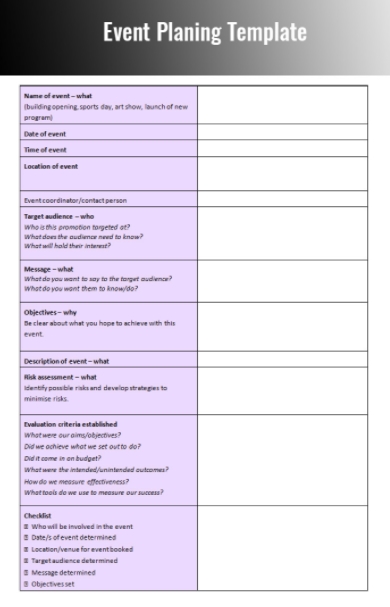 390×607 event planning template sample template business psd excel word from acmeofskill.com
  600×730 event planning templates word excel formats samples from www.wordpdftemplates.com



Event Planning Template For Parties & Small Events :
Event Planning Template For Parties & Small Events was posted in June 3, 2025 at 9:44 am. If you wanna have it as yours, please click the Pictures and you will go to click right mouse then Save Image As and Click Save and download the Event Planning Template For Parties & Small Events Picture.. Don’t forget to share this picture with others via Facebook, Twitter, Pinterest or other social medias! we do hope you'll get inspired by SampleTemplates123... Thanks again! If you have any DMCA issues on this post, please contact us!