Career Development Plan Template
Career Development Plan Template
A career development plan is a roadmap for your professional growth. It outlines your career goals, the skills and knowledge you need to acquire, and the steps you will take to achieve those goals. Using a template can provide a structured approach, helping you identify key areas to consider and ensuring a comprehensive plan.
This template provides a framework to build your own personalized career development plan. Remember to revisit and update this plan regularly as your career evolves and opportunities arise.
I. Self-Assessment
Before setting career goals, it’s crucial to understand your current situation. This section focuses on identifying your strengths, weaknesses, interests, and values.
A. Strengths
List your core strengths – skills, talents, and personal qualities that make you effective in your work. Consider both hard skills (technical skills) and soft skills (interpersonal skills). Provide specific examples of how you’ve used these strengths to achieve positive outcomes.
Example:
- Strength: Project Management. Example: Successfully led a cross-functional team to deliver a critical software update two weeks ahead of schedule.
- Strength: Communication. Example: Effectively presented complex technical information to non-technical stakeholders, resulting in increased buy-in and support for the project.
B. Weaknesses
Identify areas where you need improvement. Be honest and specific. Acknowledging weaknesses is the first step toward addressing them. Consider areas where you consistently struggle or receive negative feedback.
Example:
- Weakness: Delegation. Plan to Improve: Will actively practice delegating tasks to team members, starting with smaller, less critical assignments. I will also attend a workshop on effective delegation techniques.
- Weakness: Public Speaking. Plan to Improve: Join Toastmasters to improve presentation skills and gain confidence speaking in front of groups.
C. Interests
Explore your passions and areas of interest. What aspects of your current work do you enjoy? What new areas are you curious about? Consider hobbies, volunteer work, or other activities that align with your interests.
Example:
- Interest: Data Analysis. How it relates to my career: I enjoy analyzing data to identify trends and insights. I would like to develop my data analysis skills to improve decision-making within my team.
- Interest: Learning new technologies. How it relates to my career: I am fascinated by emerging technologies and their potential impact on the industry. I want to stay current with the latest trends and explore opportunities to apply new technologies to my work.
D. Values
Define your core values – the principles and beliefs that are important to you. Consider values such as integrity, teamwork, creativity, work-life balance, and personal growth. How well does your current role align with your values?
Example:
- Value: Continuous Learning. How it relates to my career: I value opportunities for professional development and seek out roles that encourage learning and growth.
- Value: Making a positive impact. How it relates to my career: I want to contribute to work that is meaningful and makes a difference in the world.
II. Goal Setting
Based on your self-assessment, define your short-term (1-2 years), mid-term (3-5 years), and long-term (5+ years) career goals. Use the SMART framework (Specific, Measurable, Achievable, Relevant, Time-bound) to ensure your goals are well-defined and attainable.
A. Short-Term Goals (1-2 Years)
Example:
- Goal: Improve project management skills. SMART Goal: Obtain Project Management Professional (PMP) certification within 18 months by completing a PMP training course and passing the certification exam.
B. Mid-Term Goals (3-5 Years)
Example:
- Goal: Transition into a leadership role. SMART Goal: Become a Team Lead within 4 years by gaining experience leading smaller projects, mentoring junior team members, and completing a leadership development program.
C. Long-Term Goals (5+ Years)
Example:
- Goal: Become a Director of Engineering. SMART Goal: Secure a Director of Engineering position within 7 years by consistently exceeding performance expectations in current and future roles, expanding my network within the engineering community, and pursuing advanced education in engineering management.
III. Action Plan
Outline the specific steps you will take to achieve your goals. This section should include timelines, resources needed, and potential obstacles.
A. Skill Development
Identify the skills you need to acquire or improve to achieve your goals. For each skill, list specific actions you will take, such as taking courses, attending workshops, seeking mentorship, or practicing on the job.
Example:
- Skill: Data Visualization. Action: Complete an online course on Tableau within 3 months. Practice creating visualizations with real-world data sets. Seek feedback from experienced data analysts.
B. Networking
Build and maintain relationships with people who can support your career development. Attend industry events, join professional organizations, and connect with people on LinkedIn.
Example:
- Action: Attend at least two industry conferences per year. Join a relevant professional organization. Connect with at least five new people on LinkedIn each month.
C. Education and Training
Identify any formal education, certifications, or training programs that will help you achieve your goals.
Example:
- Action: Enroll in a master’s degree program in business administration within the next two years. Complete a project management certification.
IV. Monitoring and Evaluation
Regularly review your career development plan to track your progress and make adjustments as needed. Schedule quarterly reviews to assess your achievements, identify any challenges, and update your goals and action plan.
A. Tracking Progress
How will you measure your progress toward your goals? What metrics will you use to assess your success?
Example:
- Metric: Completion of PMP certification.
- Metric: Number of new connections made on LinkedIn.
- Metric: Performance review ratings.
B. Adjustments
What will you do if you encounter obstacles or setbacks? How will you adapt your plan to changing circumstances?
Example:
- Scenario: Difficulty passing the PMP exam. Adjustment: Seek additional tutoring and practice exams.
- Scenario: Company restructuring. Adjustment: Re-evaluate career goals and identify new opportunities within the organization or externally.
This template provides a solid foundation for creating your career development plan. Remember to tailor it to your specific needs and aspirations, and to revisit and update it regularly to ensure it remains relevant and effective.
 1567×1224 career development plan template sampletemplatess sampletemplatess from www.sampletemplatess.com
  585×575 career development plan template word documents from www.template.net
  1211×1584 career development plan employees template sampletemplatess from www.sampletemplatess.com
 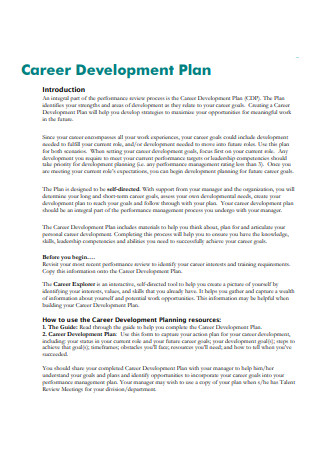 320×455 sample career development plan ms word from www.sample.net


Career Development Plan Template :
Career Development Plan Template was posted in November 2, 2025 at 12:03 pm. If you wanna have it as yours, please click the Pictures and you will go to click right mouse then Save Image As and Click Save and download the Career Development Plan Template Picture.. Don’t forget to share this picture with others via Facebook, Twitter, Pinterest or other social medias! we do hope you'll get inspired by SampleTemplates123... Thanks again! If you have any DMCA issues on this post, please contact us!
Related For Career Development Plan Template
Budgeting Plan Template For Transpo
Transportation Budgeting Plan Template Transportation Budgeting Plan Template EffectiveWeekly Lesson Plan Template For Tea
Weekly Lesson Plan Template for Teachers Weekly Lesson Plan