SAT Study Plan Template
Crafting Your Perfect SAT Study Plan: A Template for Success
The SAT is a pivotal exam that significantly influences your college application. Effective preparation is key, and a well-structured study plan can dramatically improve your score. This template provides a framework to build a personalized study schedule tailored to your specific needs and learning style.
I. Assessment and Goal Setting
A. Diagnostic Testing: Knowing Where You Stand
Before diving into study materials, take a full-length, official SAT practice test under timed conditions. This diagnostic test serves as your baseline, revealing your strengths and weaknesses across the Reading, Writing and Language, and Math sections. Accurately score your test using the official scoring guidelines.
B. Identifying Weak Areas: Focus Your Efforts
Analyze your diagnostic test results meticulously. Pinpoint specific question types, content areas, or skills where you consistently struggled. For instance, did you miss a lot of algebra questions in the Math section, or did you struggle with paired passages in the Reading section? This detailed analysis will guide your study focus.
C. Setting Realistic Goals: Aim High, But Be Practical
Based on your diagnostic score and desired score range, set realistic goals for each section and overall. Research the average SAT scores for colleges you’re interested in to determine a target score. Remember that significant improvement takes time and consistent effort. Break down your overall goal into smaller, more manageable milestones for each week or month.
II. Resource Allocation and Scheduling
A. Choosing the Right Resources: Quality Over Quantity
Select high-quality study materials. Official SAT practice tests from the College Board are invaluable. Supplement these with reputable prep books like those from Kaplan, Princeton Review, or Barron’s. Consider online resources like Khan Academy, which offers free SAT preparation, and UWorld, a paid platform with excellent practice questions and explanations. Choose resources that align with your learning style; some people prefer books while others thrive with interactive online platforms.
B. Creating a Study Schedule: Consistency is Key
Develop a detailed study schedule that fits your lifestyle and commitments. Allocate specific days and times for SAT preparation. Consistency is more important than marathon study sessions. Aim for at least 1-2 hours of focused study per day, 5-6 days a week. Schedule regular breaks to avoid burnout. Your schedule should be flexible enough to accommodate unexpected events, but try to stick to it as much as possible.
C. Balancing Content Review and Practice: A Holistic Approach
Your study schedule should incorporate both content review and practice. Content review involves revisiting key concepts and skills in each section. Practice involves solving SAT-style questions to apply what you’ve learned. A good rule of thumb is to allocate approximately 40% of your study time to content review and 60% to practice questions and full-length practice tests. Remember to review the explanations for both correct and incorrect answers to understand the underlying concepts.
III. Section-Specific Strategies
A. Reading: Comprehension and Speed
Focus on improving your reading comprehension skills by practicing with a variety of passages. Develop strategies for identifying the main idea, supporting details, and author’s purpose. Practice time management techniques to ensure you can complete all passages within the allotted time. Pay attention to vocabulary in context and learn to infer meaning from the surrounding sentences. Try reading articles from reputable sources like *The New York Times* or *The Atlantic* to improve reading stamina.
B. Writing and Language: Grammar and Rhetoric
Review grammar rules and rhetorical devices. Practice identifying and correcting errors in grammar, punctuation, sentence structure, and word choice. Familiarize yourself with the different types of questions on the Writing and Language section, such as revising sentences, improving paragraph organization, and strengthening arguments. Practice writing concise and clear sentences.
C. Math: Content Mastery and Problem-Solving
Review fundamental math concepts, including algebra, geometry, trigonometry, and data analysis. Practice solving a variety of math problems, focusing on areas where you struggle. Learn common problem-solving strategies and shortcuts. Utilize your calculator effectively, but also practice solving problems without it. Regularly review formulas and theorems. Consider using flashcards or online resources to memorize key concepts.
IV. Practice Tests and Review
A. Full-Length Practice Tests: Simulate the Real Experience
Take full-length, official SAT practice tests regularly to simulate the actual test environment. This will help you get used to the timing, format, and pressure of the real exam. Analyze your performance on each practice test to identify areas for improvement.
B. Review and Analyze Mistakes: Learn from Your Errors
Thoroughly review each practice test, paying close attention to the questions you missed. Understand why you made the mistake and what you can do to avoid making the same mistake in the future. Keep a mistake log to track your errors and identify recurring patterns. This will help you focus your study efforts on your weakest areas.
C. Adjusting Your Study Plan: Adapt and Improve
Based on your practice test results and mistake analysis, adjust your study plan as needed. If you’re consistently struggling with a particular topic, dedicate more time to reviewing that material. If you’re doing well in a certain area, you can reduce the amount of time you spend on it. The SAT is adaptive so adjust your plan to accommodate the changes and challenges.
V. Test-Taking Strategies and Mental Preparation
A. Pacing and Time Management: Key to Success
Develop effective pacing and time management strategies for each section. Practice allocating a certain amount of time to each question. Learn to recognize when you’re spending too much time on a question and move on to the next one. Mark difficult questions and come back to them later if you have time. Familiarize yourself with the test instructions and format to avoid wasting time on test day.
B. Eliminating Answers: Improving Your Odds
Learn to eliminate incorrect answer choices to increase your odds of selecting the correct answer. Look for keywords, contradictions, and illogical statements that can help you narrow down your options. Even if you’re unsure of the correct answer, you can often eliminate one or two choices, giving you a better chance of guessing correctly.
C. Managing Test Anxiety: Stay Calm and Focused
Practice relaxation techniques to manage test anxiety. Get plenty of sleep the night before the test. Eat a healthy breakfast. Arrive at the test center early to avoid feeling rushed. Take deep breaths during the test to calm your nerves. Remember that you’ve prepared for this exam, and you have the skills and knowledge to succeed.
By following this template and tailoring it to your individual needs, you can create a comprehensive and effective SAT study plan that will help you achieve your desired score and reach your college goals. Remember to stay consistent, focused, and motivated throughout your preparation process.
 1080×386 satact study plan tri ed tutoring llc from tri-edtutoring.com
  1080×794 proven sat study plans month schedules from testprepnerds.com
  1024×902 sat study plan ixl official blog from blog.ixl.com
  640×480 build sat study plan sample schedules from blog.prepscholar.com
  680×300 creating sat study plan ultimate guide prepmaven from prepmaven.com
  2048×1366 sat study plan schedule templates from prepory.com
 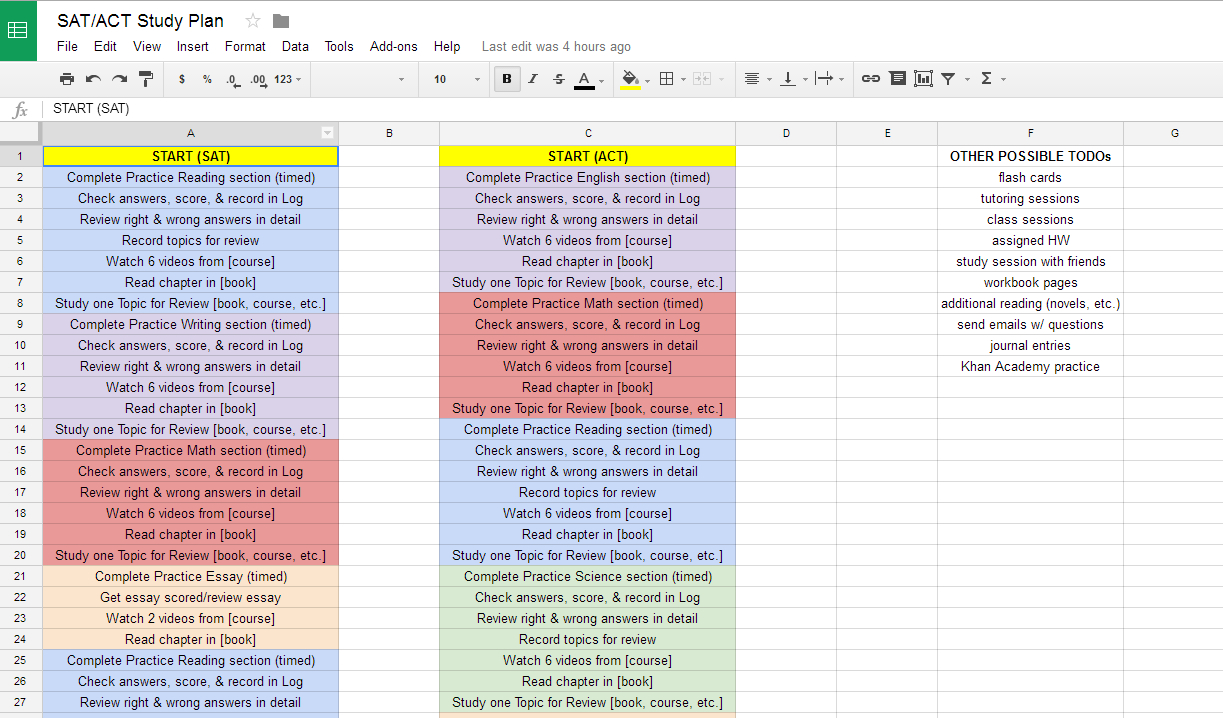 1223×718 ultimate sat act study plan reason prep db excelcom from db-excel.com


SAT Study Plan Template :
SAT Study Plan Template was posted in November 2, 2025 at 10:00 am. If you wanna have it as yours, please click the Pictures and you will go to click right mouse then Save Image As and Click Save and download the SAT Study Plan Template Picture.. Don’t forget to share this picture with others via Facebook, Twitter, Pinterest or other social medias! we do hope you'll get inspired by SampleTemplates123... Thanks again! If you have any DMCA issues on this post, please contact us!